


















India's passport and visa photo rules differ from most countries because the visa and OCI photos are square (51 × 51 mm) rather than the usual 35 × 45 mm portrait. The Passport Seva Kendra and the visa authorities check head size, background, and even digital file specifications closely. This guide explains what you need to know and how PicToPassport helps you create a compliant photo for free, entirely in your browser.
Why India passport photo rules cause rejection
Passport Seva scales Indian passport photos so the head fills 80–85% of a 35 mm × 45 mm frame against plain white, with no border around the print. A head that sits smaller than that band, a tinted backdrop or a drawn edge sends the photo back for replacement, adding days to the application. Check the head proportion against the table before you print.
Official Photo Size
The required India passport photo size is 35 mm wide × 45 mm tall. The head should occupy 80–85% of the photo for new applications. Indian visa and OCI card photos are a different, square format — 51 mm × 51 mm — with the head measuring 25–35 mm for visas and 70–80% of the frame for OCI cards. Always verify with the official Passport Seva portal before submitting.
Most rejections are file size rather than pixels, so shrink it until it clears the limit: Compress Image to KB
Background and Lighting
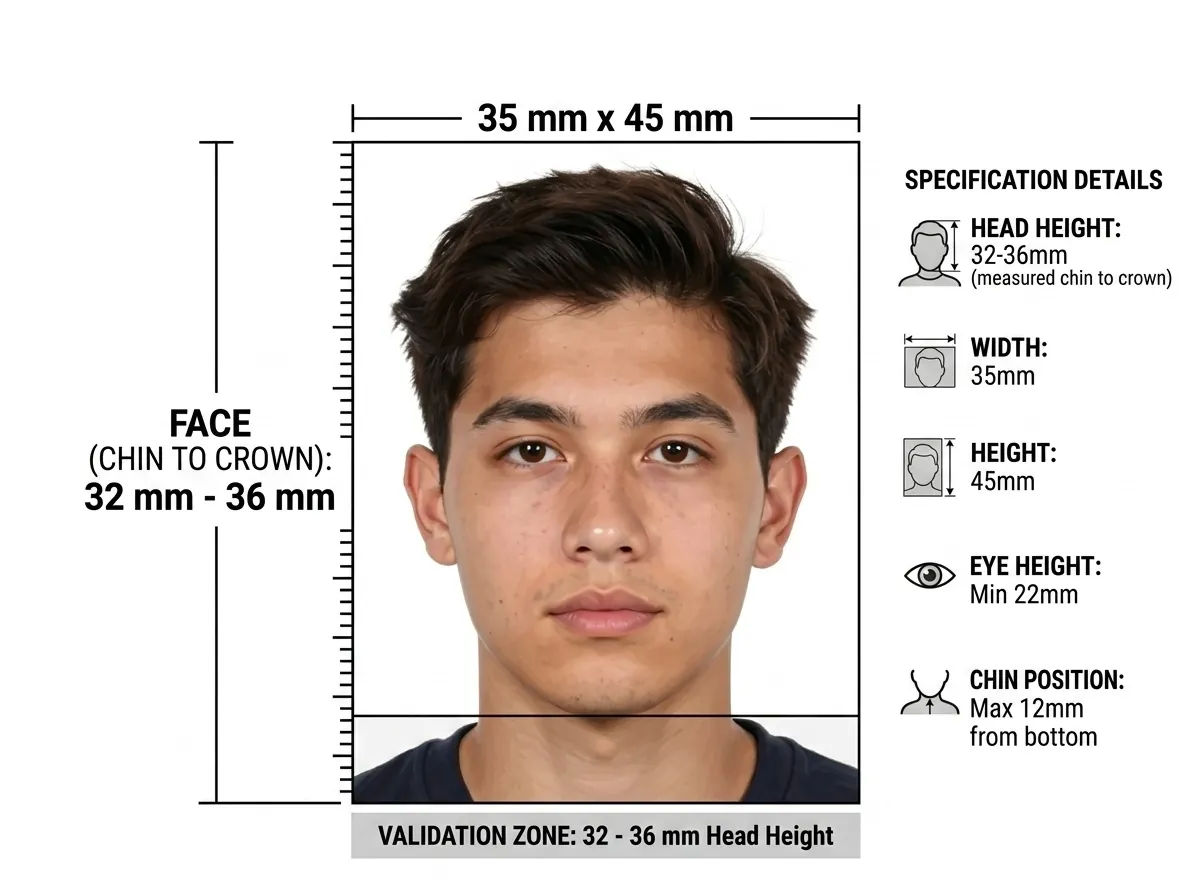
The background must be plain white for passport photos and a plain light or white background for visa and OCI photos. Avoid any patterns, textures, or objects behind you. Lighting must be even across the face with no shadows on the background or behind the ears. Natural daylight from a window works well, but avoid direct sunlight that creates harsh shadows.
Expression and Pose
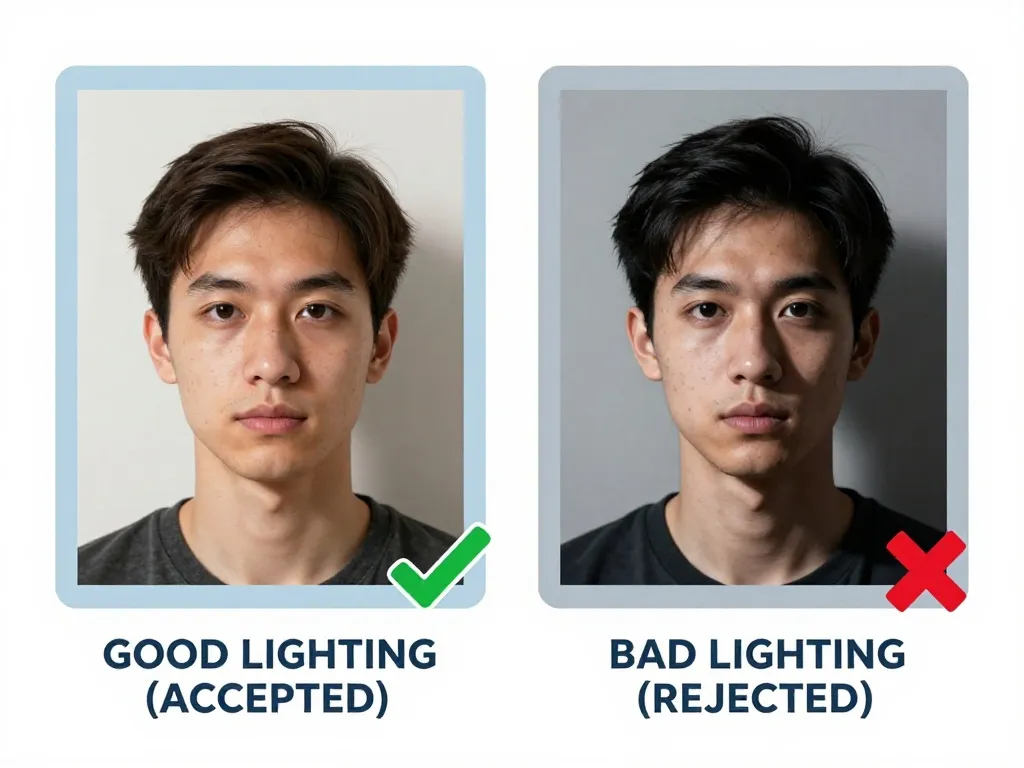
India requires a neutral expression with the mouth closed and the face front-on, centred in the frame with no border around the print — a white margin added by a photo lab is itself a defect. Head coverings are accepted only for religious reasons. Uniforms are prohibited for passport photos, so change out of school or service dress before the appointment. The head must sit large in the frame, which changes how you compose the shot compared with other countries.
Glasses and Accessories
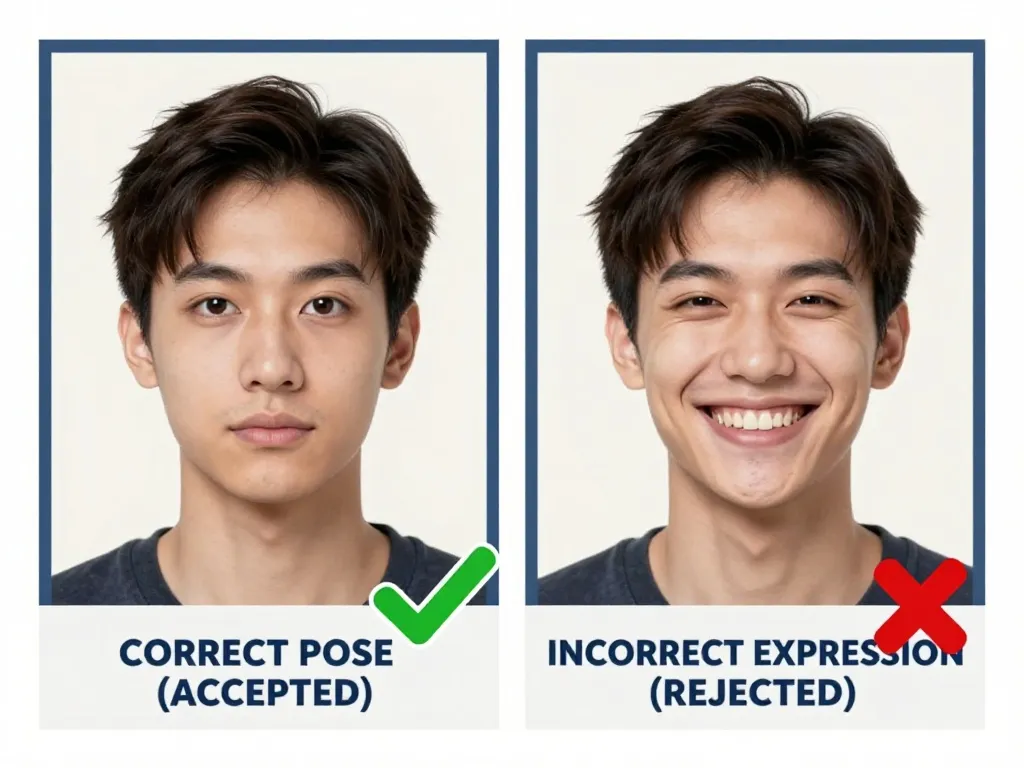
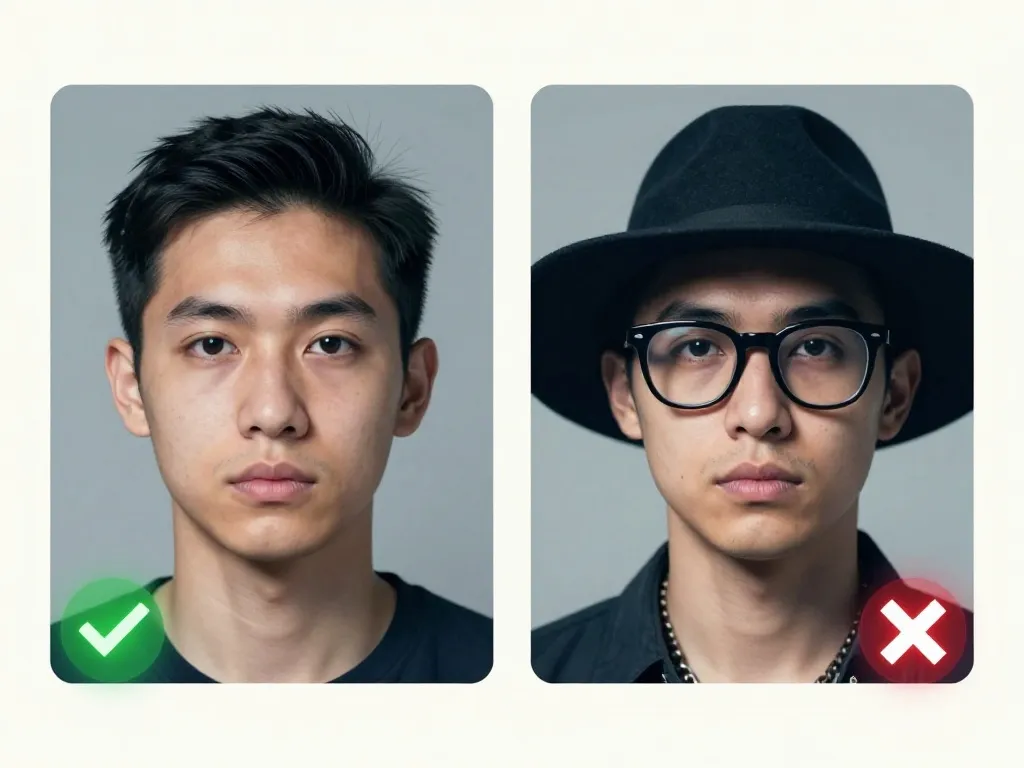
Uniforms must not be worn in passport photos. Head coverings are only permitted for religious reasons, and the face must remain fully visible from chin to forehead. Religious headwear is allowed for visa and OCI photos under the same condition — facial features must not be obscured. Ensure your eyes are clearly visible and not covered by hair or frames.
Face Visibility
India's head sizing is the most aggressive of the mainstream specifications: the head must occupy 80–85 per cent of the 35 mm × 45 mm print. Visa and OCI submissions switch to a square 51 mm × 51 mm frame, where the visa head measures 25 mm to 35 mm and the OCI head 70–80 per cent. Choosing the wrong frame for the wrong application is the commonest Indian rejection — a passport photo sent for a visa fails on shape alone before anyone measures the head.
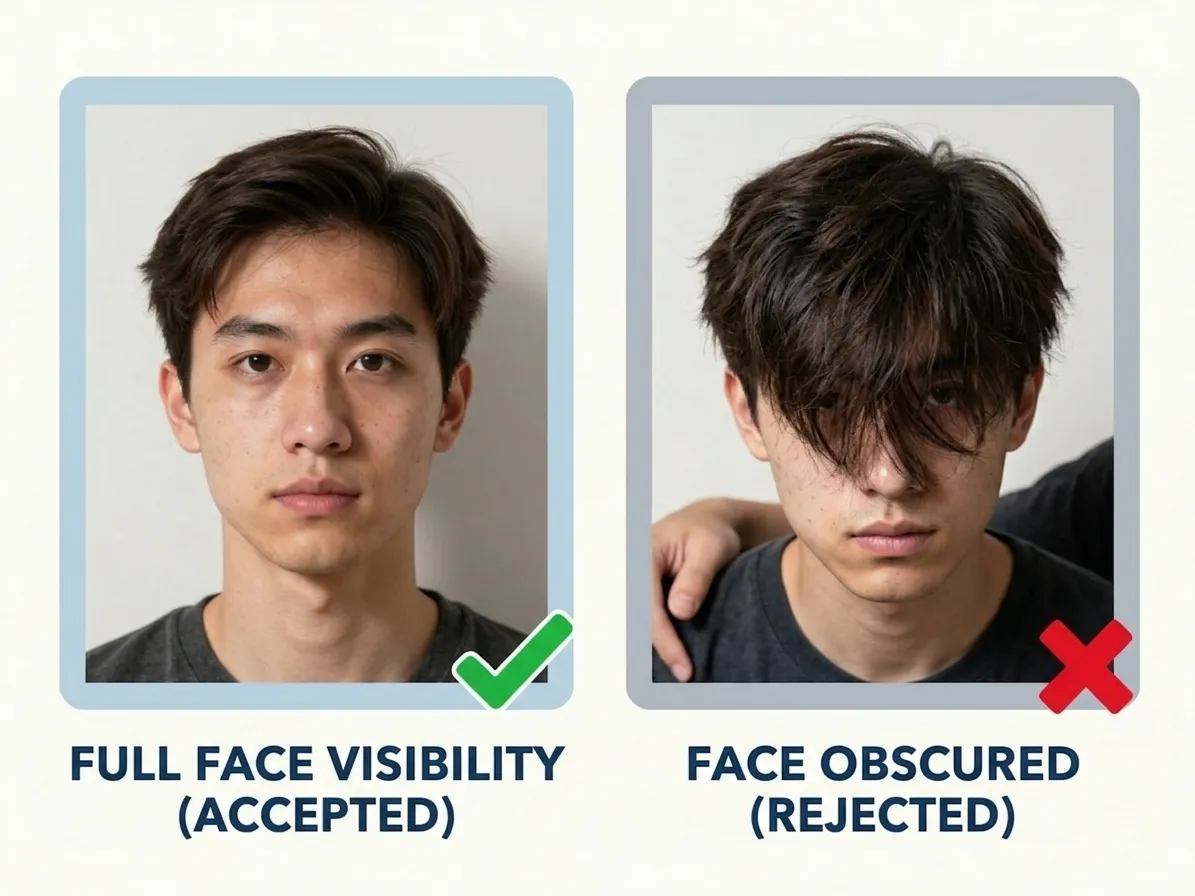
Photo Recency
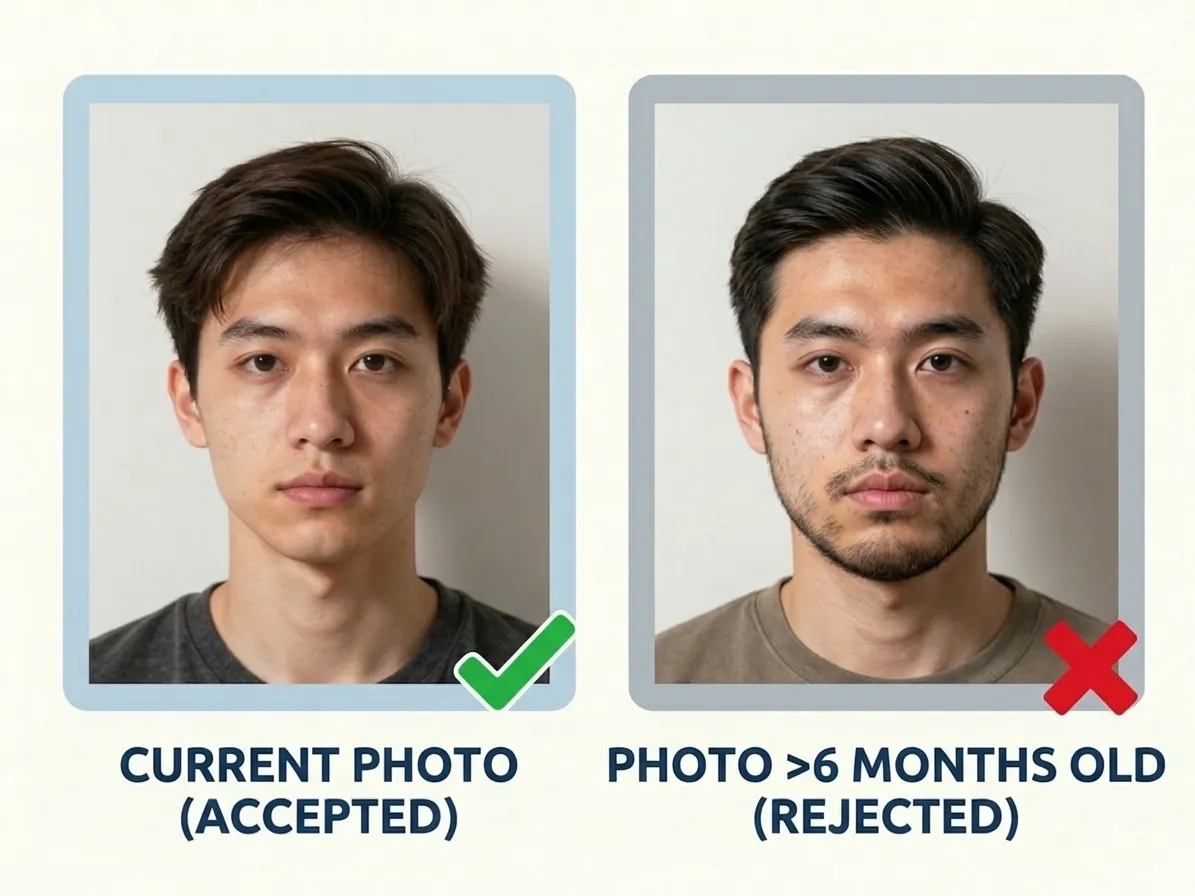
India publishes no fixed month count for photo age; the requirement is that the image is current and truly represents you. In practice that means retaking it for each application rather than scanning an old print, especially since child registrations and visa submissions also demand a digital copy — a square JPEG between 10 KB and 300 KB, from 350 px up to 1000 px. A photo meeting the print rules but not that file window still stalls the application.
How Many Copies You Get
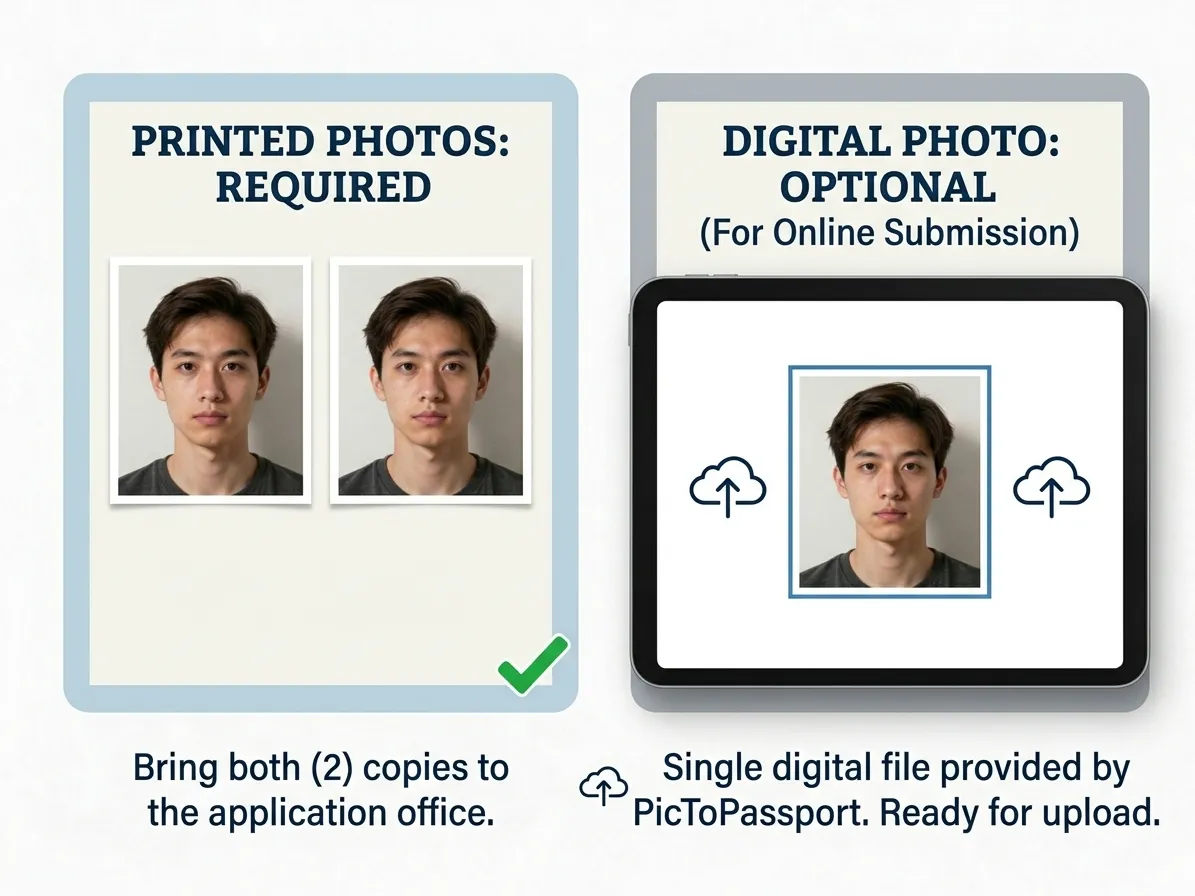
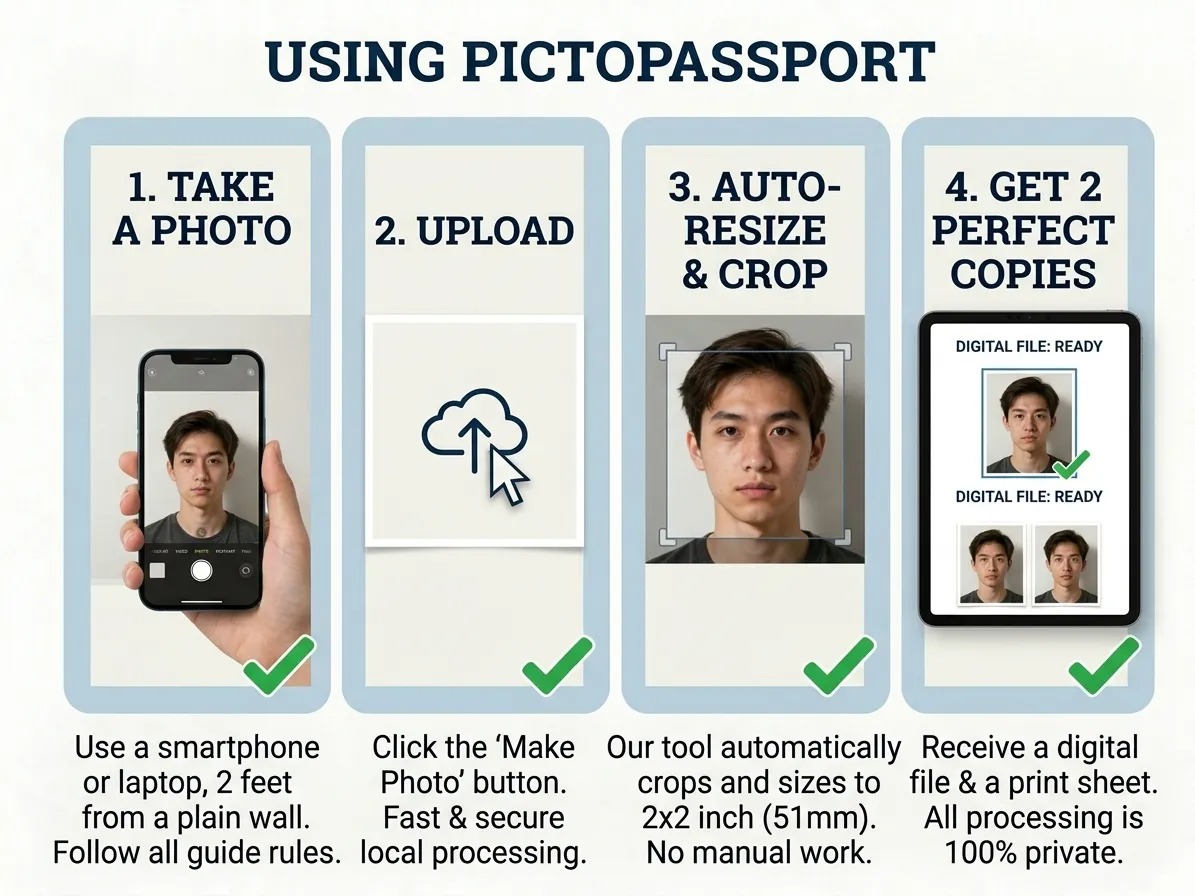
Indian passport applications require 2 printed photos. Visa and OCI applications are submitted digitally, so you need one correctly sized digital file. When you use PicToPassport, you receive a digital file ready for upload plus a print-friendly layout with multiple copies on a single page. The digital file is sized exactly for the Indian passport and visa photo requirements, so you can upload it directly or take it to a photo shop.
Common Mistakes to Avoid
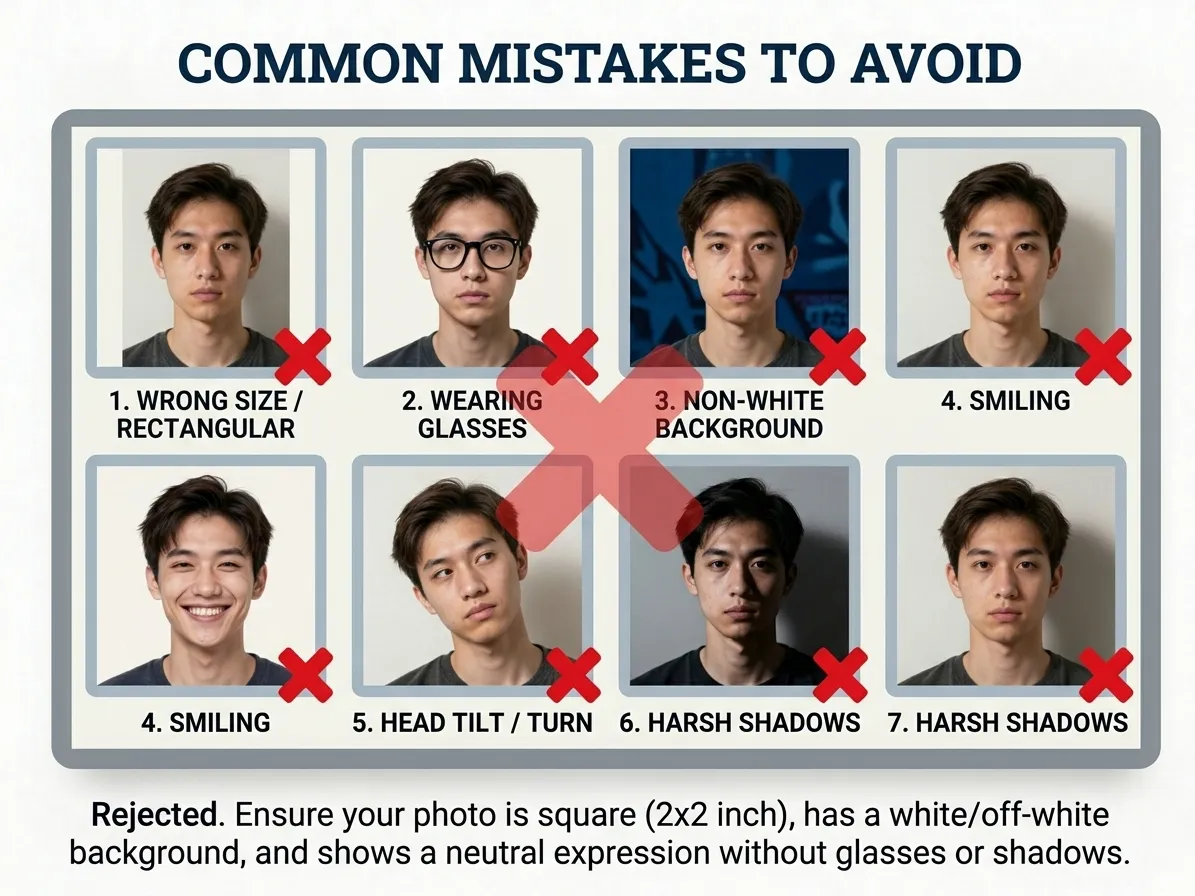
The most frequent reasons for rejection are using the wrong size (remember the visa and OCI photos are square 51 × 51 mm, not 35 × 45 mm), a non-white background, a head that is too small or too large, wearing a uniform, or a photo with borders. Other issues include tilting the head, smiling, having hair cover the face, or submitting an out-of-date photo. Always double-check the India passport photo requirements before submitting.
A phone photo almost never comes out at the right dimensions, so scale it to the sheet: Photo Resizer
Baby Passport Photos
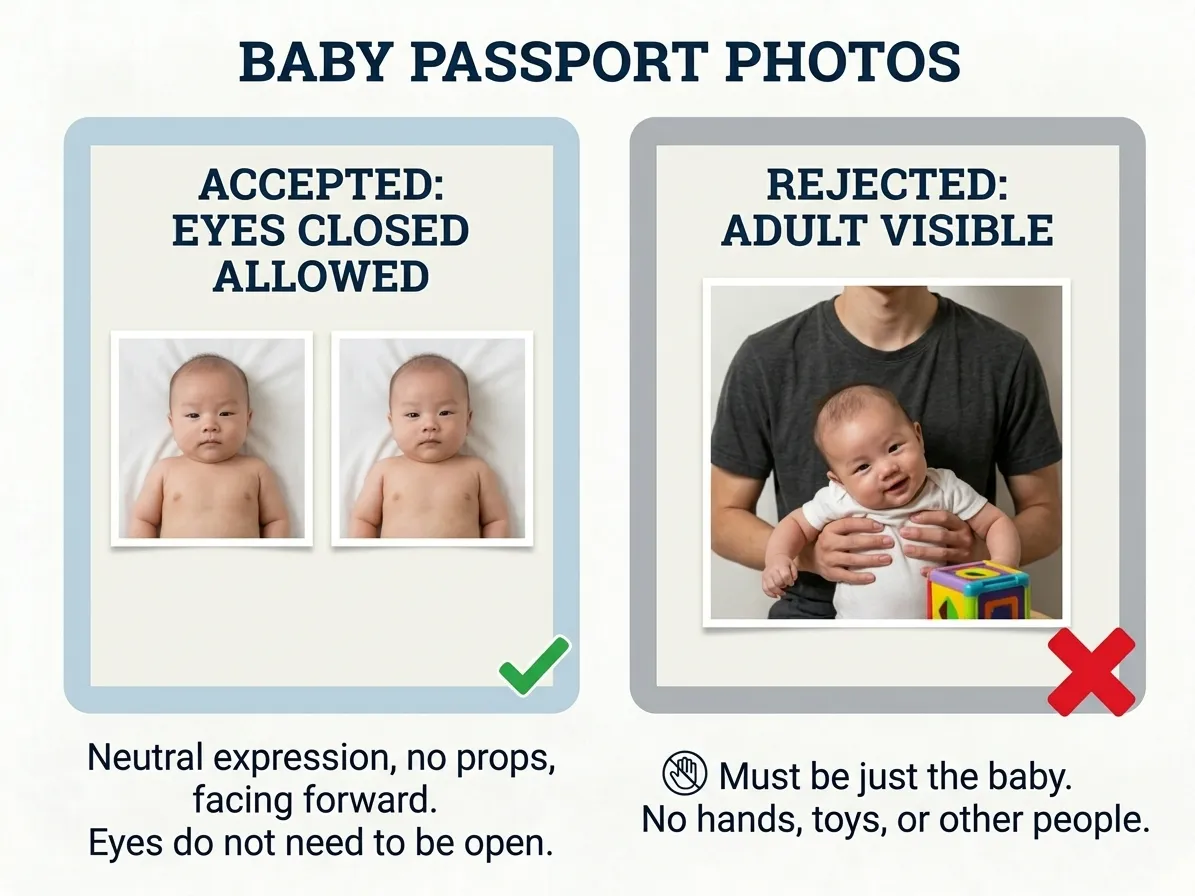
India's rules do not separate infants from adults, so a baby's photo is cut to the same 35 mm × 45 mm frame with the head filling 80–85 per cent of it. Lay the child on a plain white sheet, shoot from directly above, and wait for both eyes to be open before releasing the shutter. No hands, toys or pacifiers may appear, and the borderless crop and white background apply exactly as they do for an adult applicant.
Using PicToPassport
PicToPassport cuts the Indian passport photo to 35 mm × 45 mm and the square visa or OCI frame to 51 mm × 51 mm, inside your browser for free. The background stays plain white for the passport and light or white for visa and OCI, with the head at 80–85% of the photo. You leave with print-ready output — 2 printed photos — plus a digital copy of 350 px – 1000 px if you are uploading. Nothing reaches a server; the file stays on your device.
A correct image in the wrong format still fails validation, which is why: Convert Image Format
Get Started in Minutes
Passport Seva charges ₹2,500 for a 36-page, 10-year adult passport, and it publishes no standard processing time — the official fee and time document is the reference to check. Meanwhile your photo can be finished today: PicToPassport crops to 35 mm × 45 mm in the browser, stays free and private, and uploads nothing to a server — the file never leaves your device.

