

















Nepal passport photo requirements — official size, background, and pose guide

Nepal Passport Photo Requirements — Complete Guide

Review the official Nepal passport photo requirements — exact size, background, and pose rules. 100% free and private; everything runs in your browser.

35×45 mmMake Nepal Passport Photo NowCorrect size set automaticallyUpload Photo

Key Takeaways

The rules that decide the application.

  1. Choose 35 mm × 45 mm or 50 mm × 50 mm, with the face filling 70–80% and both ears showing.
  2. Shadows are the quiet failure — the white background and the face must both be evenly lit, borderless and in colour.
  3. Regular service takes 10–30 days, while fast track in Kathmandu issues a passport in about 2 working days for NPR 7,000 extra.
  4. Apply at your district office for the standard route, or prepare the photo in PicToPassport and travel to Kathmandu for fast track.

Official Requirements

The figures on file with the department that issues the passport.

Spec & Compliance Table

Spec & Compliance Table — Nepal
Photo size (passport)35 mm × 45 mm or 50 mm × 50 mm for a passport; 35 mm × 45 mm for a visa
Head height / face sizeFace covers 70–80% of the photo, with both ears visible
Resolution & fileBorderless colour print with no shadows; no published DPI figure
BackgroundPlain white, with no shadow on the face or behind the head
Photos required4 photos for a passport; 1 for a visa
Photo age limitWithin the last 3 months for visa use; no published passport limit
Passport feeFast track adds NPR 7,000 for a 34-page passport or NPR 10,000 for a 66-page passport; district fee confirmed on the official page
Standard processingRegular service takes 10–30 days from registration; fast track issues a passport in about 2 working days in Kathmandu

Official source: Department of Passports, Nepal — application process — Requirements change — re-check the current rules on the official page before you submit.

Fees & Processing Times

What it costs, and how long it takes.

Fees & Processing Times — Nepal
Regular service (district or area administration office)10–30 days from registration
Fast track (Department of Passports, Tripureshwar, Kathmandu)about 2 working days
Fast-track surcharge, 34-page passportNPR 7,000 on top of the district fee
Fast-track surcharge, 66-page passportNPR 10,000 on top of the district fee
District office feepublished on the official application-process page
Fast track at district officesnot available — Kathmandu only

Official fee schedule: Department of Passports, Nepal — fees and fast track

Fees and processing times are set by the issuing authority and change without notice. Confirm the current figure on the official page linked above before you pay.

Nepal's passport photo rules specify two acceptable sizes — 35 × 45 mm or 50 × 50 mm — and require a borderless, colour image with the face covering 70–80% of the photo. Unusually, babies' eyes may be closed. This guide explains the official requirements and how PicToPassport helps you create a compliant photo for free, entirely in your browser.

Why Nepal passport photos get rejected so often

Nepalese applications are checked for borderless, colour images with the correct face coverage. A photo that is cropped too tightly (below 70% face area) or has a white border can be rejected. Because either 35 × 45 mm or 50 × 50 mm is accepted, picking the wrong crop wastes a print. Getting the white background, neutral expression, and ear visibility right the first time avoids delays at the Department of Passports.

Official Photo Size

Nepal accepts a passport photo of 35 mm × 45 mm or 50 mm × 50 mm. You need 4 photos for a passport application. The face should cover 70–80% of the photo area. Visa photos are 35 × 45 mm and require just 1 photo. The image must be borderless. PicToPassport crops precisely to either size you choose. Always verify with the official Department of Passports before submitting.

If you are moving between two sizes, resize rather than crop and hope: Photo Resizer
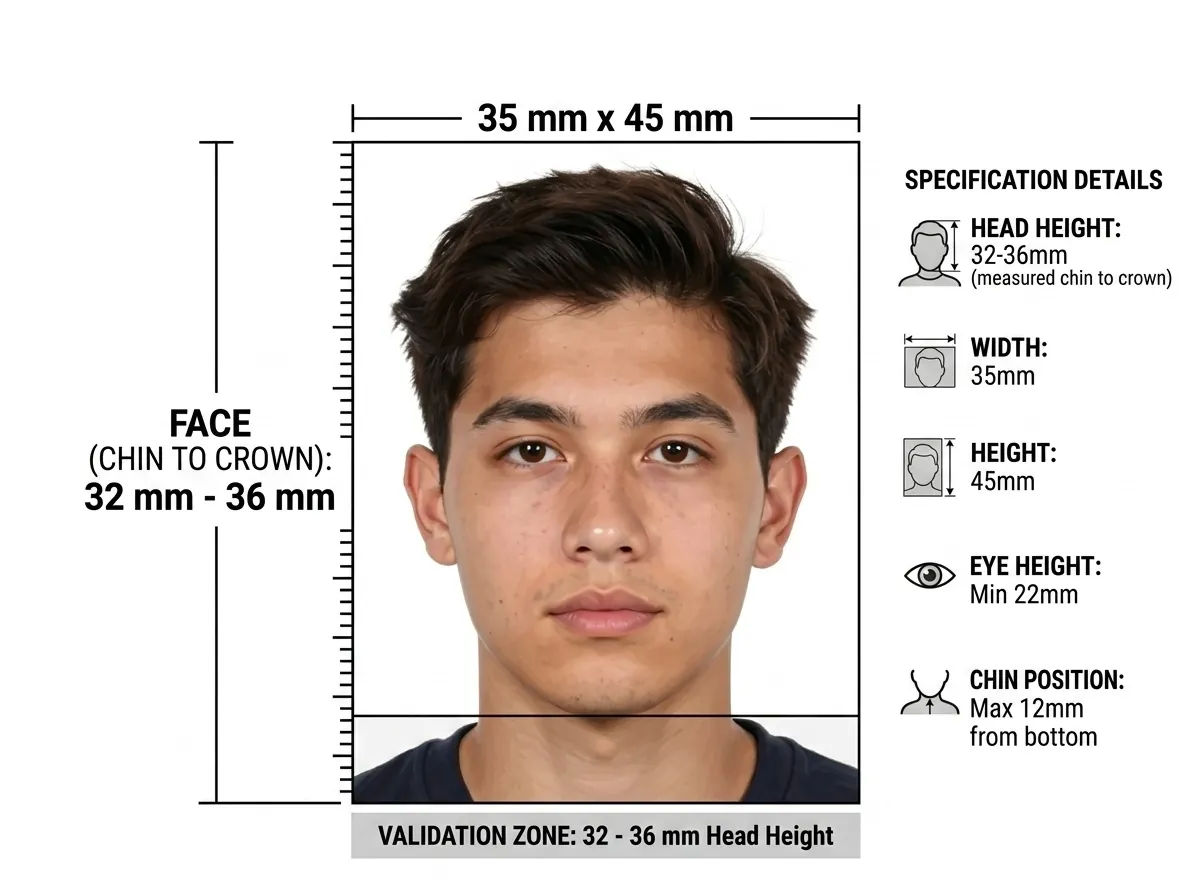
Measurement diagram of a 35 × 45 mm print with a portrait inside a ruler frame. A bracket on the left gives a face measurement of 32 to 36 mm, and a specification panel lists head height, a width of 35 mm, a height of 45 mm, a minimum eye height of 22 mm and a maximum chin position 12 mm from the bottom.

Background and Lighting

The background must be plain white, with no shadows on the face or the background. Lighting should be even and bright, from the front, so the face is evenly lit. Because the photo must be borderless, avoid any white border or frame around the printed image. A plain wall or backdrop in soft daylight works well.
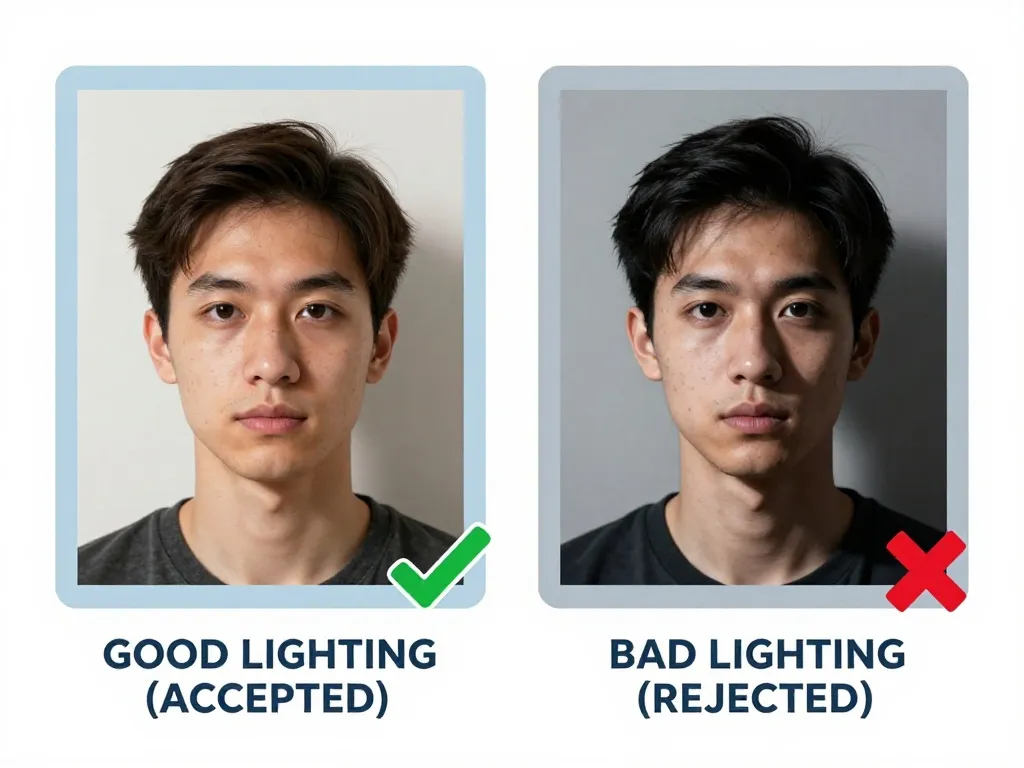
Two portraits side by side. The left, captioned Good lighting (accepted) and marked with a green tick, is evenly lit against a light background. The right, captioned Bad lighting (rejected) and marked with a red cross, is lit hard from one side, leaving a deep shadow across half the face.

Expression and Pose

Nepal requires a neutral expression with the eyes open and both ears clearly visible, so the hair is pulled back before the shutter rather than tidied afterwards. The face sits square to the camera with no shadow falling on it or on the backdrop behind. Nothing in the published rules licenses a smile or a head tilt, so treat the Nepali photo as a plain biometric record: front-on, evenly lit, ears uncovered.
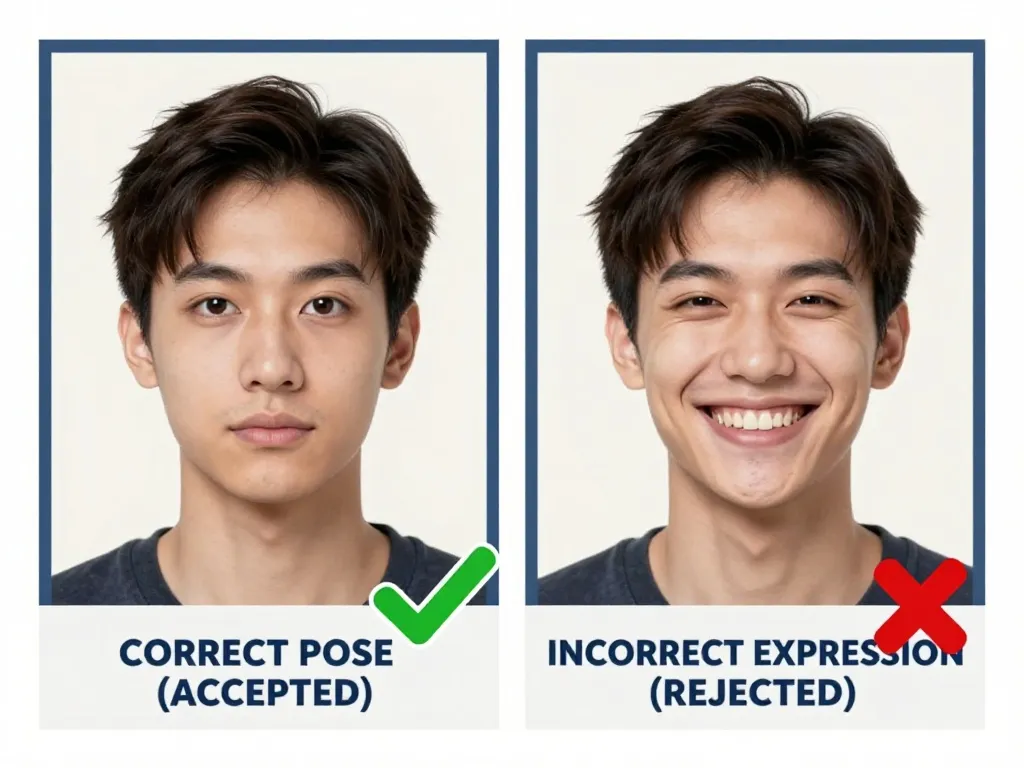
Two portraits side by side. The left, captioned Correct pose (accepted) and marked with a green tick, shows a closed mouth and a level gaze. The right, captioned Incorrect expression (rejected) and marked with a red cross, shows a wide toothy smile.

Glasses and Accessories

Nepal's rules don't specifically mention glasses, so clear everyday glasses are generally acceptable as long as your eyes are fully visible and there are no lens reflections. To avoid any risk, many applicants remove them. Head coverings are only permitted for religious reasons, and the full face — including both ears — must remain visible. Keep accessories minimal so nothing obscures the features.
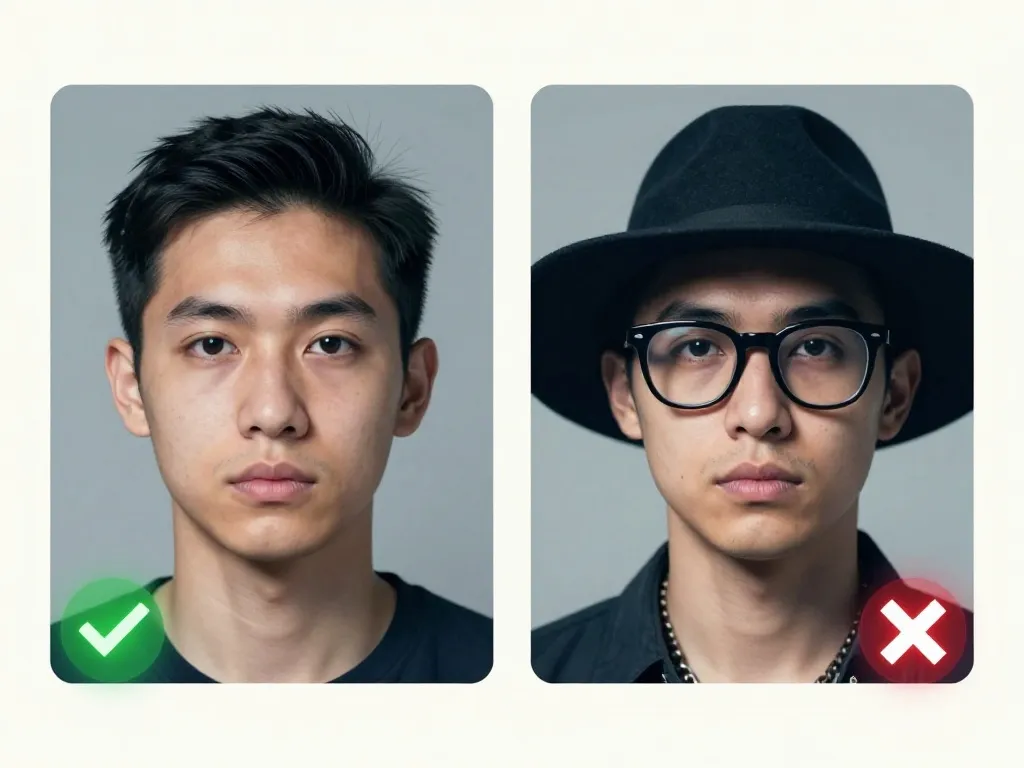
Two portraits side by side with no captions. The left, marked with a green tick, shows a man with no glasses and no hat. The right, marked with a red cross, shows the same man wearing thick black glasses and a black wide-brimmed hat.

Face Visibility

The Nepali measure is coverage rather than millimetres: the face must fill 70–80% of the photo, whether you print 35 mm × 45 mm or the alternative 50 mm × 50 mm square. Too little coverage leaves the face lost in white space; too much crops the crown. Both ears should sit inside that coverage, and the colour image must be borderless with no shadow on the white background behind the head.
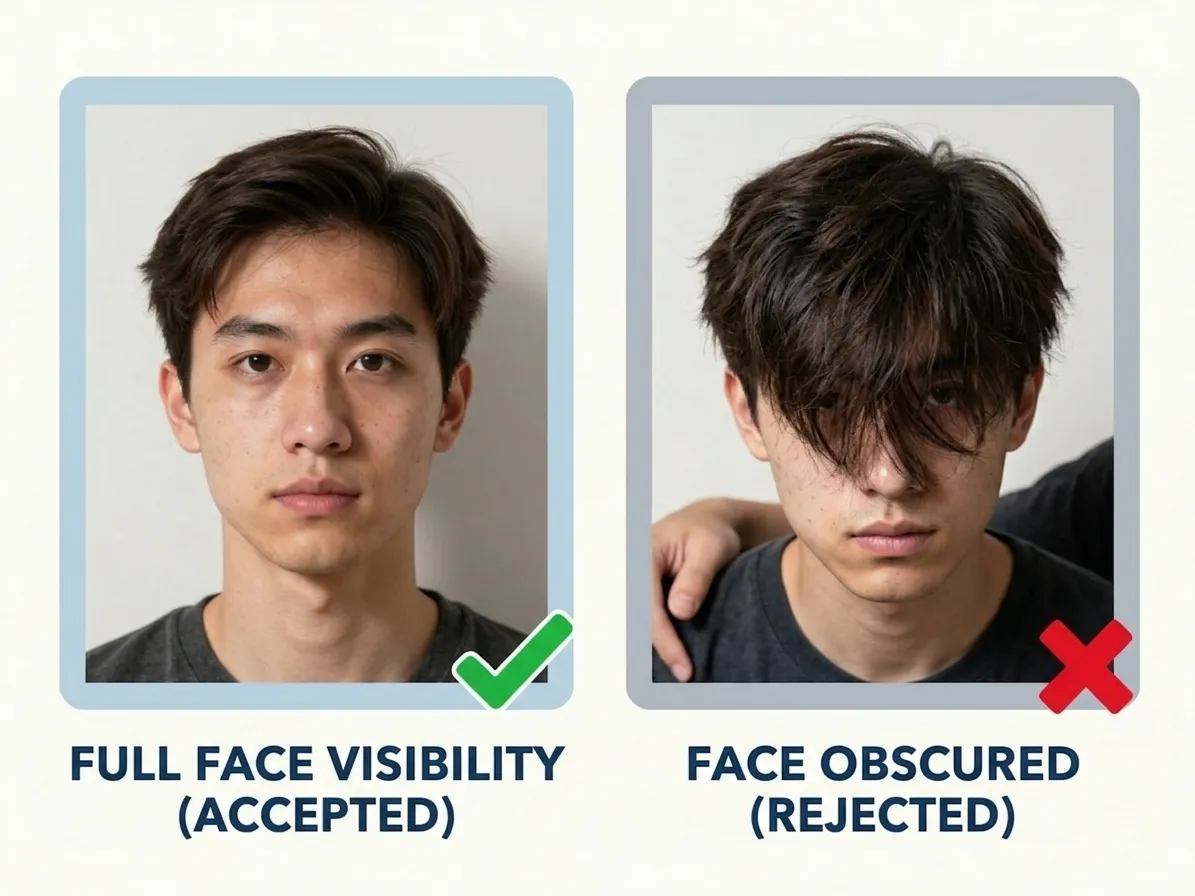
Two portraits side by side. The left, captioned Full face visibility (accepted) and marked with a green tick, shows a face with both edges clear. The right, captioned Face obscured (rejected) and marked with a red cross, shows hair falling across one eye and another person's hand on the shoulder.

Photo Recency

For visa use the Nepali photo must have been taken within the last three months, while the passport rules publish no fixed window. The practical answer is the same for both: do not recycle an older print merely because it is the right size. Take a fresh borderless colour picture when you register the application and keep the digital file, so a reprint never becomes the reason a submission stalls.
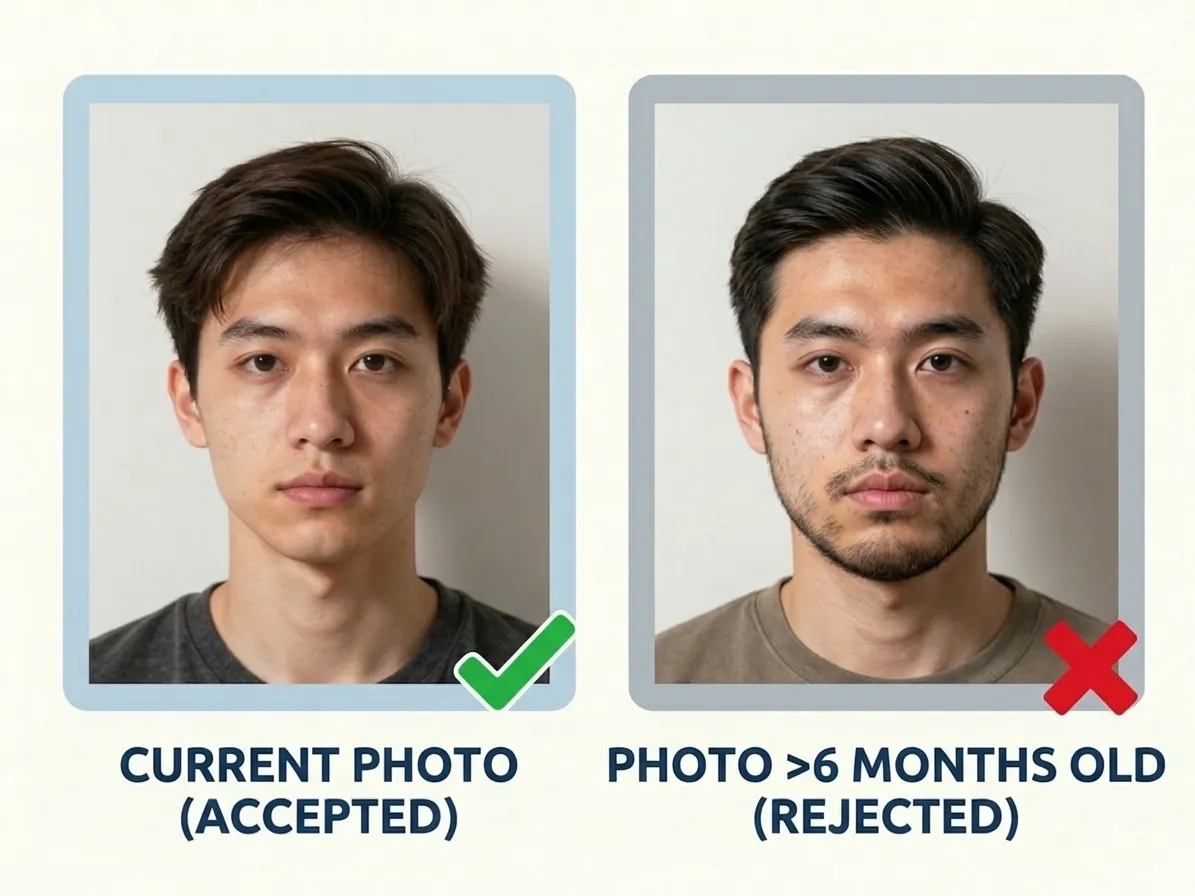
Two portraits side by side. The left, marked with a green tick and captioned as recent, shows a clean-shaven man. The right, marked with a red cross and captioned as more than 6 months old, shows the same man with a beard.

How Many Copies You Get

You need 4 photos for a Nepal passport and 1 photo for a visa. With PicToPassport, you receive a digital file cropped exactly to your chosen size (35 × 45 mm or 50 × 50 mm), ready for upload, plus a print-friendly sheet with multiple copies on one page so you can produce a sharp, borderless set at home or at a photo shop.
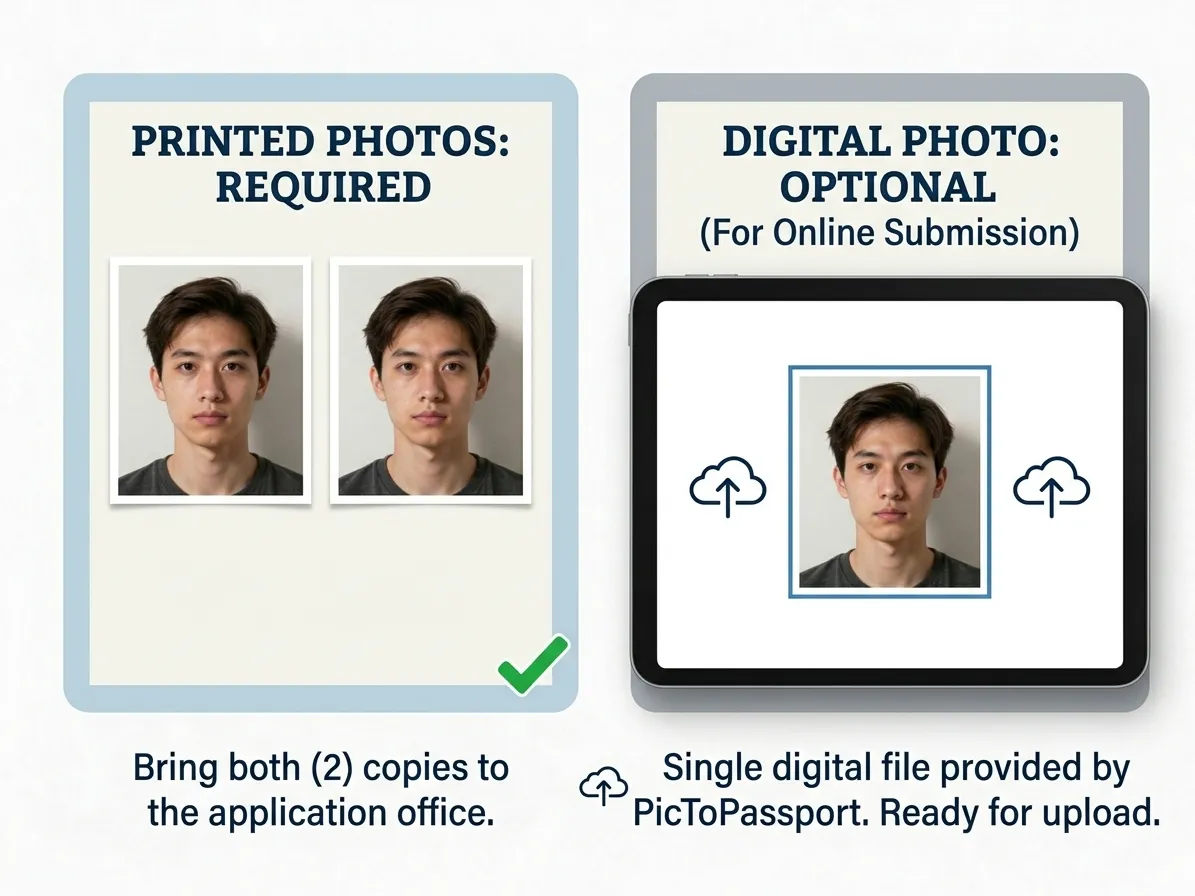
Two panels. The left, captioned Printed: required, shows two identical prints with a green tick, noted as copies to bring to the application office. The right, captioned Digital: optional, shows a tablet displaying the cropped portrait between two upload arrows, for online submission.

Common Mistakes to Avoid

Common reasons for rejection are a white border around the photo, a black-and-white image, a face that covers too little or too much of the frame, shadows on the face or background, or ears hidden by hair. Smiling or a non-neutral expression can also cause issues. Always check the Nepal passport photo requirements before submitting.

If the application wants a format your phone did not save, convert it before you upload: Convert Image Format
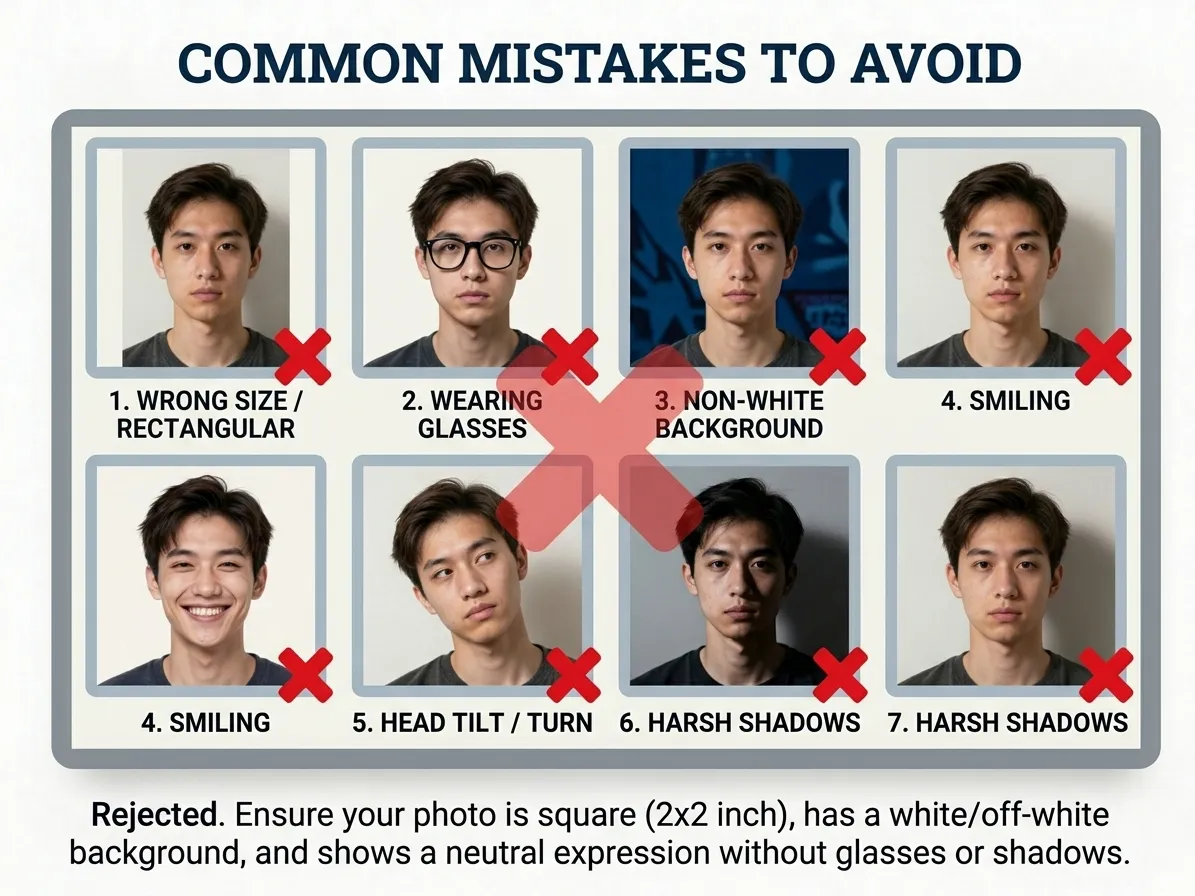
A grid headed Common mistakes to avoid showing eight portraits, each marked with a red cross and labelled wrong size or rectangular, wearing glasses, non-white background, smiling, head tilt or turn, and harsh shadows.

Baby Passport Photos

Nepal is unusually forgiving: a baby’s eyes may be closed, one of the few countries that allows it. Everything else stays standard — white background, no shadows, both ears visible where the pose allows, and the face covering 70–80% of either the 35 mm × 45 mm or the 50 mm × 50 mm frame. Lay the sleeping baby on a plain white sheet, shoot from above, and keep hands and toys out of the picture.

Framing an infant is where most adults go wrong, and this one measures the head for you: Baby Passport Photo Maker
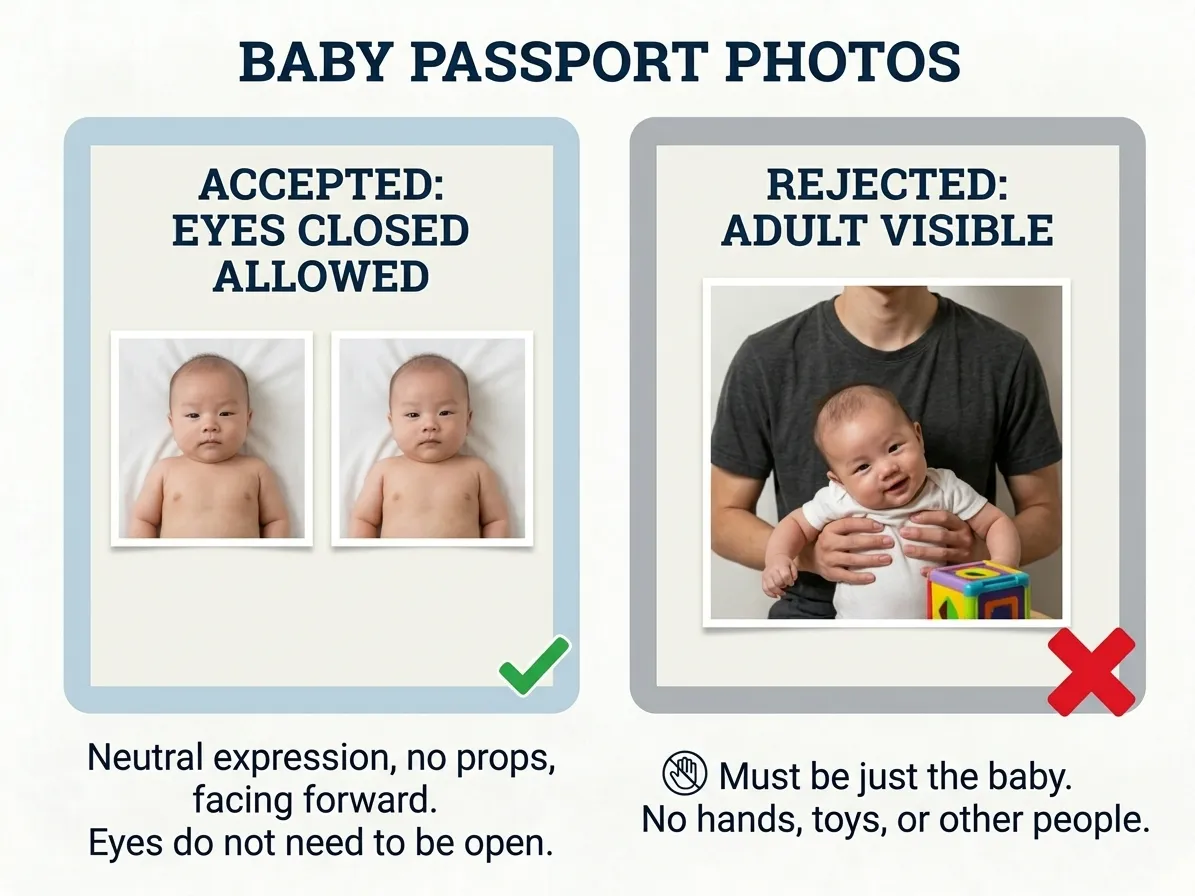
Two panels. The left, marked with a green tick, is captioned Accepted: eyes closed allowed and shows two small prints of a baby lying on a white sheet. The right, marked with a red cross, is captioned Rejected: adult visible and shows an adult holding a baby beside a toy.

Using PicToPassport

Nepali passport photos come in 35 mm × 45 mm or 50 mm × 50 mm, and PicToPassport lets you make either one in the browser at no cost. The background is plain white with no shadow on the face or behind the head, the face covers 70–80% of the photo, and both ears stay visible. You get a borderless colour print, ready for the 4 photos a passport needs or the 1 a visa needs. No upload occurs; the file stays on your device.
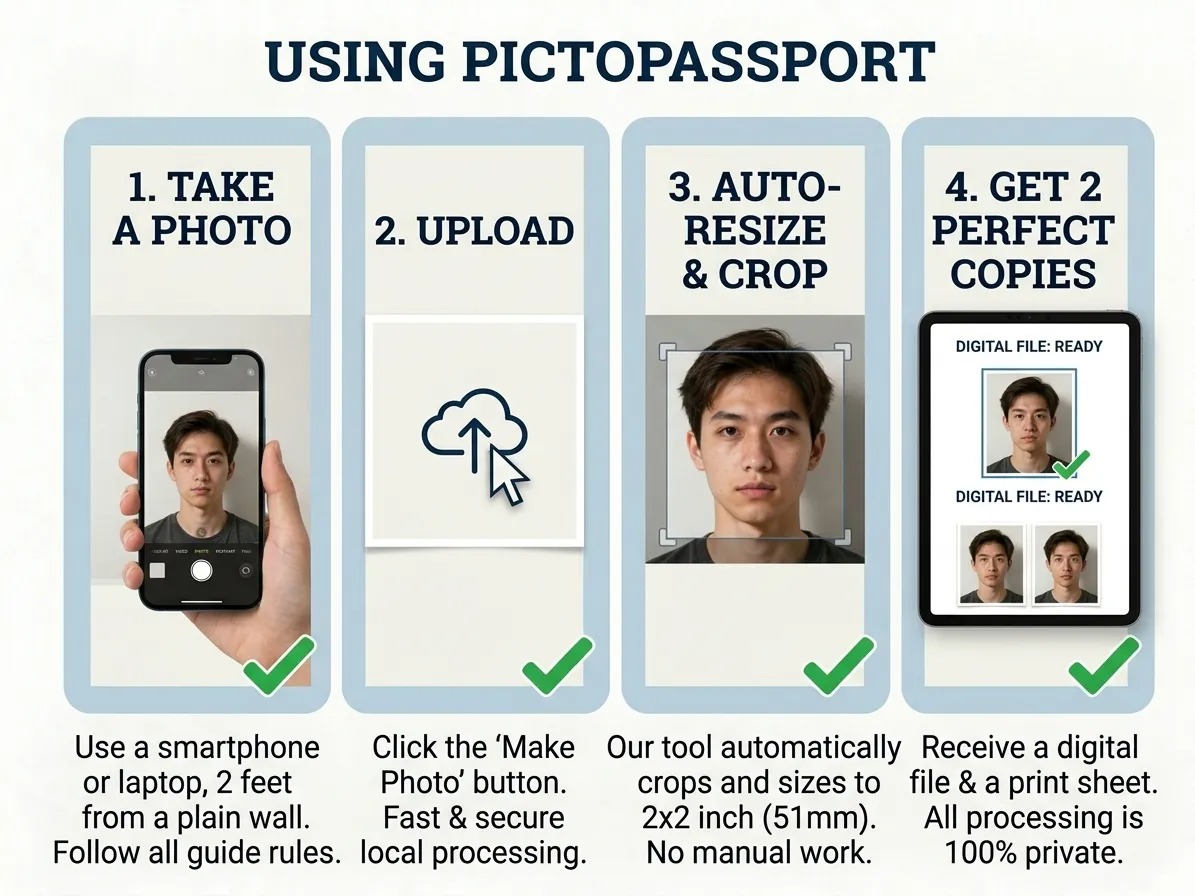
Four numbered panels, each marked with a green tick, showing the sequence: capture with a phone, upload the file, auto-resize and crop to a crop frame, and receive a digital file shown beside two prints.

Get Started in Minutes

The Department of Passports, Nepal adds NPR 7,000 for fast track on a 34-page passport or NPR 10,000 on a 66-page passport; regular service takes 10–30 days from registration, while fast track issues in about 2 working days in Kathmandu. Prepare your photo in the meantime: PicToPassport is free, runs in your browser, and keeps everything private on your device.

Frequently Asked Questions

What is the passport photo size in Nepal in mm and inches?

Nepal accepts 35 × 45mm or 50 × 50mm passport photos — about 1.4 × 1.8 inches or a 2-inch square — with the face covering 70–80% of the image. Visa photos are 35 × 45mm.

How many photos do Nepal passport forms require?

Submit 4 photos with a passport application and 1 photo for a visa.

Which background works for a Nepal passport photo?

A plain white background with no shadows. The print must be borderless and in colour.

Can a baby's eyes be closed in a Nepal passport photo?

Yes — unlike most countries, Nepal allows a baby's eyes to be closed in the passport photo.

What are the Nepal visa photo requirements?

A Nepal visa photo is 35 × 45mm on plain white with no shadow, taken within the last 3 months, and only 1 copy goes in with the application.

100% Private — Your photos never leave your device