

















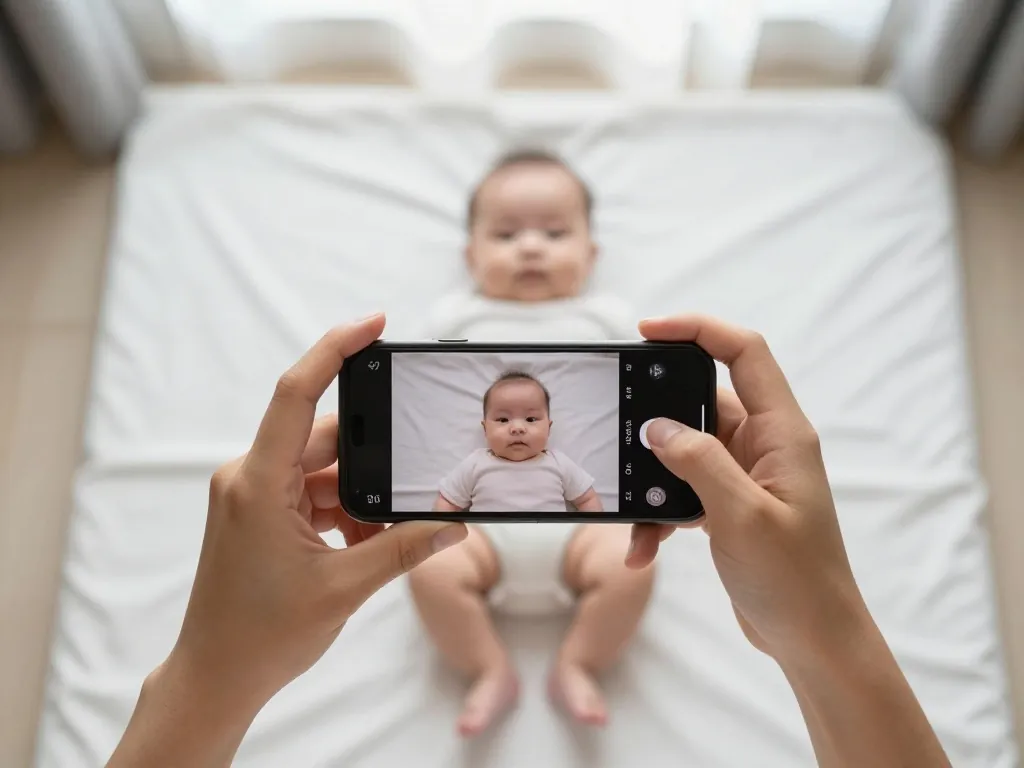
It’s 10 p.m. The baby has finally dozed off, one tiny fist still curled by the ear. You ease the phone into position, hold your breath, and tap the shutter, only to realise their eyes are shut and your thumb is in the corner. If this scene feels familiar, you’re in good company. Millions of parents have wrestled with the humble baby passport photo, and most of the panic is unnecessary.
Why a baby passport photo feels impossible
Babies don’t take direction. They squint, they flail, they fall asleep mid-shot, and they will not “look at the camera and smile.” Add to that the lighting in most homes. A single ceiling bulb throws shadows a passport desk will reject on sight. Then there is the clock, because babies run on their own schedule, not yours.
Passport offices already know this. The standard for an infant is more forgiving than for adults, but only up to a point, and the point where leniency ends is worth knowing before you set up.
What the rules actually require
Most of what circulates about baby photos is wrong. The core requirements are simple:
- Older infants should have eyes open. Newborns are usually accepted with eyes closed.
- Expression: a relaxed, neutral face is fine, and no forced smile is required.
- No hands. You may steady the head from behind, but no fingers, toys, or your own arm may appear anywhere in the frame.
- Background: still must be plain white or light grey, evenly lit, with no shadows cast onto it.
Every one of these rules exists for a single reason: the photo has to be machine-readable, which means a clearly visible face. Face unobstructed, background clean, and most baby photos are accepted.
What accepted photos look like
Picture the target before you set up. Accepted baby passport photos show a calm infant centred in the frame, head straight, eyes (when possible) open and visible, with a soft neutral background. Study a few examples and a pattern emerges: simplicity wins. No chairs, no blankets bunched at the neck, no proud parent’s thumb. The plainer the setup, the higher your odds. For a full side-by-side, see the passport photo requirements for every country.
Removing the struggle
The best baby passport photo comes from removing the struggle, not from waiting for a better behaved baby. Lay your baby on a white sheet or fleece blanket and shoot straight down from above. Gravity keeps the head still and the background naturally plain. Alternatively, buckle them into a car seat and hang a white cloth behind it. Soft, indirect daylight beats a camera flash, which can wash out pale skin and add red-eye; face the baby toward a bright window instead. A plain onesie works better than a busy pattern, and a slightly elevated angle keeps the chin from disappearing into the chest. Skip the cute hat. Headwear is almost never allowed, even for newborns. Aim for a time when they’re fed, calm, and freshly napped; a cranky, hungry baby makes every frame a gamble.
The four rejections we hear about most
A parent’s hand cradling the head. A shadow pooled behind the ear. A photo taken from an angle that tilts the face. A photo taken too close. All four are easy to dodge, and each one is a reason to reshoot.
The fix is almost always the same: flatten the setup, soften the light, and shoot from directly above so the face stays square to the lens. When in doubt, check the official guidance for your destination. The UK passport photo rules explain exactly what gets rejected.
Country-specific sizes & requirements
Every destination sets its own dimensions and background rules. The table below covers baby and infant passport photos across all 34 countries we cover.
| Country | Passport Size | Background | Expression |
|---|---|---|---|
| Australia | 35 × 45mm | Plain white, cream, or pale blue background | Neutral expression, mouth closed, eyes open |
| Bangladesh | 45mm × 55mm | Baby (under 6): 3R size, gray background | Looking straight at the camera |
| Brazil | 50mm × 70mm | White background required | Looking straight at the camera |
| Canada | 50mm × 70mm | White or light-coloured background | Looking straight at the camera |
| China | 33mm × 48mm | White background | Neutral expression, mouth closed |
| France | 35mm × 45mm | — | Neutral expression, mouth closed |
| Germany | 35mm × 45mm | — | Neutral expression, mouth closed |
| India | 35mm × 45mm | White background | Neutral expression, mouth closed |
| Indonesia | 35mm × 45mm | White background | Neutral expression, mouth closed |
| Ireland | 35mm × 45mm (max 38 × 50mm) | Light colour background (white or pale grey) | Neutral expression, mouth closed |
| Italy | 35mm × 45mm | — | — |
| Japan | 35mm × 45mm | White or off-white background | Neutral or natural expression |
| Kuwait | 40mm × 60mm | Sky-blue background | Plain expression, mouth closed |
| Malaysia | 35mm × 50mm | White background (off-white for visa) | Natural expression, eyes open |
| Mexico | 35mm × 45mm | White or light-coloured uniform background | Neutral expression, no teeth showing |
| Nepal | 35mm × 45mm or 50mm × 50mm | White background | Neutral expression, eyes open |
| Netherlands | 35mm × 45mm | Light grey, pale blue, or white background | Neutral expression, mouth closed |
| New Zealand | 35mm × 45mm | Light-coloured background (NOT white) | Neutral expression, not smiling or frowning |
| Nigeria | 35mm × 45mm | White background, no patterns or shadows | Neutral expression, mouth closed, eyes open |
| Pakistan | 35mm × 45mm | White background, no patterns or shadows | Neutral or slight smile, mouth closed |
| Philippines | 35mm × 45mm | White background, no patterns or shadows | Neutral expression, mouth closed |
| Poland | 35mm × 45mm | White background, no patterns or shadows | Neutral expression, mouth shut, teeth not visible |
| Qatar | 38mm × 48mm | Grey background for passport, light-coloured for visa | Neutral expression, mouth closed |
| Saudi Arabia | 50mm × 50mm (square) | White background, no patterns or shadows | — |
| Singapore | 35mm × 45mm | White background, no patterns or shadows | — |
| South Africa | 35mm × 45mm | Light-grey or cream background (NOT white) | Looking directly at camera, neutral expression |
| South Korea | 35mm × 45mm | White background (passport); pale colour or white (visa) | — |
| Spain | 26mm × 32mm | White background (both passport and visa) | Neutral, non-smiling expression (visa) |
| Sri Lanka | 35mm × 45mm | White background (both passport and visa) | — |
| Thailand | 35mm × 45mm | White background (both passport and visa) | Neutral expression, mouth closed |
| United Arab Emirates | 40mm × 60mm | White background (all document types) | Neutral expression, mouth closed |
| United Kingdom | 35mm × 45mm | Light grey or cream background | Looking straight at the camera |
| United States | 2 × 2 inches | White or off-white background (NOT pure white #FFFFFF) | Neutral expression, mouth closed |
| Vietnam | 40mm × 60mm | White background (both passport and visa) | Neutral expression, mouth closed |
Sizes are for standard passport photos, which also apply to babies unless the country sets a separate infant format (for example, Bangladesh requires a 3R photo on a grey background for children under 6).
For the official, legally binding requirements, always confirm with your destination’s government passport authority. As a reference, the U.S. State Department passport photo guidelines cover infant and baby photo rules in detail.
Keeping perspective
A compliant baby passport photo is less about a perfect infant and more about a plain background and a visible face. Requirements and rules vary a little by country, but the infant-friendly spirit is the same everywhere. Take a few tries, keep it simple, and you’ll have an accepted photo faster than the baby wakes up.
Frequently Asked Questions
How do I take a passport photo for my baby?
Lay your baby on a plain white sheet or fleece blanket and take the photo from directly above, or buckle them into a car seat with a white cloth behind. Use soft daylight from a window, keep their face square to the lens, and make sure no hands or toys appear in the frame. A calm, recently fed baby gives the best result.
Does my 2 month old baby need a passport?
Yes. Even newborns need their own passport for international travel, and that means a passport photo. There are no age exemptions, so a 2 month old baby must have a compliant photo showing the face clearly, with eyes open preferred. Newborns are usually accepted with eyes closed.
How strict are passport photos for babies?
Authorities are more lenient for infants than adults, especially on eye contact and expression. But the basics are still enforced: a plain background, even lighting, a centred face, and no visible hands or toys. Get those right and most baby photos are accepted without issue.
What are common baby passport photo fails?
The usual rejections are a parent's hand cradling the head, shadows behind the ears or neck, a tilted or angled face, and busy or coloured backgrounds. A photo taken too close, or one where the baby is laughing with mouth open, also gets refused. A flat, simple setup avoids all of these.
Where to get baby passport photos?
You can take them at home with a phone and good natural light, visit a pharmacy or photo studio, or use a passport photo service that formats the shot to the correct size. Wherever you go, the photo must still meet the official background, size, and expression rules for your destination.
What should baby wear for passport photo?
Dress your baby in a plain, light-coloured onesie without hoods, hats, or busy patterns. Headwear is not allowed unless required for religious reasons, and the chin should stay visible. Avoid anything that blends into the white background or casts shadows on the face.
Can baby smile in passport photo?
A small, natural smile is sometimes accepted, but most countries prefer a neutral expression with a closed mouth. Big grins or open mouths can cause rejection, so it is safest to aim for a calm, neutral face, especially for older babies who can hold a pose.