


















Japan's passport photo rules are precise — they specify not just the overall size but the exact height of your head and the gap from the top of your head to the edge of the photo. Japanese applications also accept either colour or black-and-white images. This guide explains the official requirements and how PicToPassport helps you produce a compliant photo for free, completely in your browser.
Why Japanese passport photos fail the first check
Japanese passport and visa applications are checked carefully against exact measurements. If your head is outside the 32–36 mm range or the margin above your head is wrong, the photo can be rejected. School photos and grainy digital camera images may also be turned away. Getting the framing right the first time avoids delays at the ward office or embassy.
Japanese passport photo size and framing
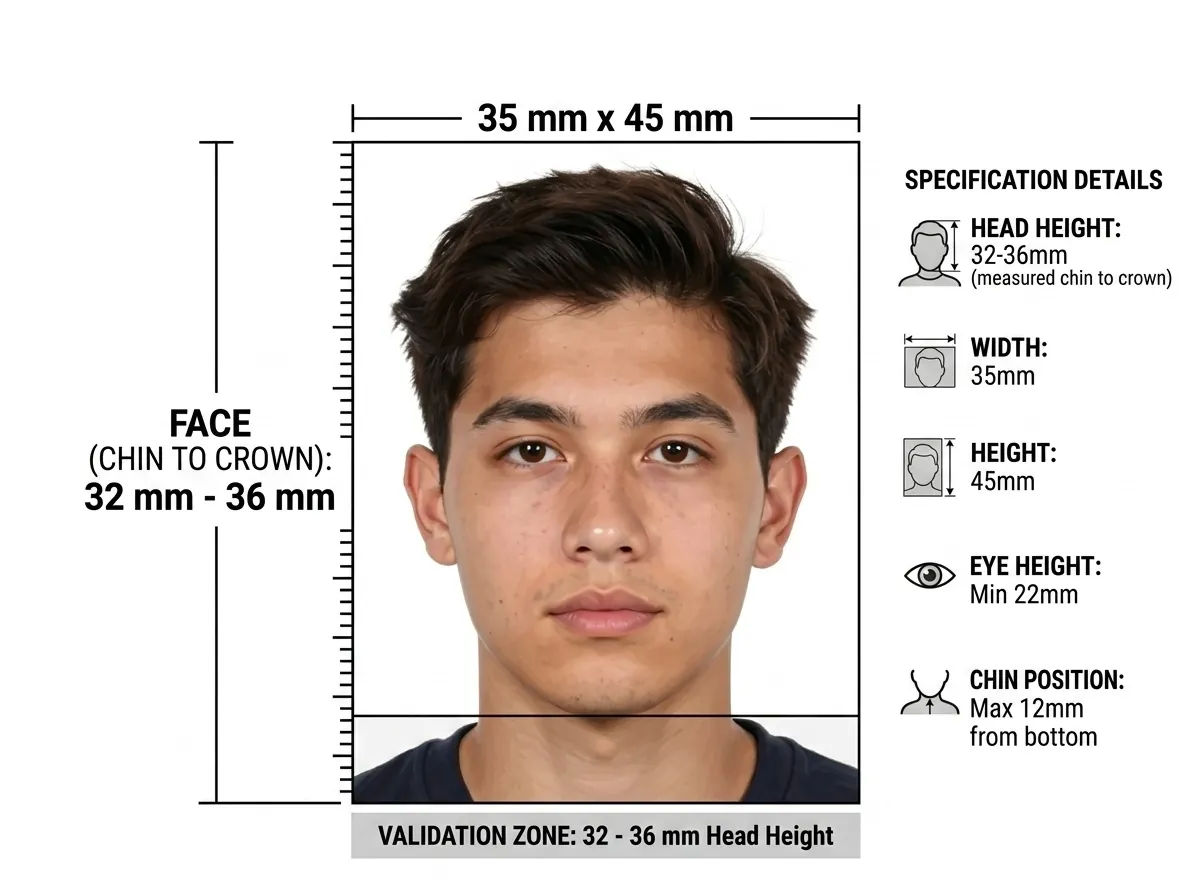
The official Japanese passport photo size is 35 mm wide × 45 mm tall. Visa photos use the same dimensions. A single photo is required for both. The head height must be 32–36 mm, and the distance from the top of the head to the top edge of the photo should be 2–6 mm. PicToPassport crops to these exact measurements automatically. Always verify with the official Ministry of Foreign Affairs before submitting.
If you are moving between two sizes, resize rather than crop and hope: Photo Resizer
Even lighting without facial shadows in Japan
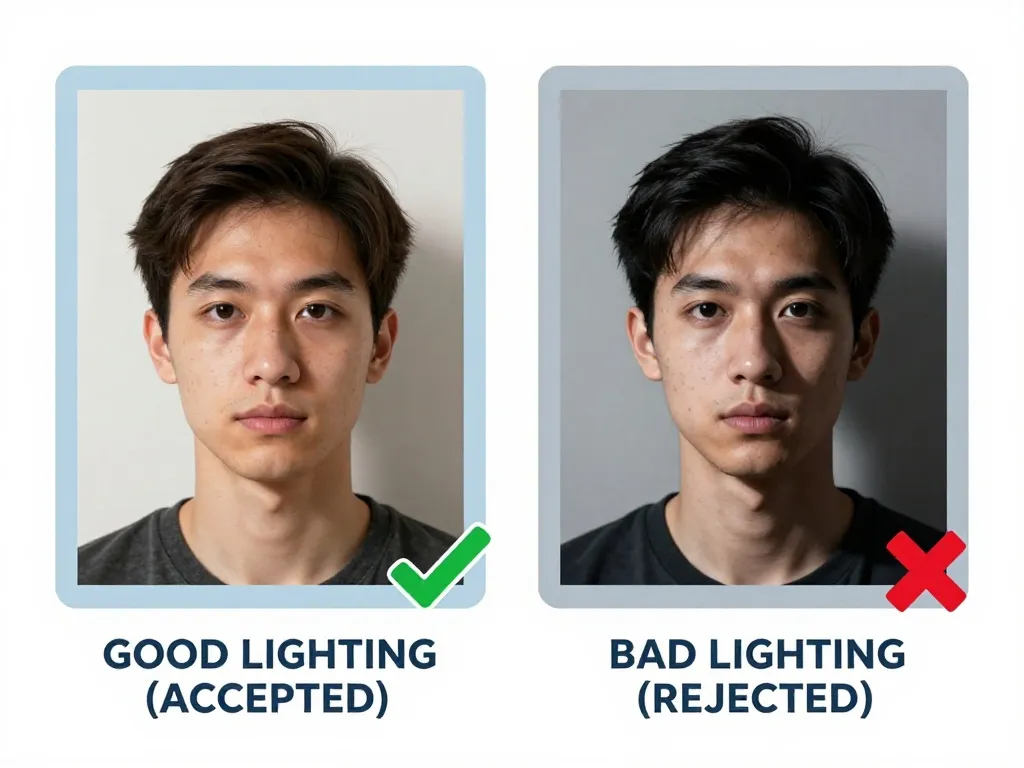
The background must be white or off-white. Lighting should be even and natural, without harsh shadows on the face or the background. Because grainy or low-quality digital camera photos may be rejected, aim for a sharp, well-lit image. A plain wall or a photo backdrop in daylight works well.
Shooting somewhere you do not control? Cut the original backdrop out afterwards: Background Eraser
Japanese expressions stay neutral or natural
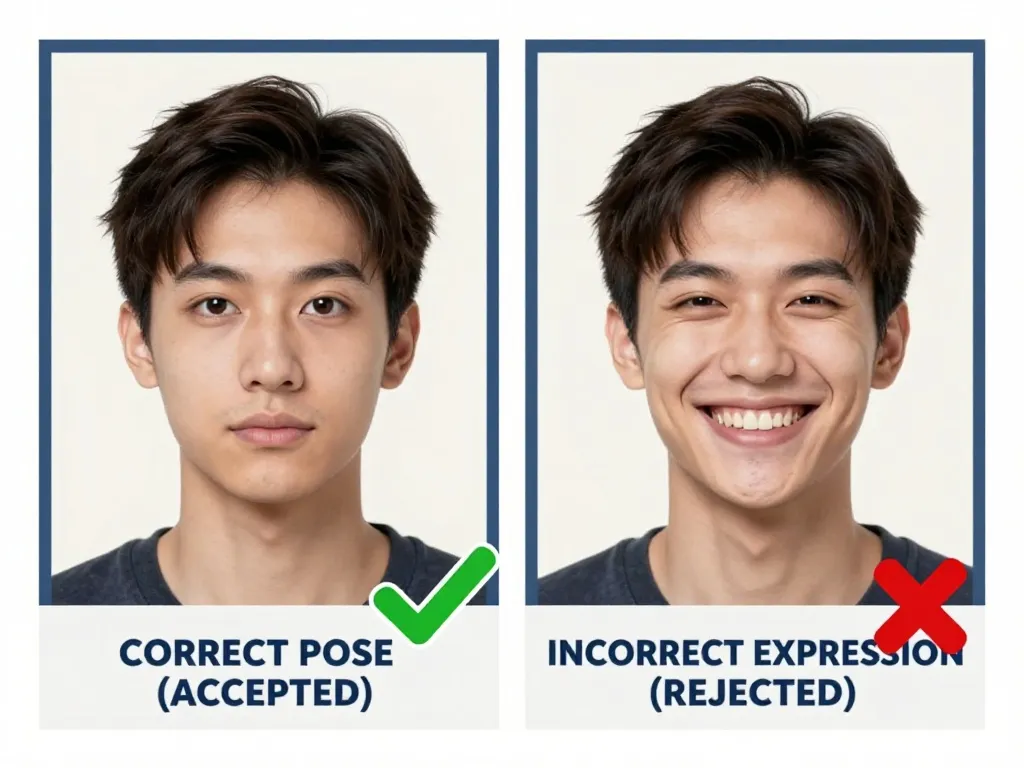
Japan accepts either a neutral or a natural expression, so a relaxed, unhurried look is fine provided the eyes stay open and the head faces the lens square. What is not tolerated is anything covering the face: hats, masks and sunglasses are all prohibited, and everyday spectacles must not throw a reflection across the eyes. Keep the head level and still — the photograph is read for identity, not for personality.
Can you wear glasses in a Japanese passport photo?
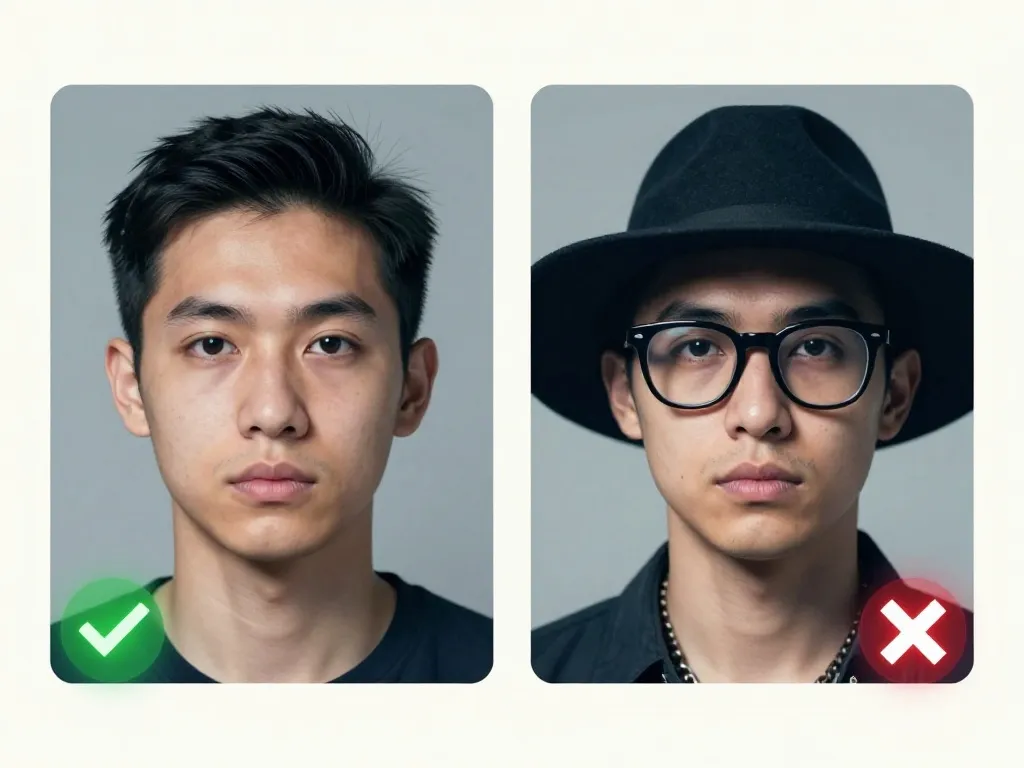
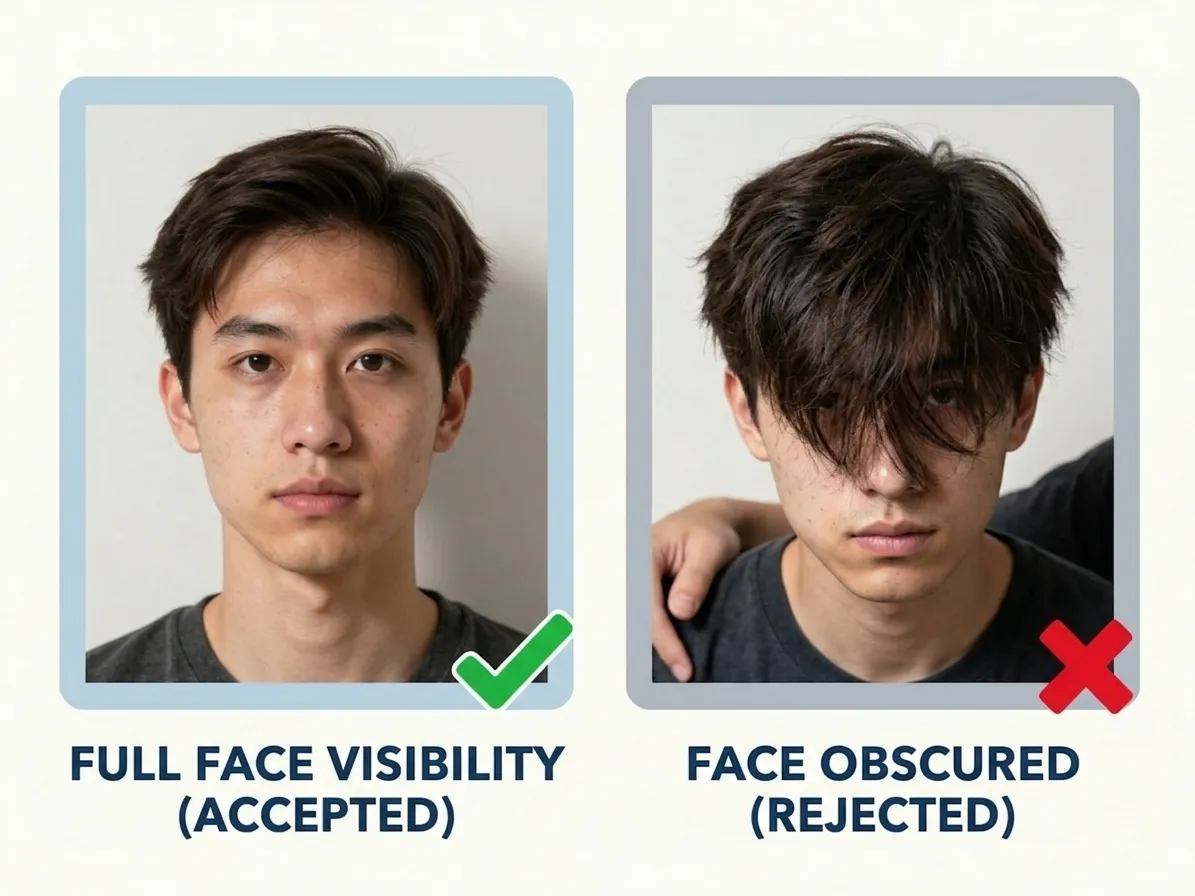
Hats, masks, and sunglasses are not allowed. Everyday prescription glasses may be worn if they do not cause reflections and the eyes remain clearly visible, but removing them is the safest option. Head coverings are only permissible for religious reasons, and the full face must stay visible. Avoid accessories that obscure your features.
Face height and spacing in a Japanese passport photo
Japanese measurements are unusually explicit. Head height must fall between 32 mm and 36 mm, with 2 mm to 6 mm between the top of the hair and the top edge of the 35 mm × 45 mm print. Measure before you print: a head at 30 mm is undersized, one at 38 mm pushes the crown off the sheet. Even lighting keeps those margins readable, with no shadow cast onto the background.
Japanese passports need a photo taken within 6 months
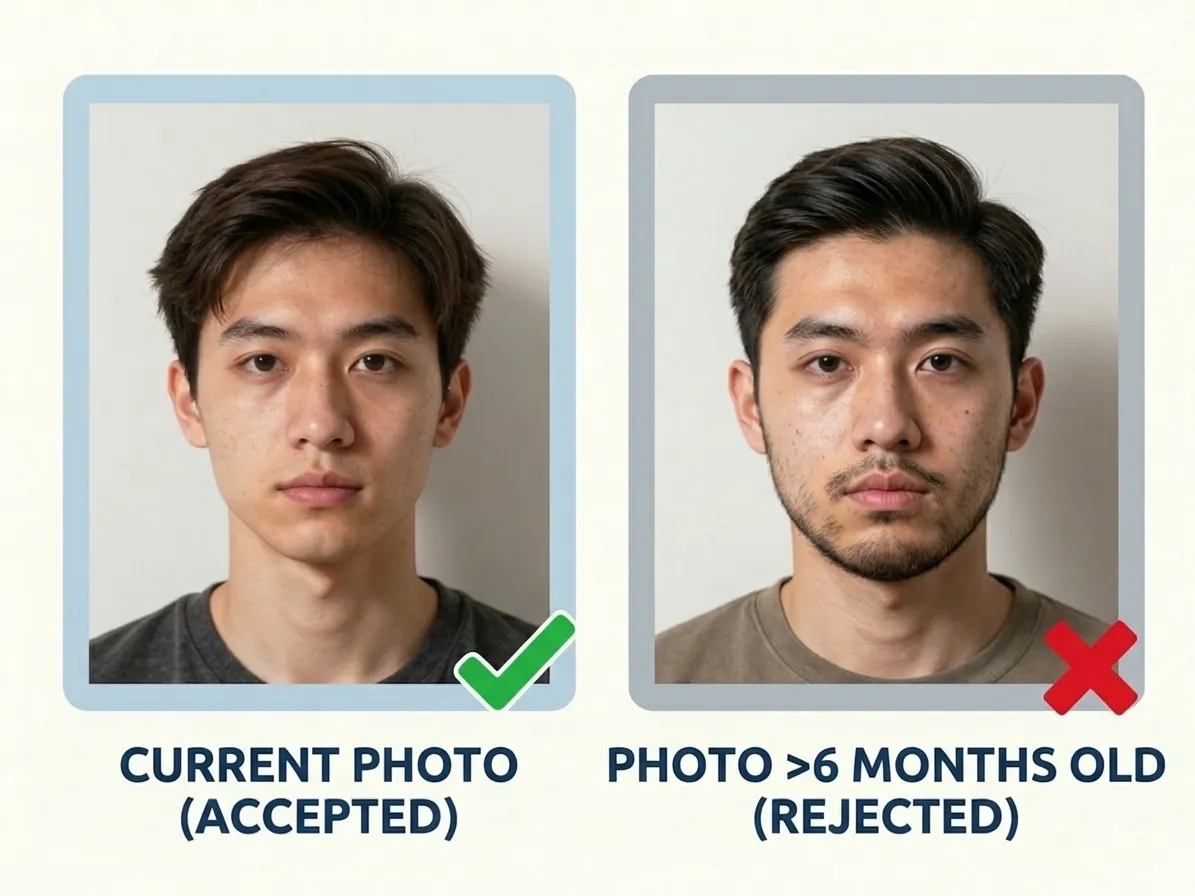
Your photograph must have been taken within the last six months. That window comfortably covers a normal haircut cycle, but it rules out the old monochrome print kept for emergencies. Japan accepts colour or black-and-white pictures, which tempts people to rescan an archived photo — resist it. Shoot again, because the six-month rule is judged against the face standing at the counter on application day.
How many copies? Just one for a Japanese passport
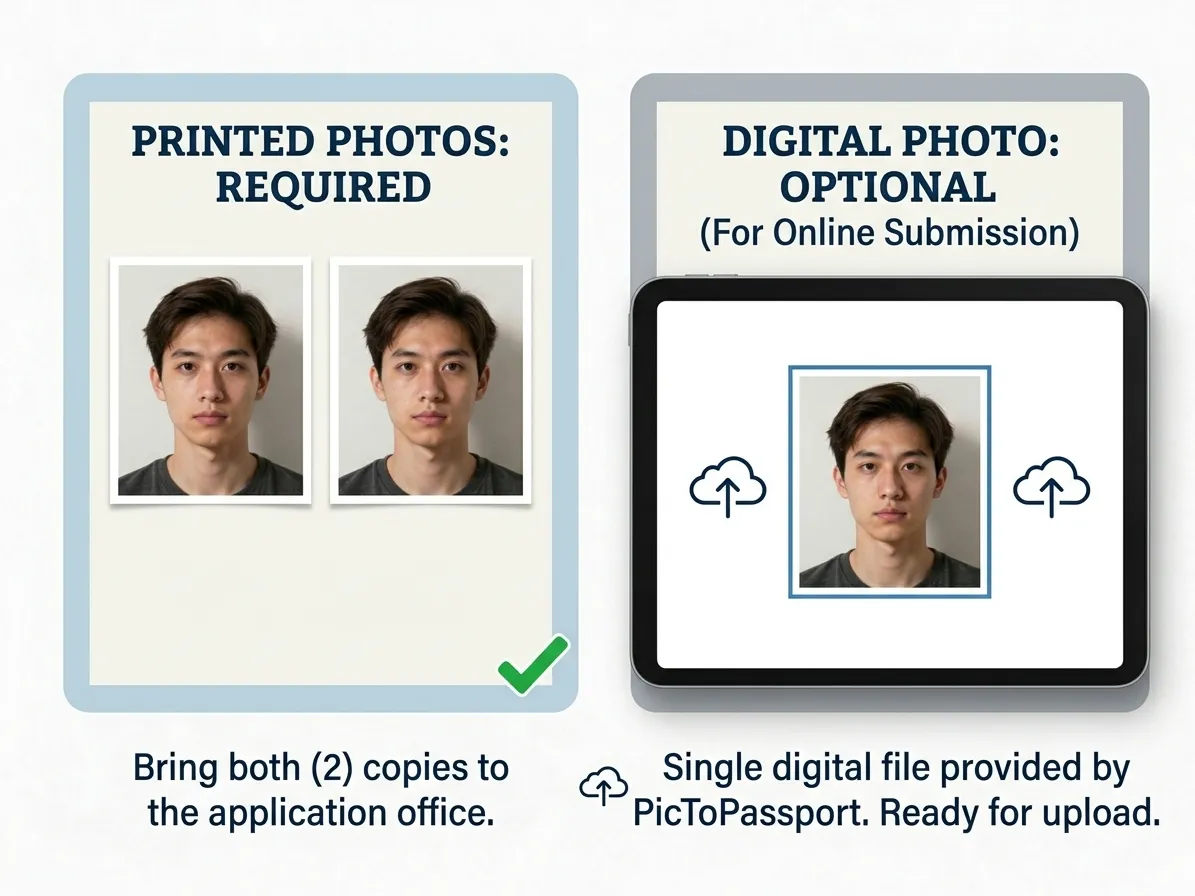
Only 1 photo is required for a Japanese passport or visa application. With PicToPassport, you receive a digital file sized exactly to 35 × 45 mm, ready for upload, plus a print-friendly layout so you can produce a sharp, studio-quality print at home or at a photo shop. The digital output avoids the grainy quality that can lead to rejection.
A photo shop charges for the layout as well as the ink, so build the sheet first: 4x6 Passport Photo Print Sheet
Common mistakes Japanese applicants make
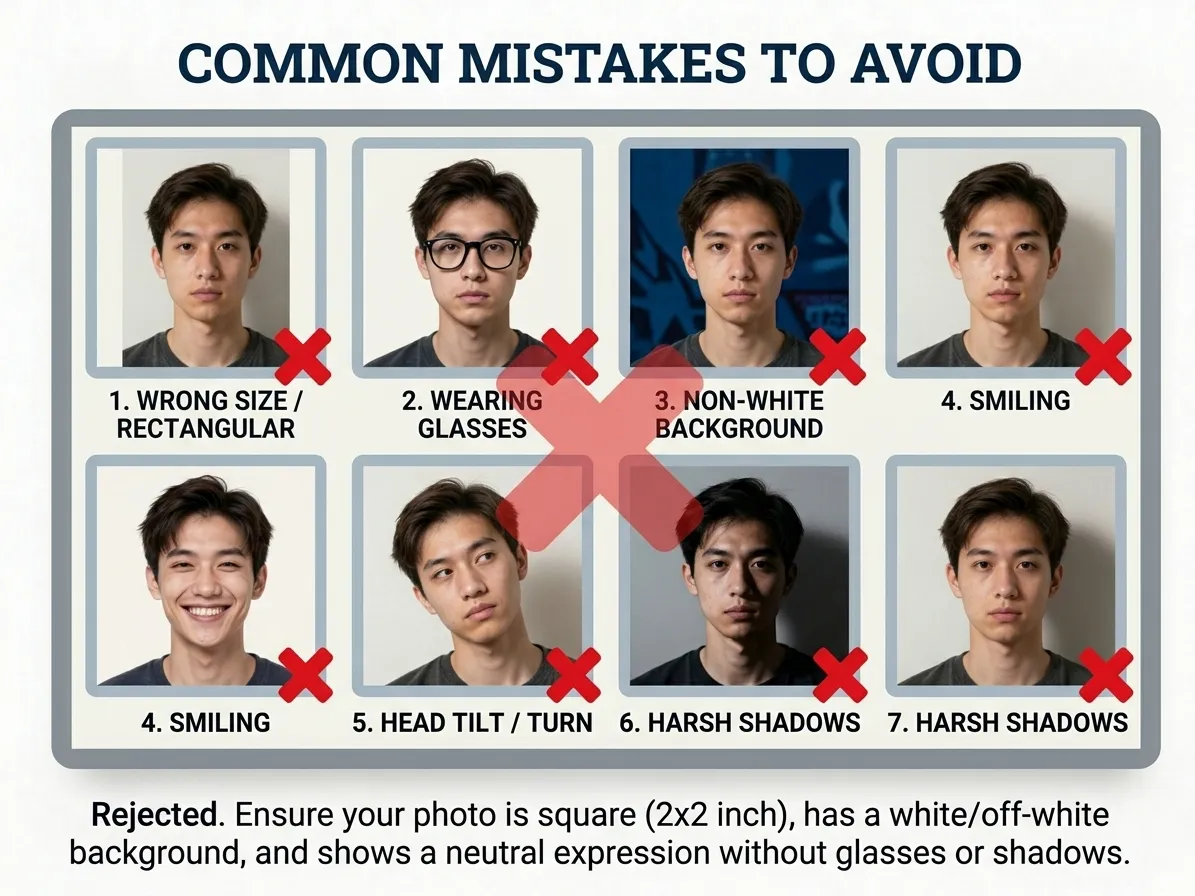
Common reasons for rejection include a head outside the 32–36 mm range, the wrong gap above the head, wearing a hat or sunglasses, or submitting a school photo. Grainy digital camera images are also risky. Avoid shadows on the background and make sure the photo is recent and sharp before you submit it.
Japanese newborn photo basics
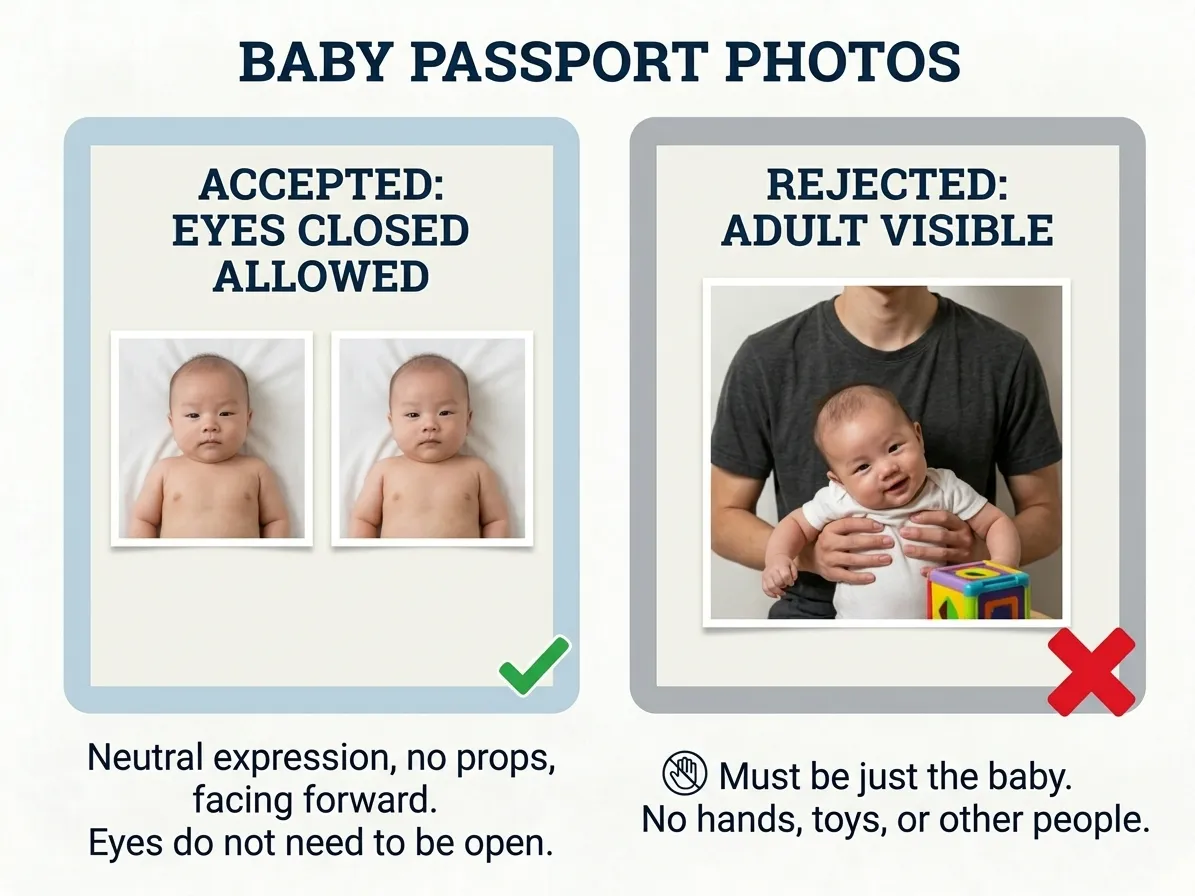
No infant exemption is published in Japan, so a baby is framed to the adult spec: 35 mm × 45 mm, white or off-white background, and the same 32 mm – 36 mm head band with 2 mm – 6 mm above it. Lay the child on a plain sheet, shoot from directly above, and check the crown before you print. Keep the face uncovered — no pacifier, no steadying hand inside the frame.
PicToPassport and Japanese passport standards
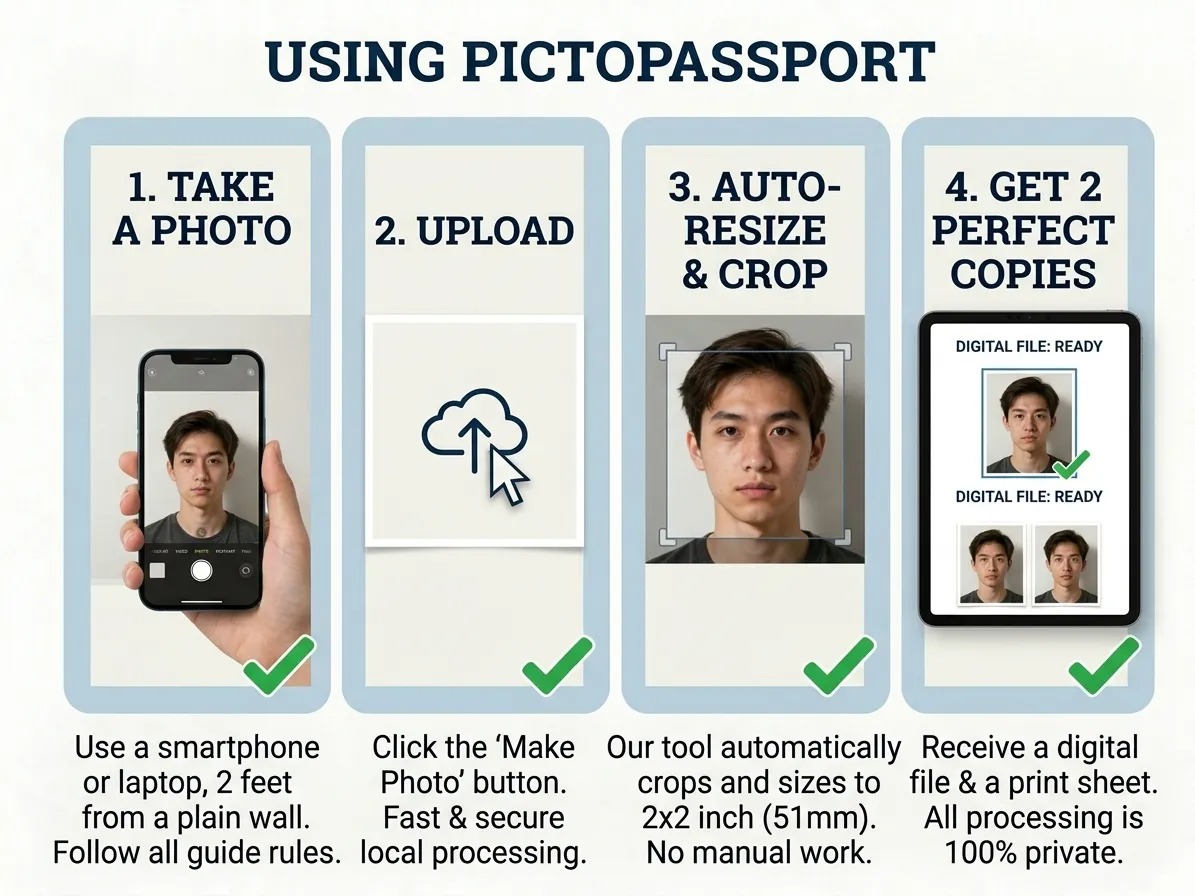
Japan uses one frame for passport and visa, 35 mm × 45 mm, and PicToPassport crops to it in seconds while staying free and browser-based. It applies a white or off-white background with even light and no facial shadows, keeps the head at 32 mm – 36 mm with 2 mm – 6 mm of space above, and returns the 1 photo a passport application needs. The result is print-ready and stays on your own device, with no upload.
Make a Japanese passport photo at home
The Ministry of Foreign Affairs of Japan charges ¥8,900 online or ¥9,300 at a counter for a 10-year adult passport, from 1 Jul 2026; expect about 2 weeks normally, or 3 weeks to 1 month during the early-July congestion. Make the photo while the timing is clear: PicToPassport is free, browser-based, and private, with nothing leaving your device.

