


















China's passport and visa photo rules are among the most detailed in the world, covering everything from head width to the finish of the paper. The Exit-Administration Bureau checks every detail, and even small issues like a visible shadow or jewellery can mean a rejected application. This guide walks you through the official requirements and shows how PicToPassport helps you create a compliant photo for free, entirely in your browser.
Why China passport photos get rejected
Chinese passport applications are rejected most often because of photo issues — wrong dimensions, a non-white background, or shadows on the face. Because the rules specify exact head width and height in millimetres, even a slightly off-centre crop can cause problems. Sorting out the details before you submit saves you time and the hassle of starting over.
Official Photo Size
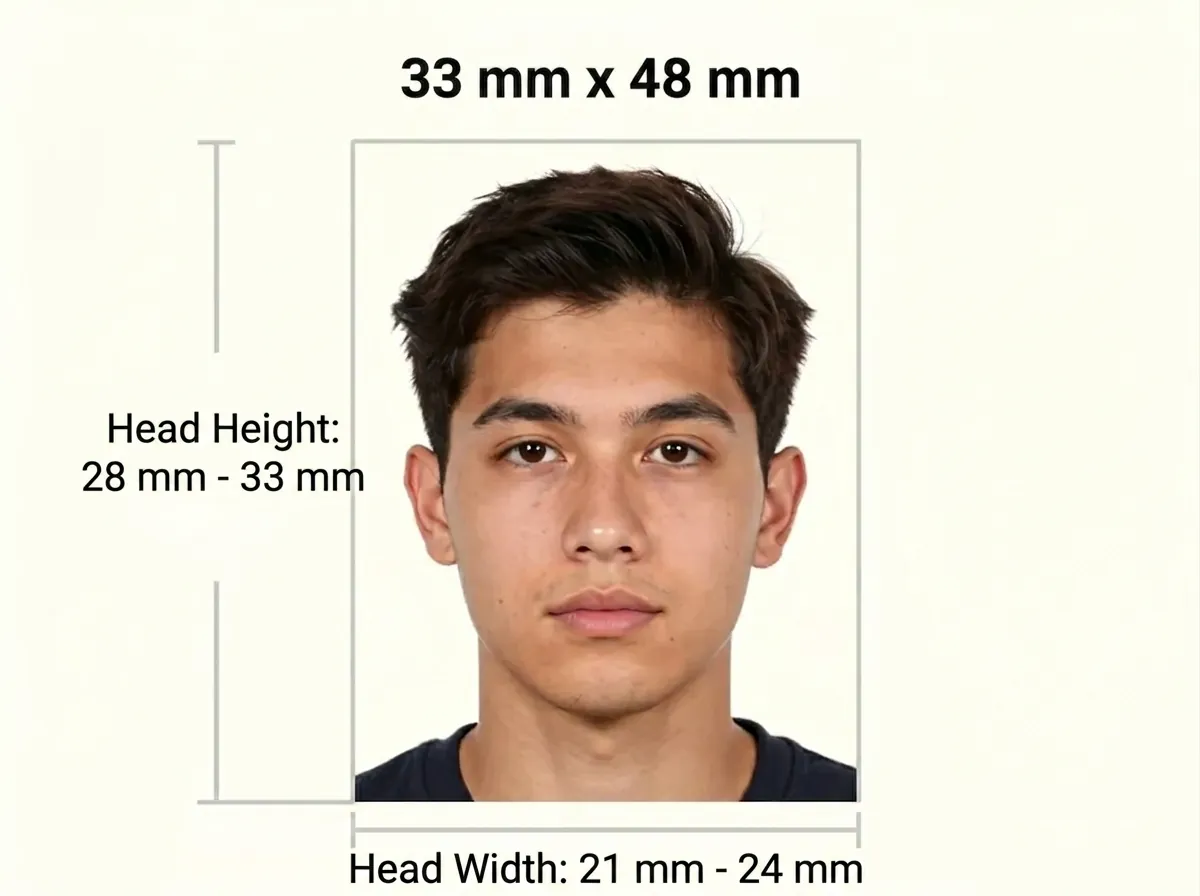
The required China passport photo size is 33 mm wide × 48 mm tall. The head height must measure between 28 mm and 33 mm (chin to crown), and the head width must be between 21 mm and 24 mm. As a worked example, at 300 dpi a 33 mm × 48 mm print comes to about 390 × 567 pixels — ask the photo shop for a 300 dpi print, or resize the file to 390 × 567 px before uploading. Visa photos use the same dimensions but require only 2 copies instead of 4. Always verify with the official Exit-Administration Bureau before submitting.
A phone photo almost never comes out at the right dimensions, so scale it to the sheet: Photo Resizer
Background and Lighting
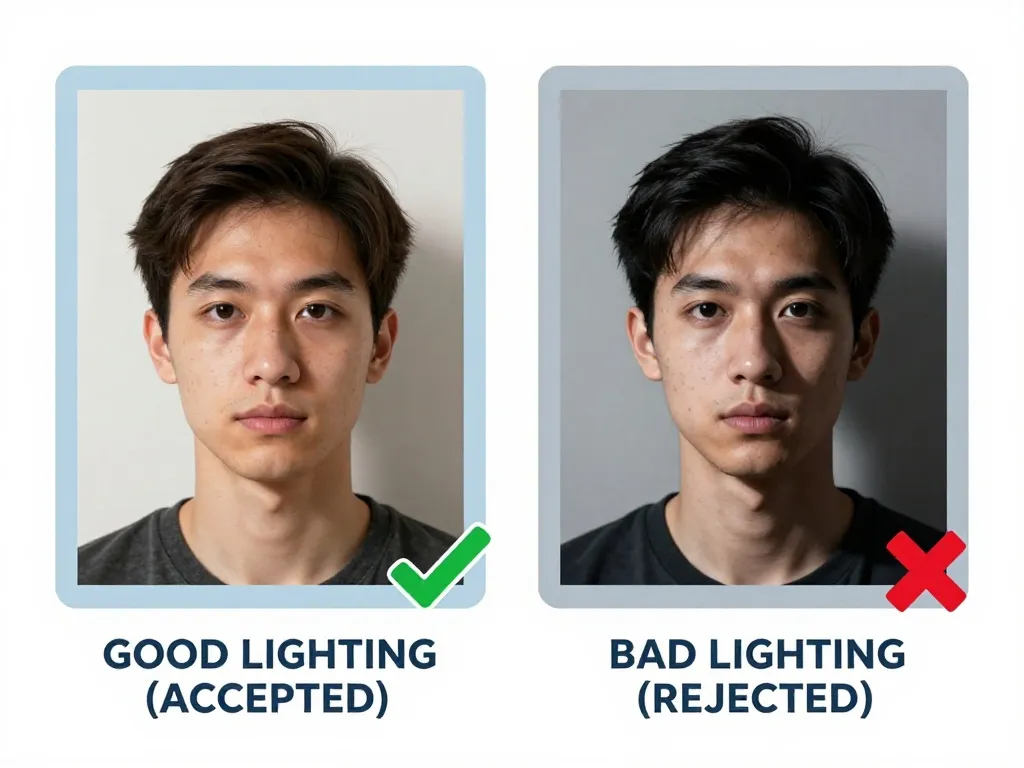
The background must be plain white with no patterns, textures, or objects. Applicants with white or grey hair may use a light blue background instead. Lighting must be uniform across the face with no shadows, glare, or flash reflections. Natural daylight from a window works well, but avoid direct sunlight that creates harsh shadows behind the ears or on the background.
Expression and Pose
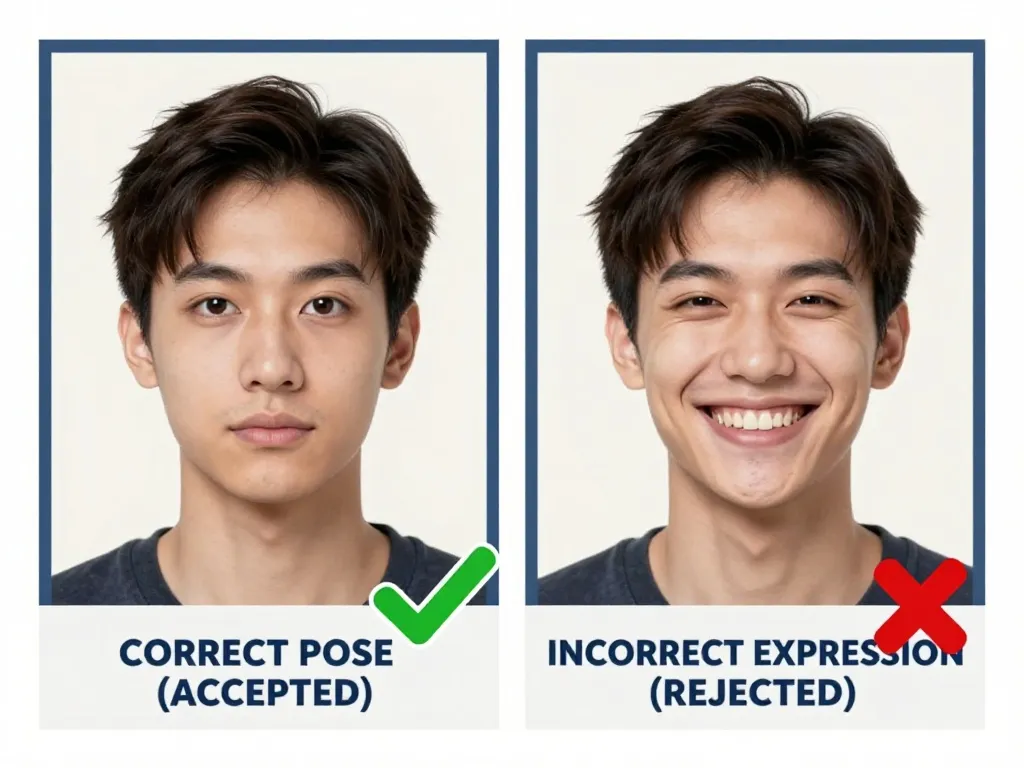
Chinese passport photos are specified down to the ears: neutral expression, mouth closed, both ears visible, and no hair crossing the forehead. Look straight at the camera with your head square to the lens. Jewellery is not permitted at all, so remove necklaces, earrings and visible piercings first. Glasses are acceptable only when they produce no glare and no distortion of the eyes — tinted lenses are refused outright, and the clothing must not match the background.
Glasses and Accessories
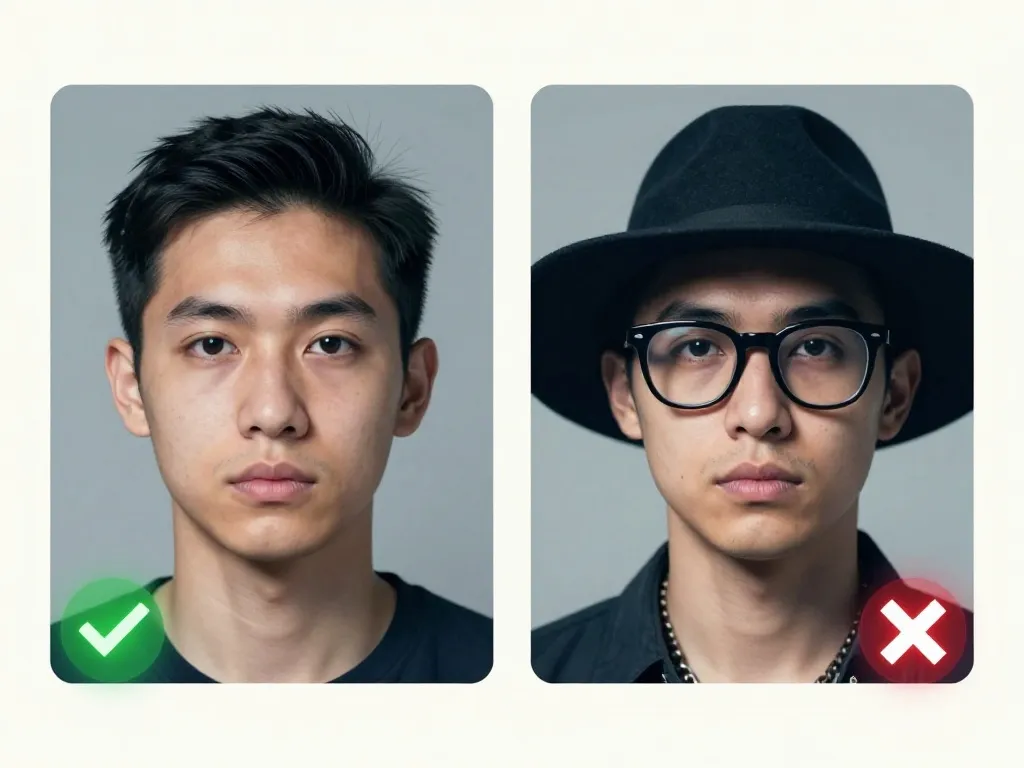
Glasses should be removed if they reflect light or distort the eyes. Tinted lenses are not permitted. Religious head coverings are allowed only if they do not obscure any facial features. Hearing aids and similar devices are permitted. Jewellery is strictly not allowed — remove all necklaces, earrings, and visible accessories before the photo. The clothing must not match the background colour.
Face Visibility
Two measurements decide a Chinese application. Inside the 33 mm × 48 mm print, head height must be 28 mm to 33 mm and head width 21 mm to 24 mm — width is checked as well as height, which is unusual. An examiner's first look is usually the ears: both must show. Hair covering the forehead, a three-quarter turn or a head cropped too tightly fails before the millimetres are even read.
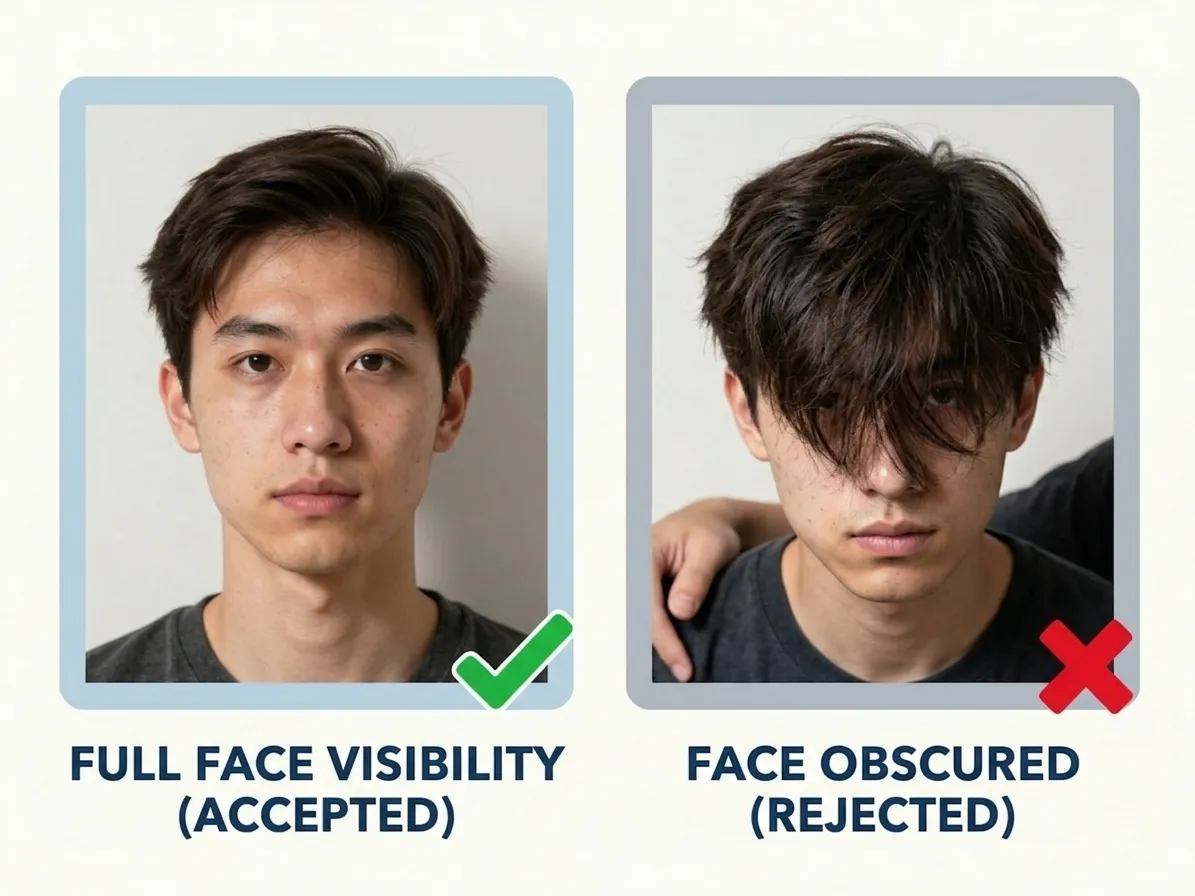
Photo Recency
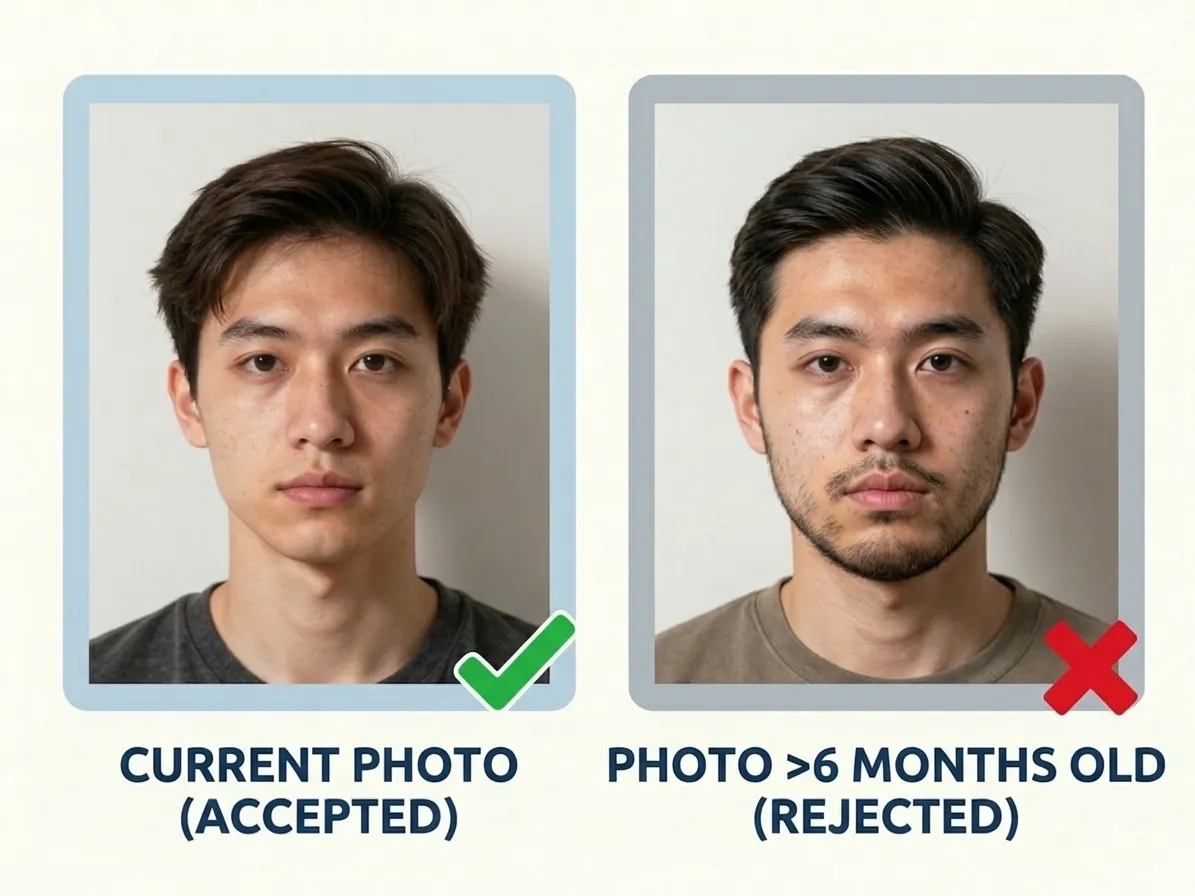
China requires the photo to have been taken within the last six months, printed on glossy photographic paper. The rule bites harder here than elsewhere because the head dimensions are read numerically: a photo taken before a hairstyle change can move the hairline and push measured head height outside the 28 mm to 33 mm band. Reusing an older print therefore risks failing on measurement, not just on likeness. Shoot against white and print four copies from the same session.
How Many Copies You Get
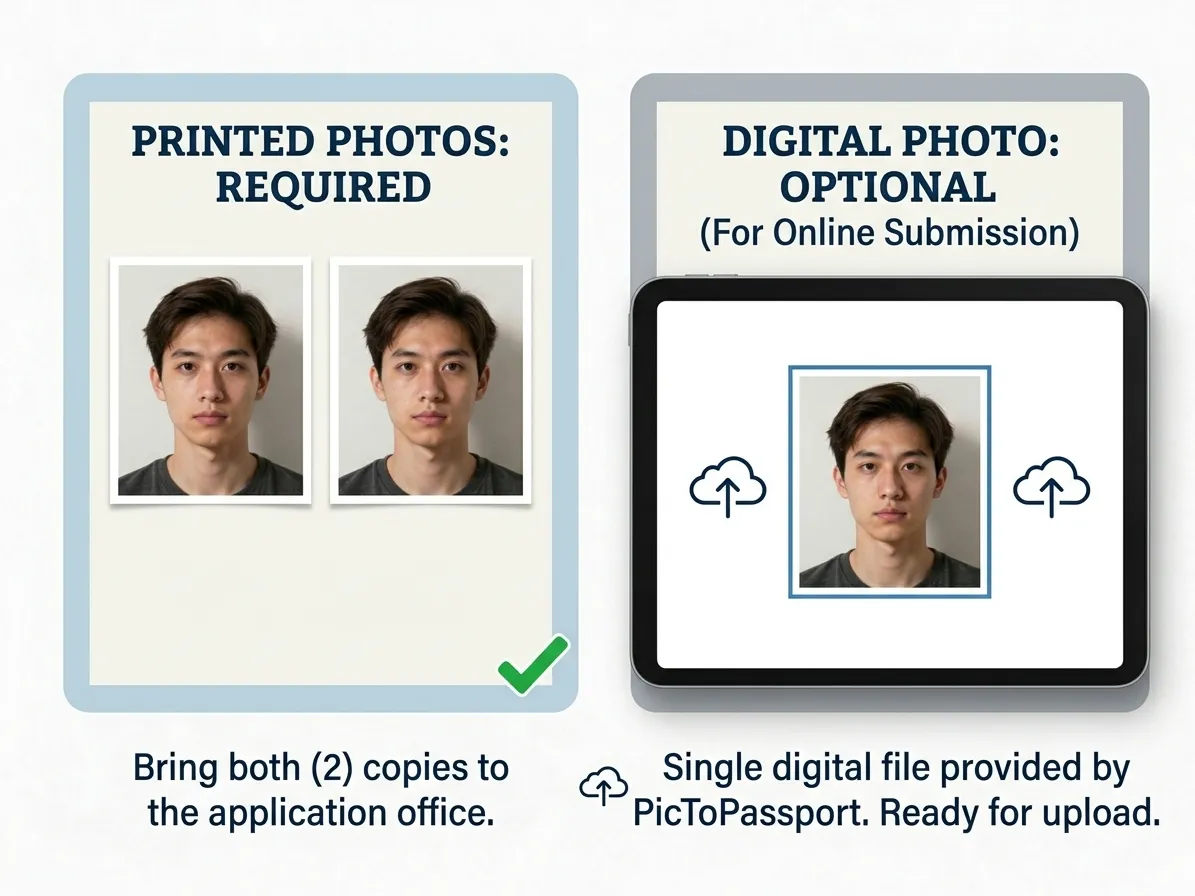
A Chinese passport application requires 4 photos, while a visa application takes 2. Have the set produced on glossy photographic paper, since the specification names that finish, and check that all four copies match before you hand them over. Printing four copies from one file at a shop is quicker than making them one at a time, and it lets you reject any sheet with a crease or a dull patch before you leave the counter.
Home printing costs less per copy than a shop, and the sheet handles the layout: 4x6 Passport Photo Print Sheet
Common Mistakes to Avoid
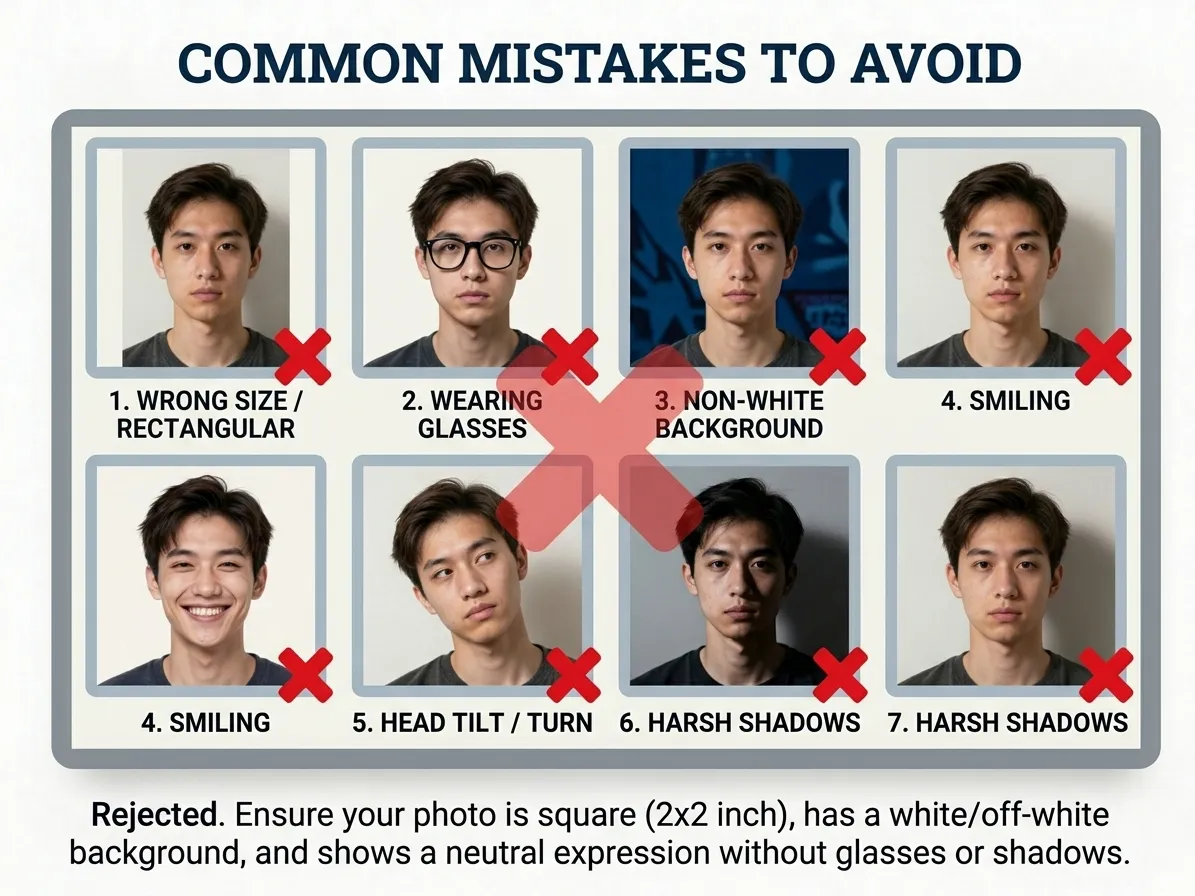
The most frequent reasons for rejection are wrong dimensions, a non-white background, shadows on the face or behind the head, and wearing jewellery. Other issues include hair covering the forehead, not showing both ears, using a photo older than six months, or wearing clothing that matches the background colour. Always double-check the China passport photo requirements before submitting.
A correct image in the wrong format still fails validation, which is why: Convert Image Format
Baby Passport Photos
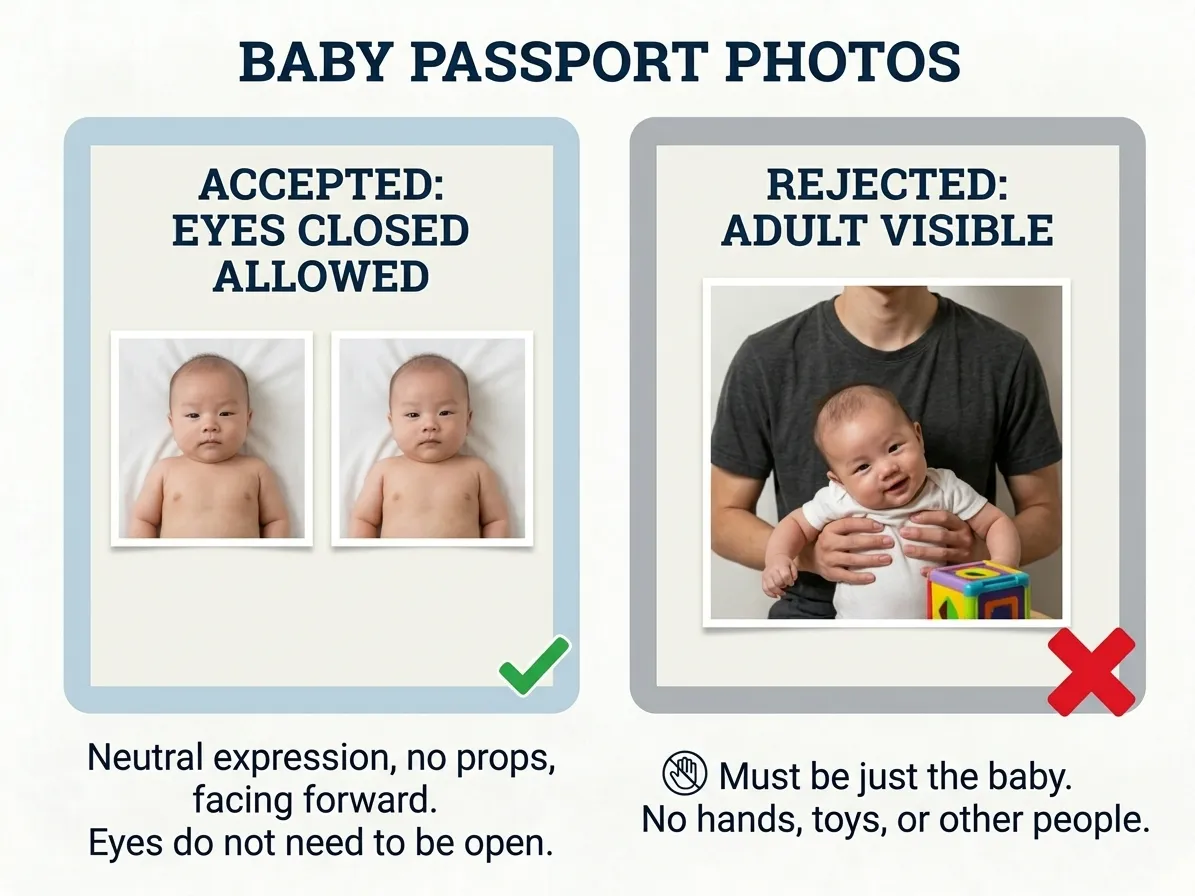
China publishes no infant-specific format, so the working method is the standard 33 mm × 48 mm frame on a plain white background. Lay the baby on white cloth and photograph from directly above in soft light, keeping the head centred so both ears stay visible — a head turned to one side is the usual failure. Hands, toys and pacifiers must stay out of the shot, and all four prints required for a passport application should come from the same take.
Using PicToPassport
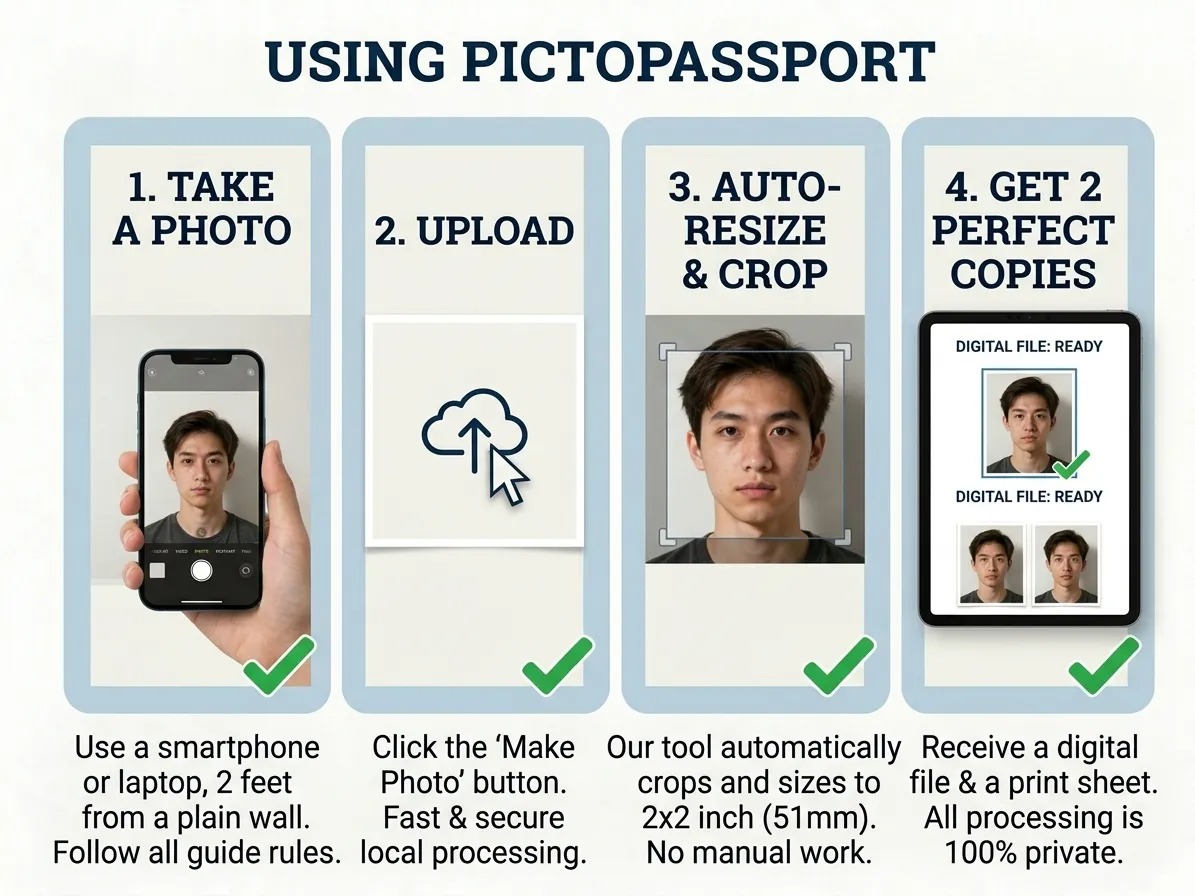
PicToPassport crops to 33 mm × 48 mm for a Chinese passport or visa, offers 51 mm × 51 mm for the 2 × 2 inch format, and falls back to 26 mm × 32 mm for the ID card. It sets a plain white background behind you — light blue if your hair is white or grey — and hands back a print-ready sheet: 4 photos for a passport, 2 for a visa. The tool is free, browser-based, and uploads nothing, keeping everything on your device.
Get Started in Minutes
The National Immigration Administration charges ¥120 for an ordinary passport, with about 7 working days at your place of household registration, 20 working days elsewhere in China, and 5 working days when expedited. Start the photo in PicToPassport now: it is free, runs entirely in your browser, applies the plain white background rule, and uploads nothing — the image stays private on your device throughout.

