


















France has some of the strictest passport and visa photo rules in Europe, covering everything from the exact face size to what you can and cannot wear. The prefecture checks every detail, and even small issues like a visible flash reflection or obscured hair can mean a rejected application. This guide walks you through the official requirements and shows how PicToPassport helps you create a compliant photo for free, entirely in your browser.
Why France passport photo rules are unforgiving
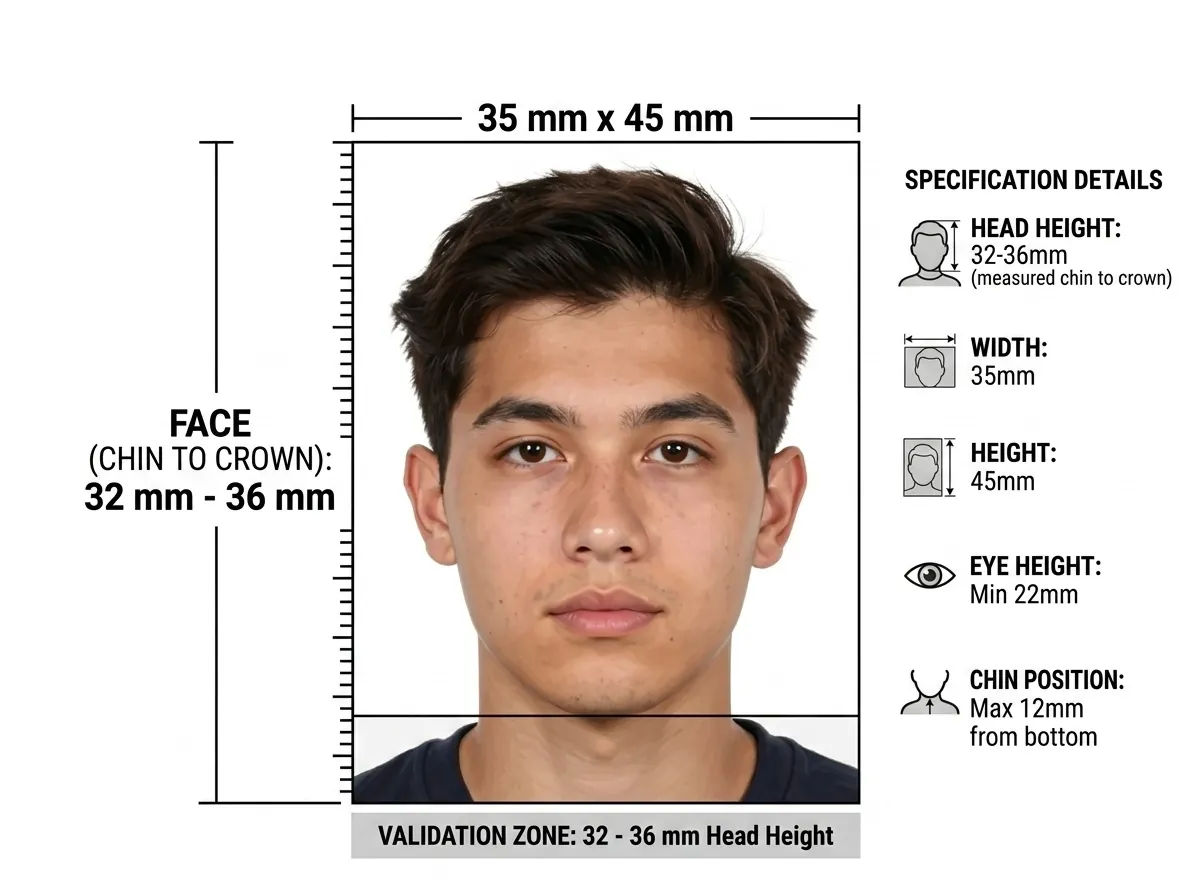
Service-Public expects a French passport photo at 35 mm × 45 mm, with the face measuring 32 mm – 36 mm from chin to crown and filling 70–80% of the frame. A shot with the wrong background — anything other than light grey or light blue for a passport — comes back rejected, and you order another print before restarting. Measuring the face once against those figures prevents a second trip.
Official Photo Size
The required French passport photo size is 35 mm wide × 45 mm tall, the standard European biometric format. The face from chin to crown must measure between 32 mm and 36 mm, and the head should occupy 70–80% of the entire photo. Visa photos use the same dimensions but have different background and glasses rules. Always verify with the official ANTS passport service before submitting.
If you are moving between two sizes, resize rather than crop and hope: Photo Resizer
Background and Lighting
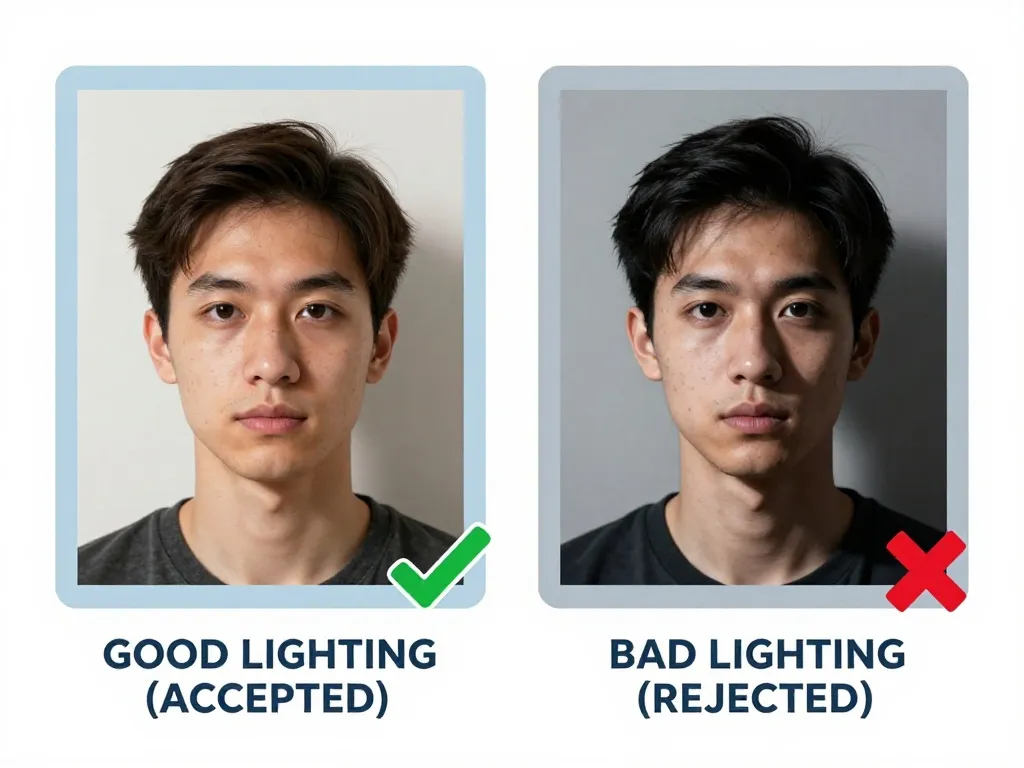
The background for a French passport photo must be light grey or light blue. Visa photos require a plain white or light background. Lighting must be even across the face with no flash reflections on the skin. Natural daylight from a window works well, but avoid direct sunlight that creates harsh shadows behind the ears or on the background. Red-eye must not be visible.
Expression and Pose
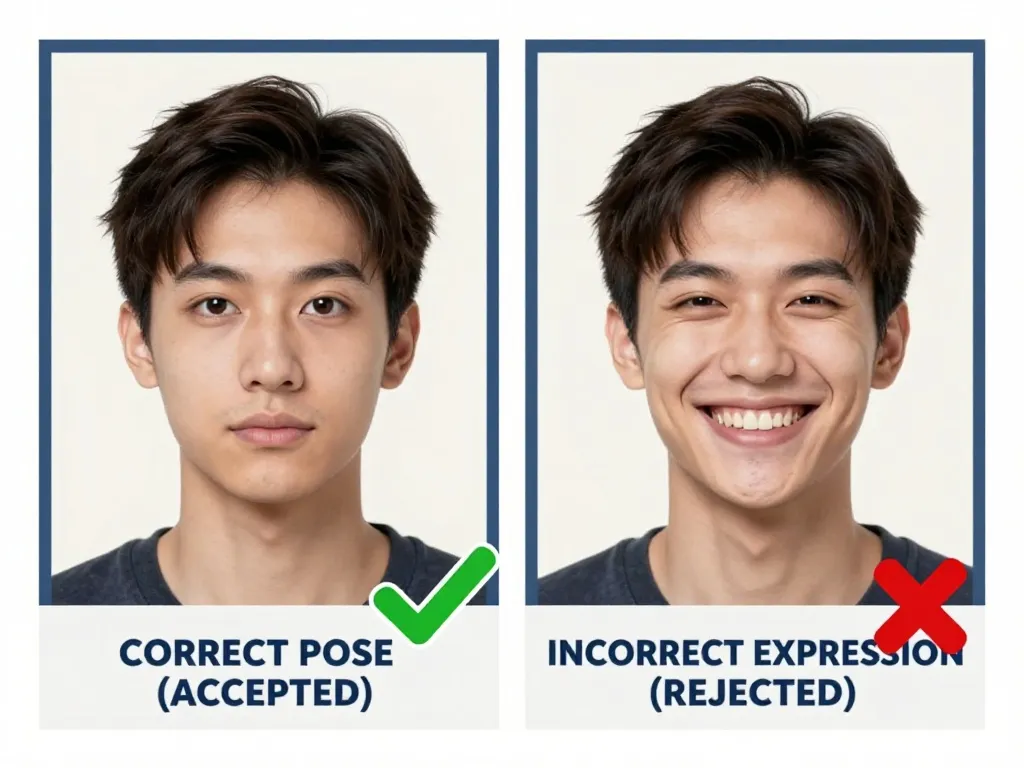
France asks for a neutral, mouth-closed expression with the eyes on the lens, and the passport version bans glasses of any kind — a rule that surprises applicants who wear them every day. For visa photos only, everyday eyeglasses are tolerated if no reflection crosses the eyes. Face masks and veils are not accepted, and the head should be level with the ears exposed where possible. An over-broad smile sends you back to the photo booth.
Glasses and Accessories
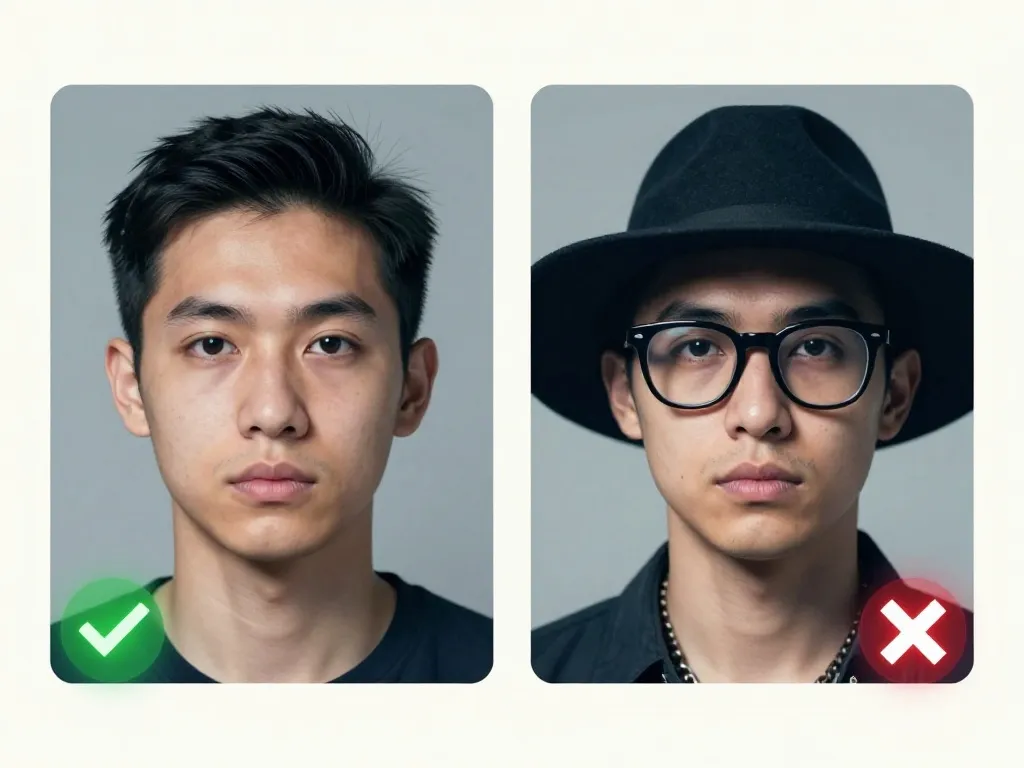
For French passport photos, glasses and other eyewear of any kind that affects the appearance are not allowed. Face masks and veils, even if traditional, are also not permitted. For visa photos, daily eyeglasses can be worn as long as there are no reflections obscuring the eyes. Dark glasses and non-prescription tinted lenses are not acceptable unless for medical reasons. Hats and headgear must be removed unless worn daily for religious reasons.
Face Visibility
French officers measure the face, not the head: chin to crown must fall between 32 mm and 36 mm, and the head should fill 70–80 per cent of the 35 mm × 45 mm print. A photo with too much empty space around the face is as wrong as one that crops the hair. Background matters equally — light grey or light blue for a passport, plain white or light for a visa — so check which document you are filing before printing.
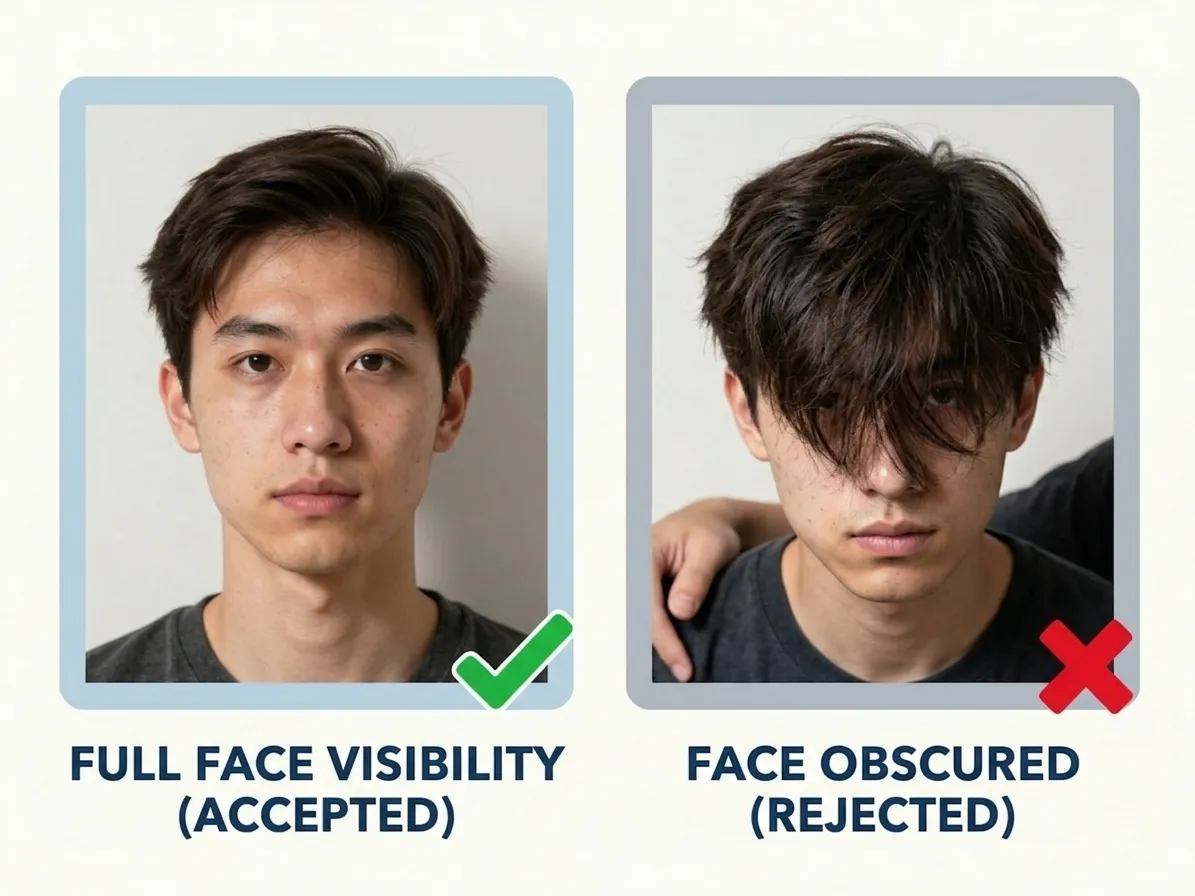
Photo Recency
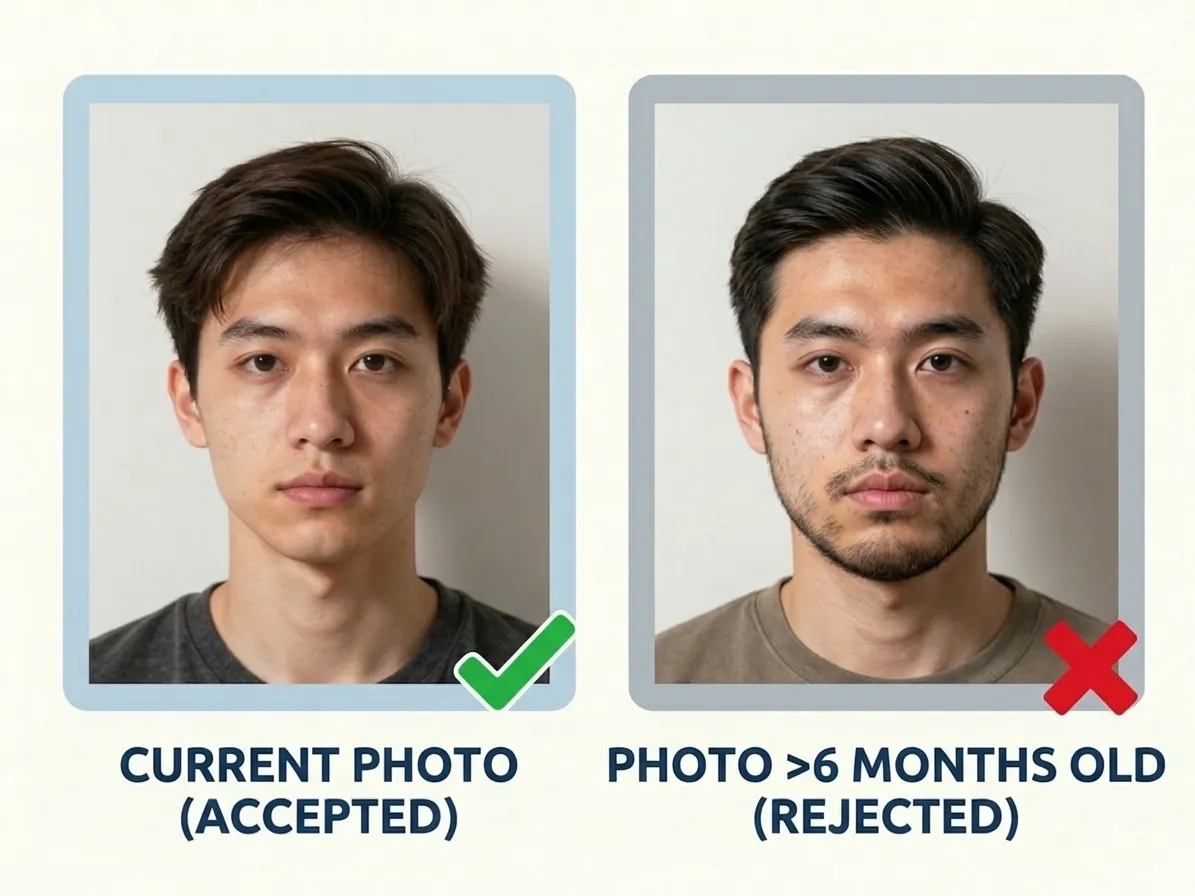
Recency in France depends on the document, and the difference is large. A passport photo may be up to six months old; a visa photo must be no more than one month old. Applicants routinely submit a visa photo that would have been acceptable for a passport and are turned away. When both are needed, take one sitting and print from it the same week — the one-month visa window leaves almost no room for an earlier studio session.
How Many Copies You Get
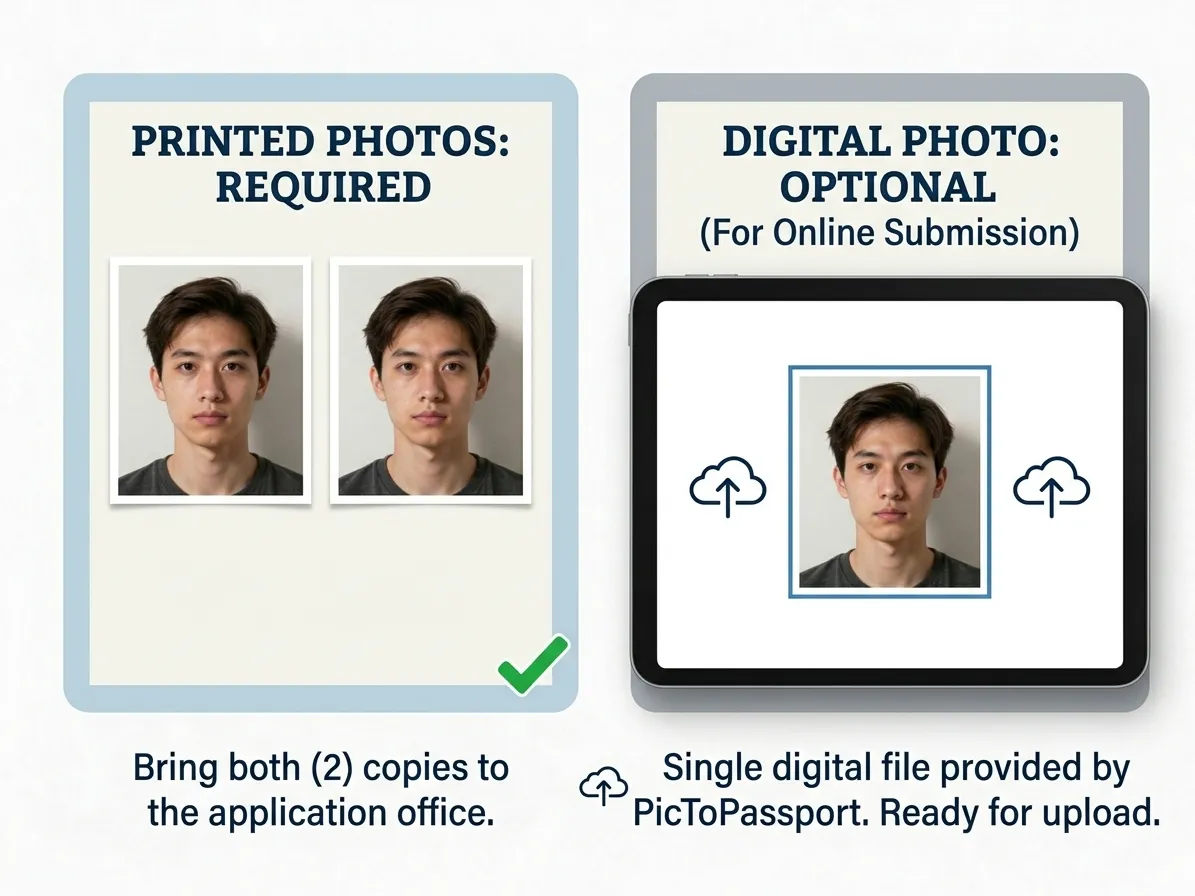
French passport applications call for just 1 photo, and a visa application calls for 2. Because the two documents differ, order or cut the prints for whichever you are submitting rather than mixing them up. One carefully prepared passport photo beats a sheet of mismatched attempts: check it against the table, then carry the single print to the counter with your form.
A photo shop charges for the layout as well as the ink, so build the sheet first: 4x6 Passport Photo Print Sheet
Common Mistakes to Avoid
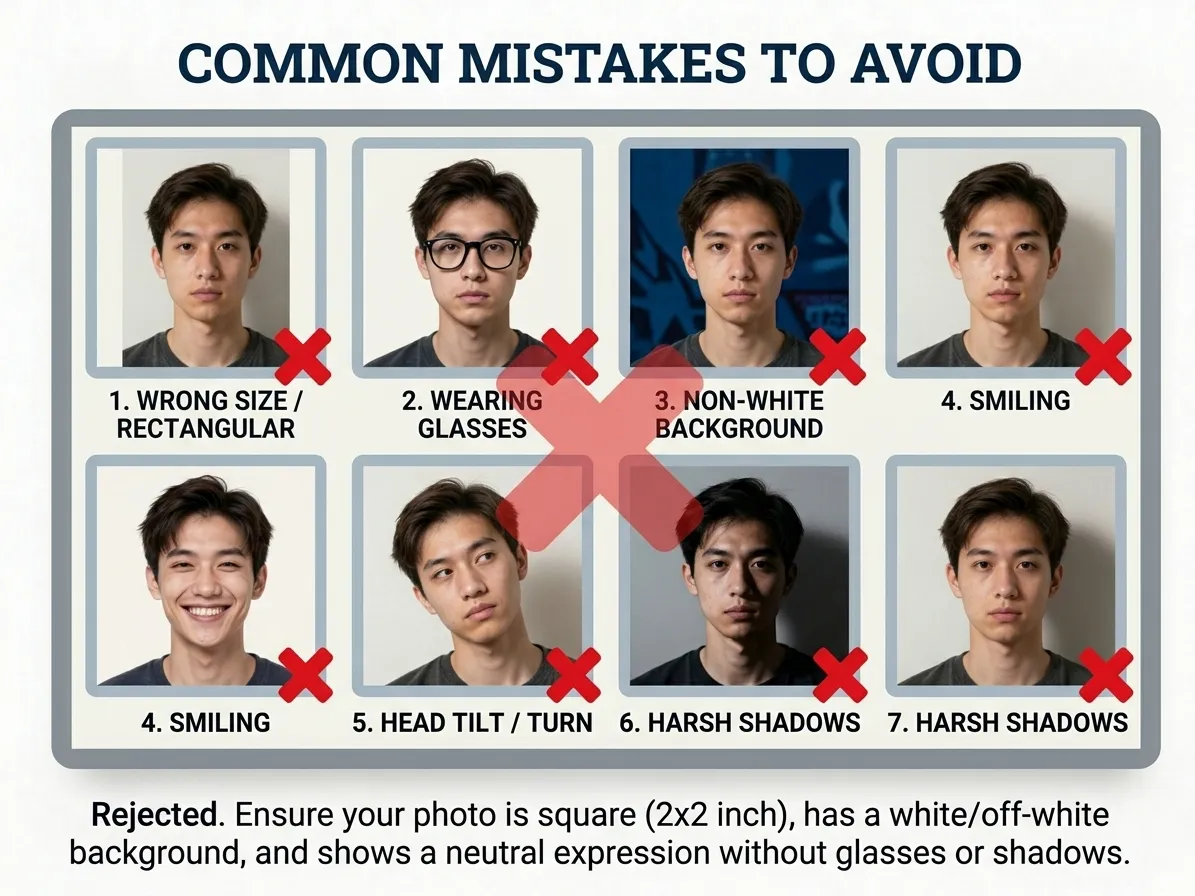
The most frequent reasons for rejection are wearing glasses in passport photos, wrong dimensions, a non-compliant background, and flash reflections on the skin. Other issues include hair obscuring the eyes, smiling, tilting the head, or using a photo that is too old. For visa photos, remember the much stricter 1-month recency rule. Always double-check the France passport photo requirements before submitting.
If the application wants a format your phone did not save, convert it before you upload: Convert Image Format
Baby Passport Photos
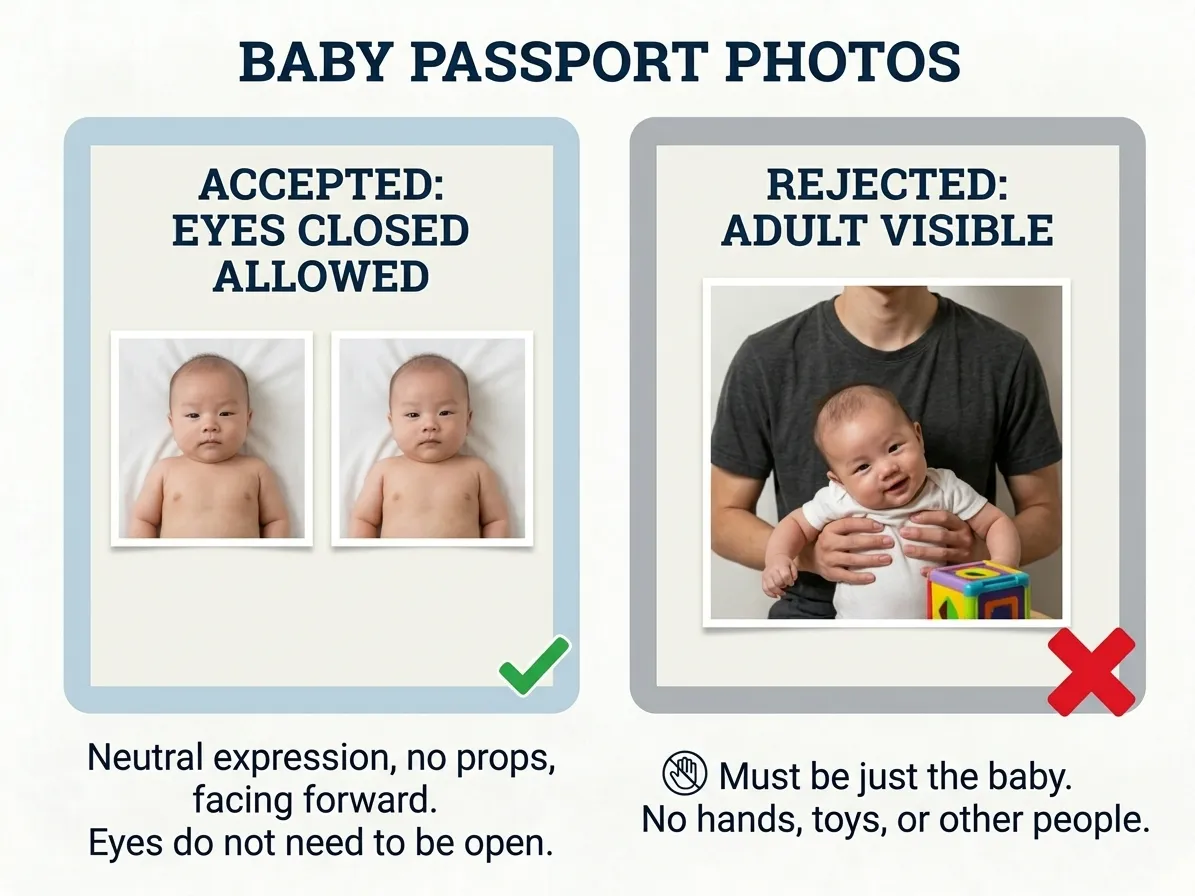
No separate infant rule appears in the French documentation, so photograph the baby in the same 35 mm × 45 mm frame, face centred and chin to crown near 32 mm. Use a plain light sheet to match the light grey or light blue passport background, shoot from above in daylight with no flash, and wait for both eyes to be open. Keep hands, dummies and toys out of the picture, and print the single photo the passport application needs.
Using PicToPassport
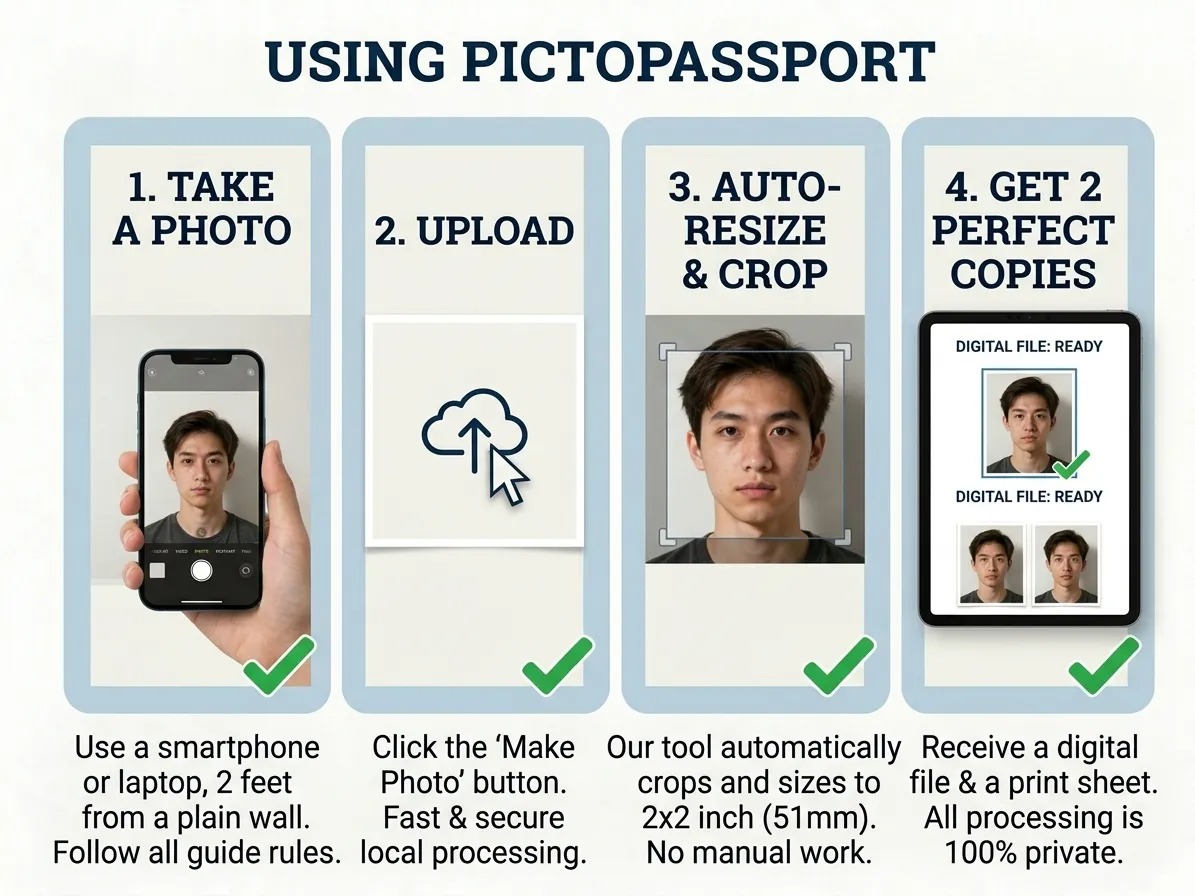
French rules shift by document, and PicToPassport shifts with them: 35 mm × 45 mm for passport, visa and driving licence, with a light grey or light blue background for the passport and plain white or light for the visa. Run it free in the browser, approve the crop, and take the print-ready output — 1 photo for a passport application, 2 for a visa. Nothing is uploaded, because the work happens on your device.
Get Started in Minutes
Service-Public lists an adult passport at €86 in mainland France (€96 applied for abroad), and no standard processing time is published, so the official guidance page remains the reference. Your photo is the part you control: PicToPassport is free in the browser, fits the frame to 35 mm × 45 mm, and holds the result private on your device instead of sending it to any server.