


















Germany's passport and visa photo requirements are governed by the Federal Office for Information Security (BSI) and are among the most precise in Europe. The rules cover exact face measurements, background colour, and even whether your photo can be in black and white. This guide explains what you need to know and how PicToPassport helps you create a compliant photo for free, entirely in your browser.
Why German passport photo rules are strict
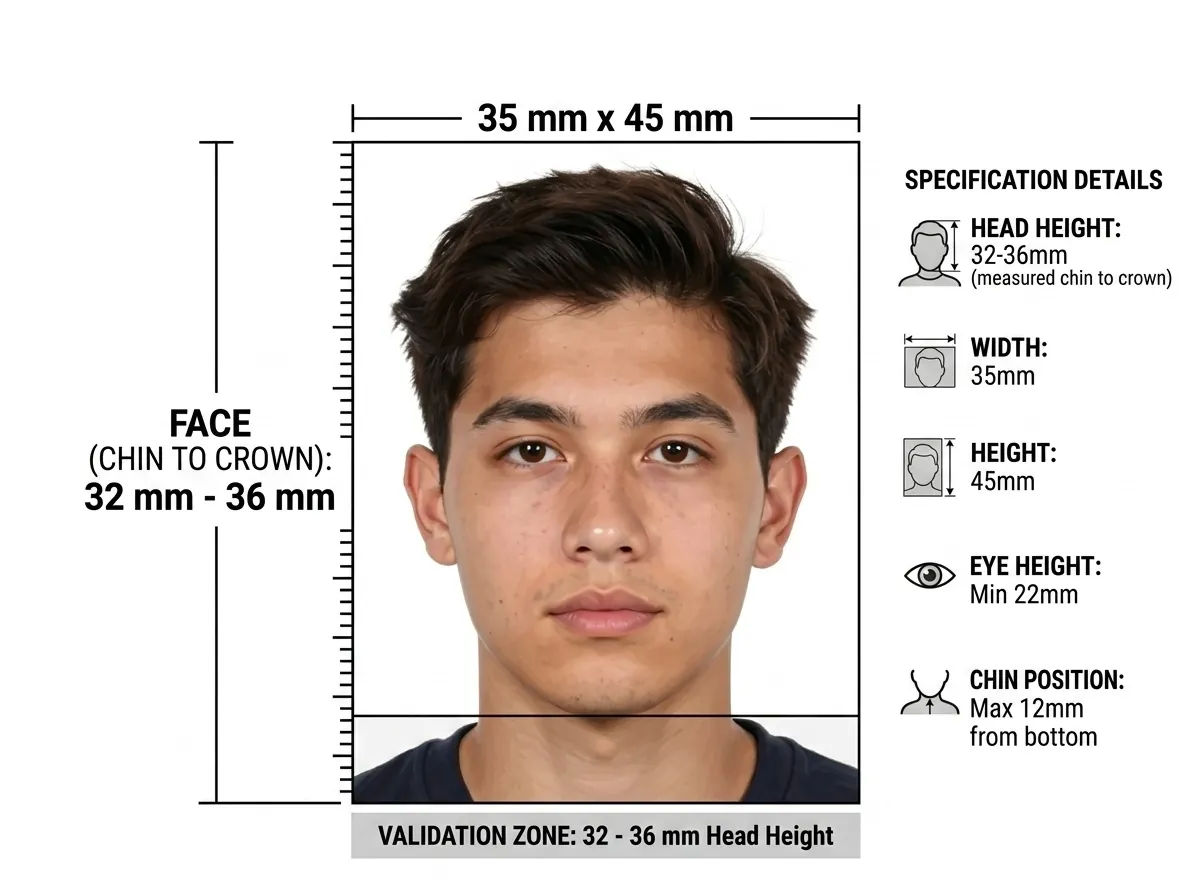
German authorities test a passport photo against hard limits: a face of 32 mm – 36 mm from chin to hairline, filling 70–80% of a 35 mm × 45 mm print, over light grey. Below 27 mm or above 40 mm the photo is refused outright, so a borderline crop means printing again and resubmitting. Measure the face before you commit to a print and the request proceeds without that detour.
Official Photo Size
The required German passport photo size is 35 mm wide × 45 mm tall, the standard European biometric format. The face from chin to hairline must measure between 32 mm and 36 mm, taking up 70–80% of the photo. If the face measures less than 27 mm or more than 40 mm, the photo will be rejected. Visa photos use the same dimensions. Always verify with the official Federal Ministry of the Interior before submitting.
Getting the frame to land on the exact millimetre is the fiddly part: Photo Resizer
Background and Lighting
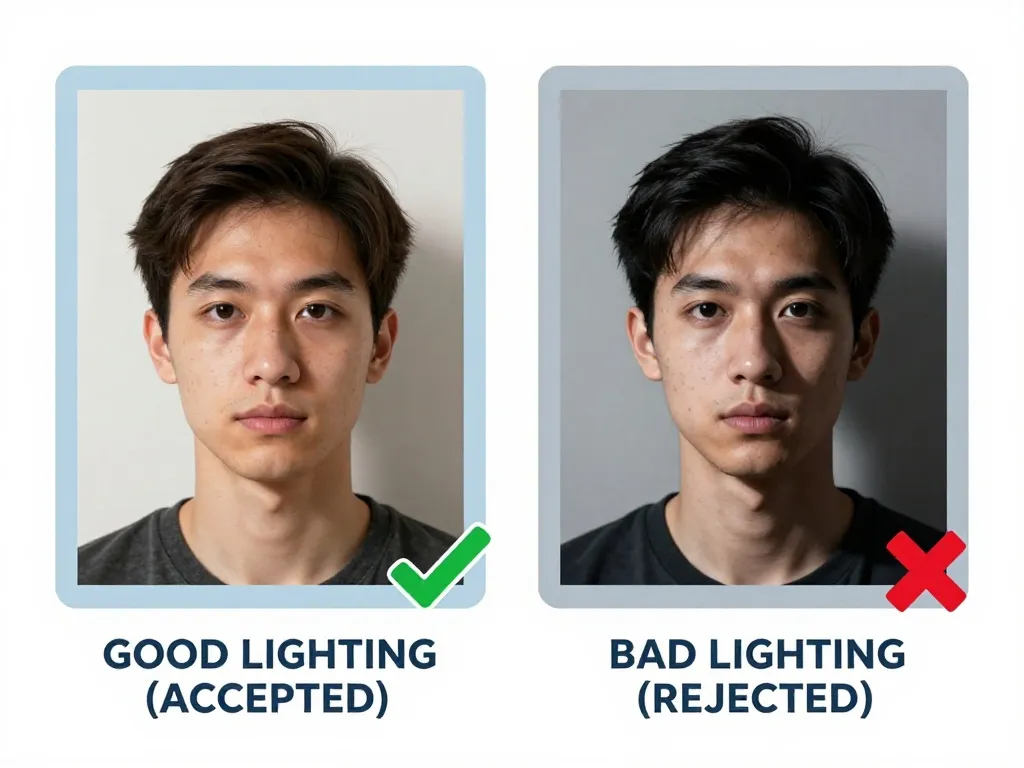
Passport photos require a light grey background. Visa photos require a white or off-white background. Lighting must be even across the face with no shadows on the background or behind the ears. Flash reflections and red eyes are not acceptable. Natural daylight from a window works well, but avoid direct sunlight that creates harsh shadows.
Expression and Pose
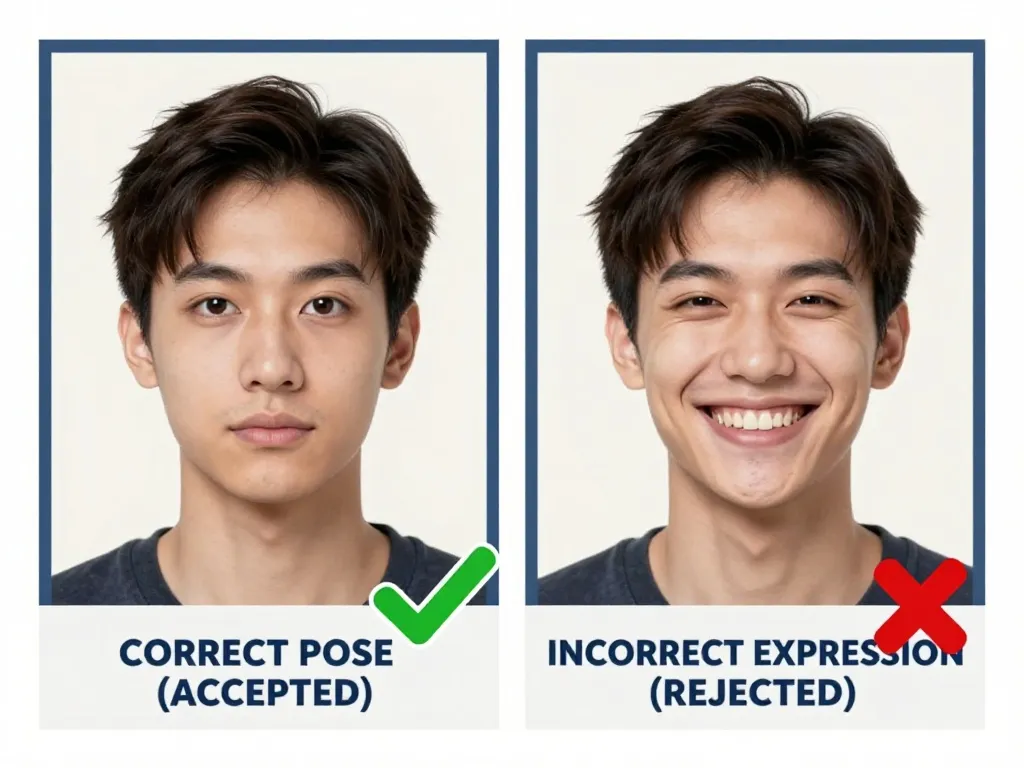
Germany's rule is a neutral expression with the mouth closed and both sides of the face shown squarely — a full front view from chin to hairline. Clear prescription glasses are permitted as long as the eyes stay visible and no reflection sits on the lenses; tinted lenses and sunglasses are refused. Head coverings are accepted only for religious reasons. Germany is also unusual in permitting either colour or black-and-white prints, so contrast, not hue, is what you should check.
Glasses and Accessories
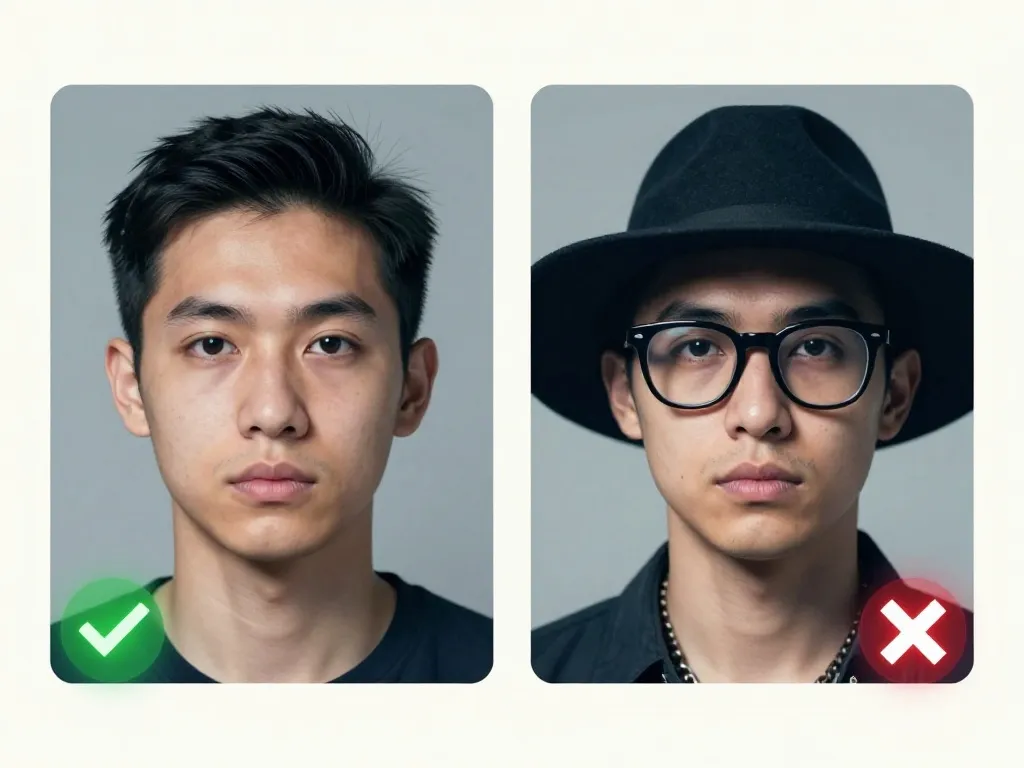
Sunglasses and tinted glasses are not acceptable. You can wear prescription glasses as long as your eyes are clearly visible and not covered by the frame. Reflections off the lenses are not allowed — make sure lighting does not cause glare. Head coverings are only permitted for religious reasons, and the face must remain visible from chin to forehead.
Face Visibility
German specifications are numeric and unforgiving. The face, measured chin to hairline, must be 32 mm to 36 mm and occupy 70–80 per cent of the 35 mm × 45 mm print; below 27 mm or above 40 mm the photo is rejected outright. That rejection band is the fact most applicants never learn. Print against a light grey background for a passport — visa photos take white or off-white instead — and submit two photos for a passport, one for a visa.
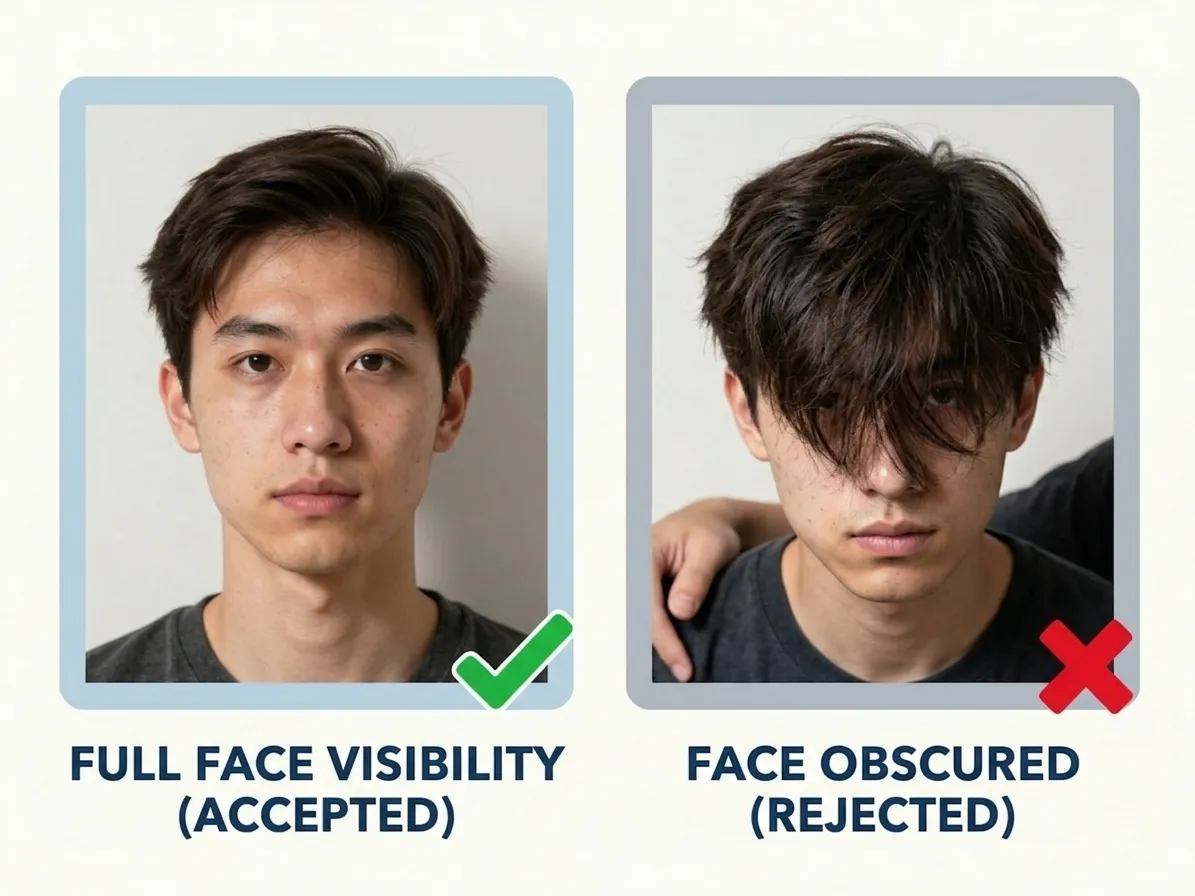
Photo Recency
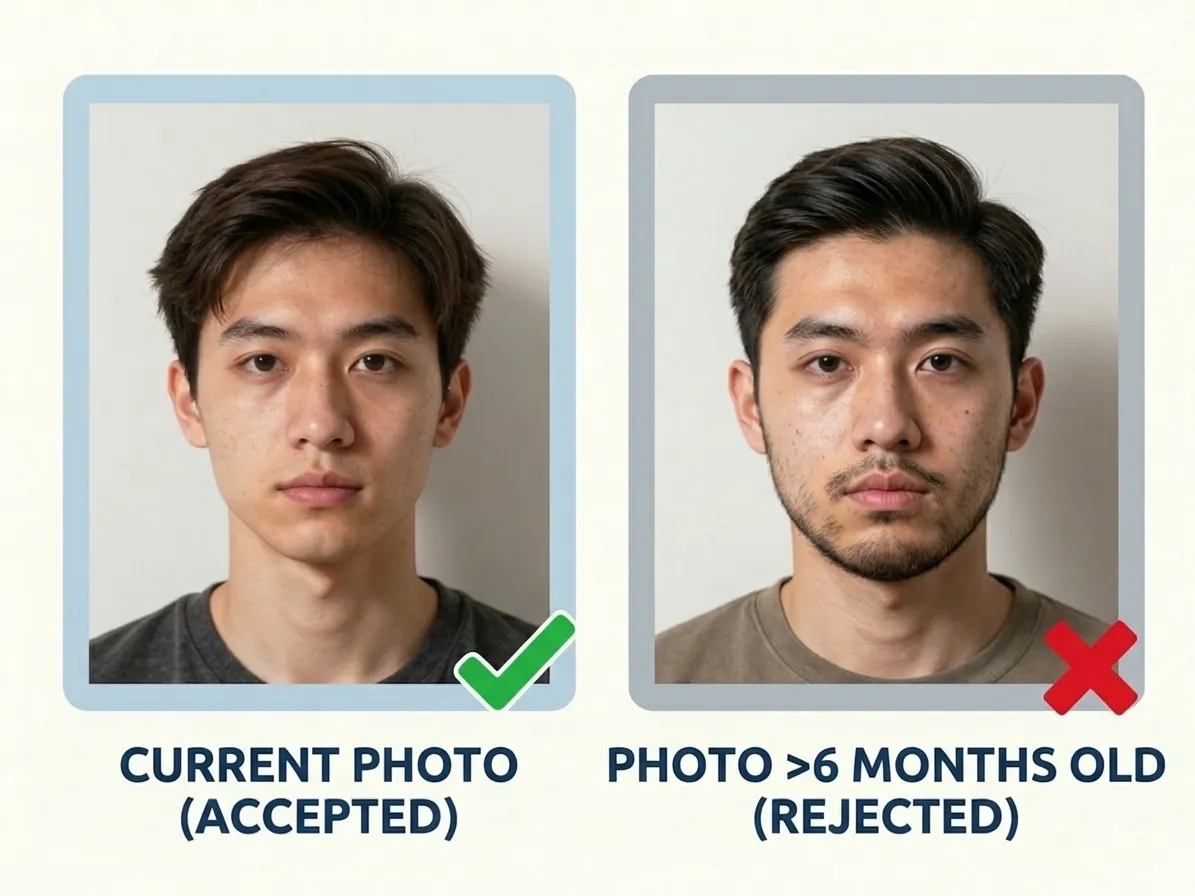
A published six-month limit applies to German visa photos, while passport photos carry no stated age and are expected simply to be current. Both may be printed in colour or black and white. The practical rule is straightforward: if the image predates a change in hair, weight or facial hair, replace it rather than argue the point at the Bürgeramt. A compliant print obtained once saves paying for a second session.
How Many Copies You Get
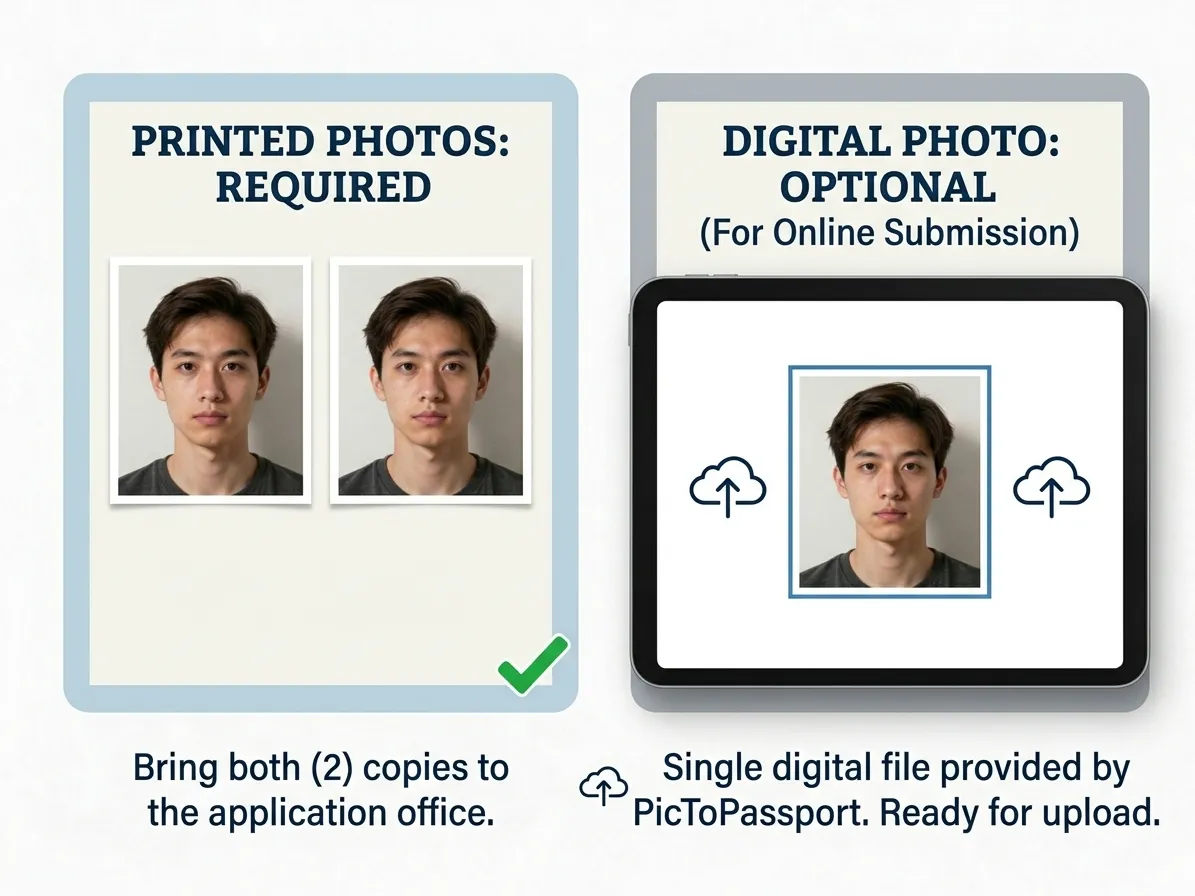
A German passport application needs 2 photos, while a visa application needs only 1. The prints may be color or black and white, so match whichever style you choose across the whole set rather than handing over a mixed pair. Prepare both copies from the same file, verify them together against the table, and keep the spare safe until the application closes.
Upload portals measure the file in kilobytes, and an oversized image is rejected outright: Compress Image to KB
Common Mistakes to Avoid
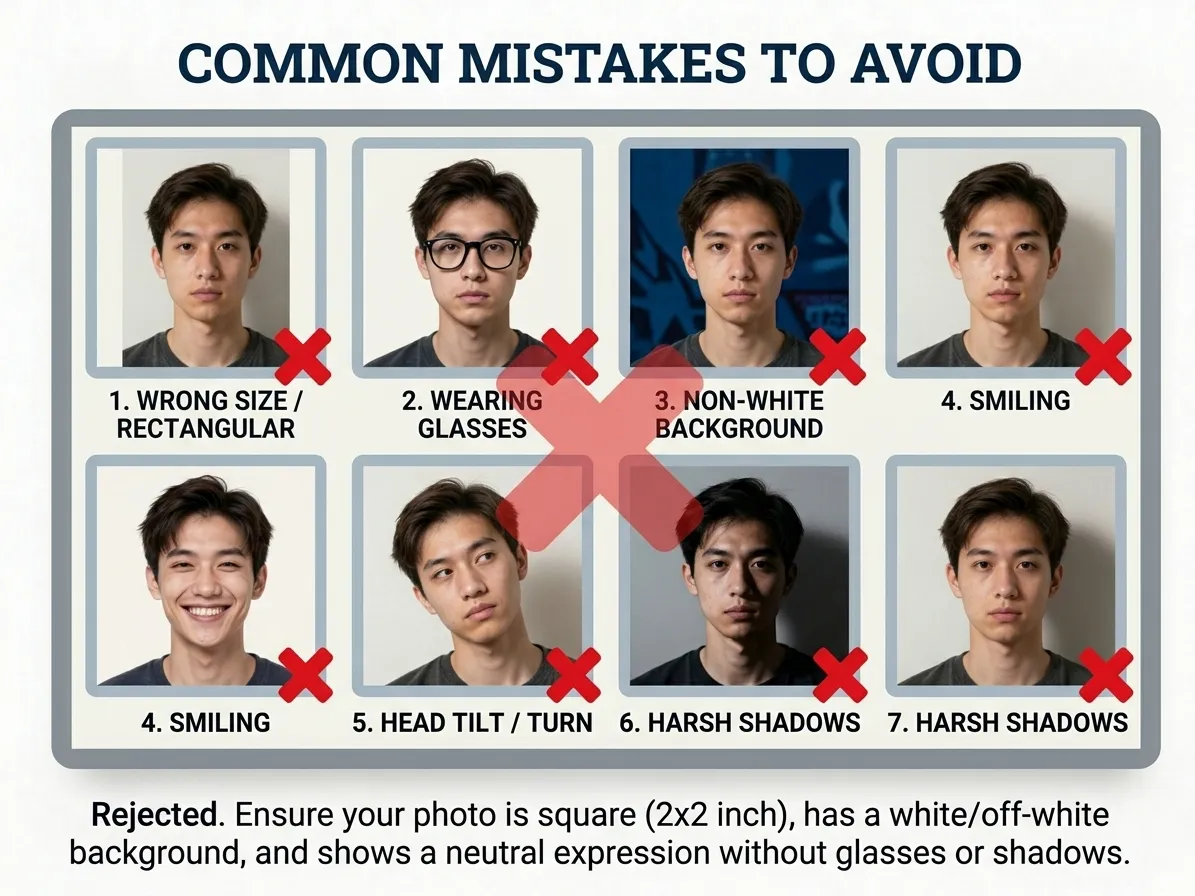
The most frequent reasons for rejection are wrong face dimensions, a non-compliant background, shadows on the face or behind the head, and wearing sunglasses. Other issues include tilting the head, smiling, having hair cover the face, or using a photo that is too old. If the face measures less than 27 mm or more than 40 mm, it will be automatically rejected. Always double-check the Germany passport photo requirements before submitting.
Portals reject the right photo in the wrong file type, so check the extension first: Convert Image Format
Baby Passport Photos
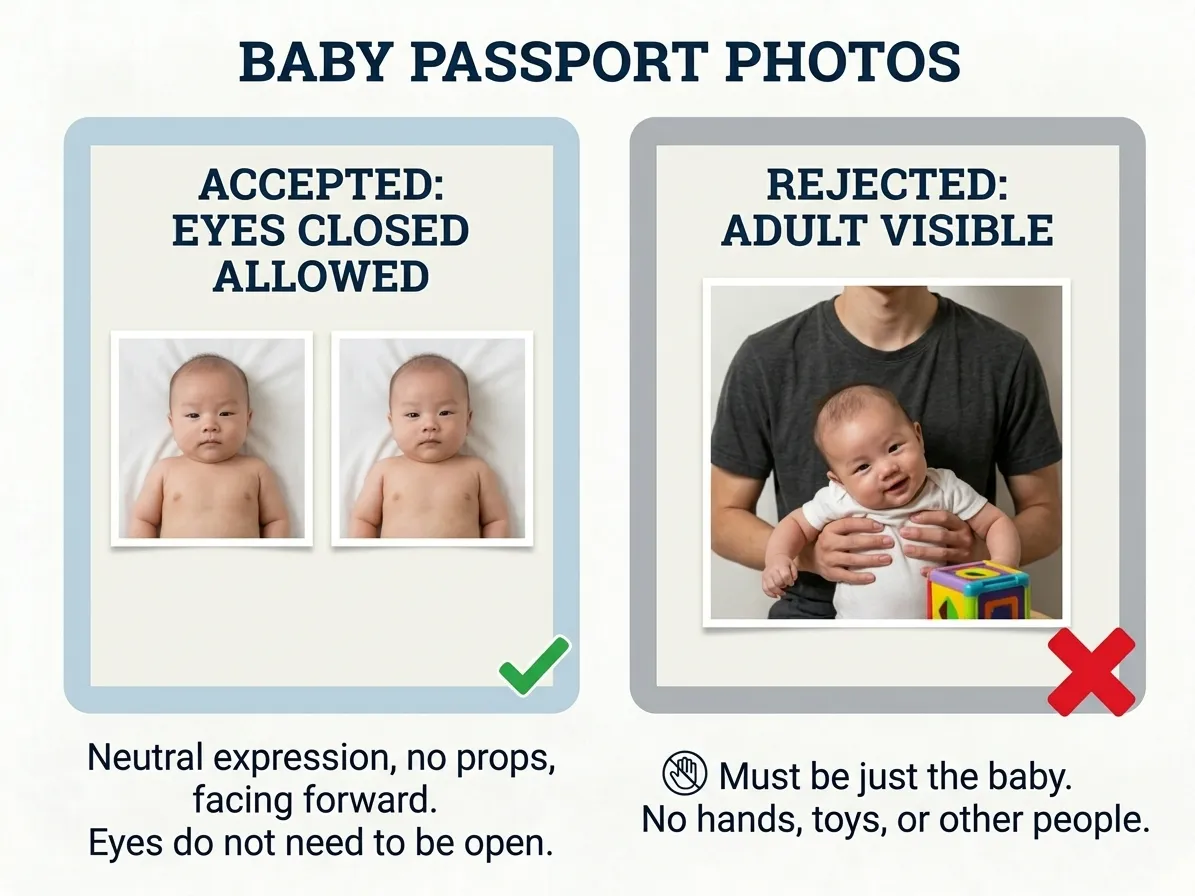
Germany's documentation sets no separate infant format, so a baby photo is made in the ordinary 35 mm × 45 mm frame with the face still inside the 32 mm to 36 mm band. Use a light grey sheet to match the passport background, hold the baby upright against an adult's chest out of frame or shoot from above, and keep the face fully visible with nothing crossing it. Wait until the eyes are open before releasing the shutter.
Using PicToPassport
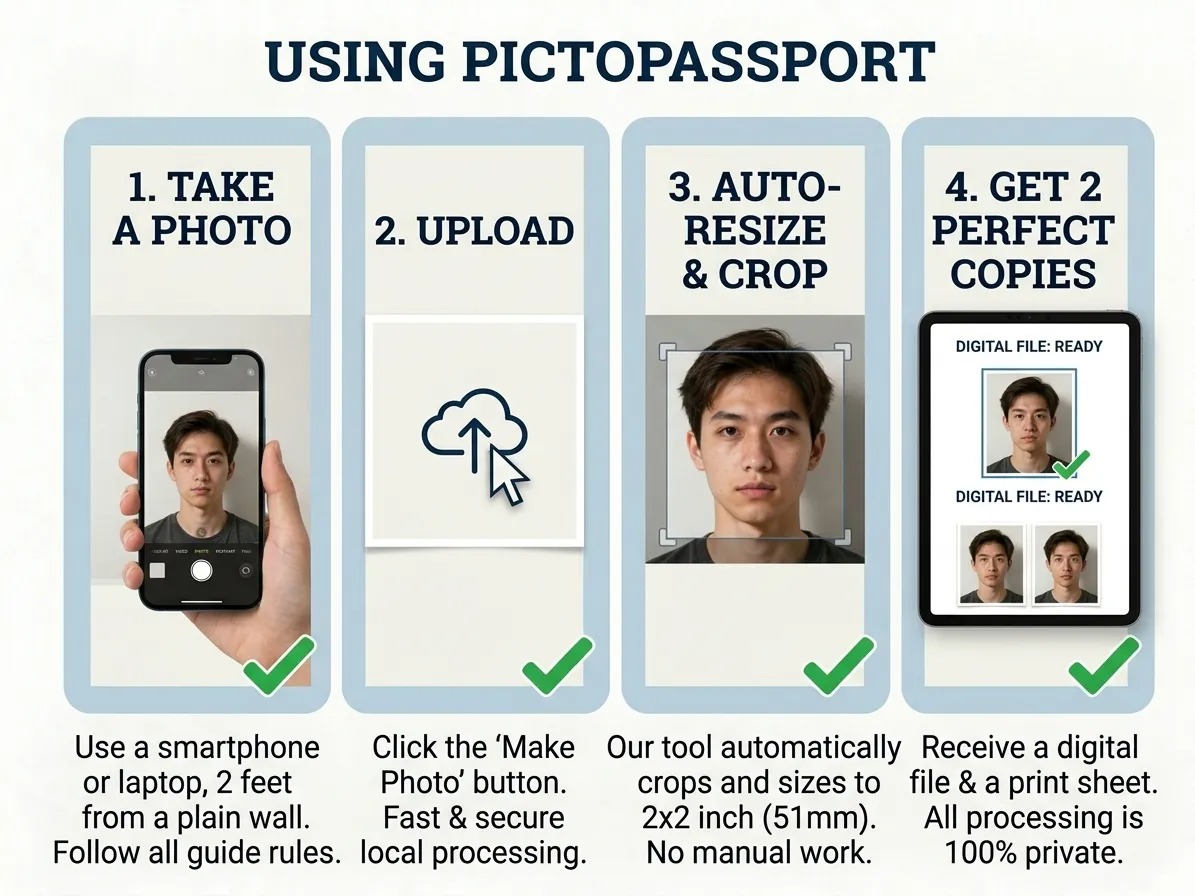
The German frame is 35 mm × 45 mm, and PicToPassport fits your face into it at 70–80% while you work free in the browser. Passport photos receive the light grey background; visa photos receive white or off-white. The output is print-ready: 2 photos for a passport application and 1 for a visa, both produced on your device, since nothing is sent to a server. Colour or black and white prints are accepted either way.
Get Started in Minutes
BMI sets the fee at €70.00 for applicants aged 24+ with 10-year validity (from 7 February 2026), and it publishes no standard processing time, so the ministry page is where the turnaround comes from. Prepare the photo first with PicToPassport — free, browser-based, and private, since the image never leaves your device. The light grey passport background is applied before you print anything.

