

















Australia passport photo requirements — official size, background, and pose guide

Australia Passport Photo Requirements — Complete Guide

Review the official Australia passport photo requirements — exact size, background, and pose rules. 100% free and private; everything runs in your browser.

35×45 mmMake Australia Passport Photo NowCorrect size set automaticallyUpload Photo

Key Takeaways

The rules that decide the application.

  1. Australian photos measure 35 mm × 45 mm, with the head between 32 mm and 36 mm from chin to crown and the background plain white, cream or pale blue.
  2. Glasses have been banned outright since 1 July 2018, so remove prescription, reading and sunglasses before the shutter — a frame otherwise looks perfect and still gets refused.
  3. From 1 January 2026 a 10-year adult passport costs AUD $422 and a 5-year child passport AUD $213; no standard processing time is published, so check the official timeframes.
  4. Apply online through the Australian Passport Office and upload one digital photo, or print two copies yourself; PicToPassport crops the file to the exact DFAT frame in your browser.

Official Requirements

The figures on file with the department that issues the passport.

Spec & Compliance Table

Spec & Compliance Table — Australia
Photo size (passport)35 mm × 45 mm (passport, visa and ID); some visa classes also accept 40 mm × 50 mm
Head height / face sizeHead height 32 mm – 36 mm measured chin to crown, with both edges of the face visible
Resolution & fileNo published DPI — print on 200 gsm glossy paper by dye sublimation; 1 digital photo for online applications
BackgroundPlain white, cream or pale blue, with no pattern and no shadow behind the head
Photos required2 identical printed photos for paper applications; 1 digital photo uploaded online
Photo age limitTaken within the last 6 months

Official source: Australian Passport Office — photo requirements — Requirements change — re-check the current rules on the official page before you submit.

Fees & Processing Times

What it costs, and how long it takes.

Fees & Processing Times — Australia
10-year adult passportAUD $422 (effective 1 January 2026)
5-year child passportAUD $213 (effective 1 January 2026)
Standard processingno published figure — see the official timeframes page

Official fee schedule: Australian Passport Office — passport fees

Fees and processing times are set by the issuing authority and change without notice. Confirm the current figure on the official page linked above before you pay.

Applying for an Australian passport starts with a photo that meets the standard set by the Australian Passport Office. This guide covers the required print size, the plain background accepted by the office, the neutral pose expected of you, and how recent the image must be when you send it in. Sections below explain each rule in everyday language and note the small details that trip applicants up. PicToPassport then prepares a compliant photo inside your browser, so nothing is uploaded while you work.

Why Australian passport photo rules catch applicants out

Australian passport officers compare every photo against a fixed frame: 35 mm × 45 mm, with the head measuring 32 mm – 36 mm from chin to crown. A print that misses either figure, or that shows a shadow behind the head against the white, cream or pale blue background, will not pass. Failed photos mean a fresh print and a delayed application, so settle these details now rather than after submission.

Official Photo Size

The required Australia passport photo size is 35 mm wide × 45 mm tall. Some offices also accept 40 × 50 mm, but the standard biometric format is 35 × 45. The head must measure 32 mm from chin to crown, with the face filling 70–80% of the frame. Both vertical and horizontal orientations are accepted, as long as the proportions stay correct. Always check the latest guidelines on the official Australian Passport Office before submitting.

Getting the frame to land on the exact millimetre is the fiddly part: Photo Resizer
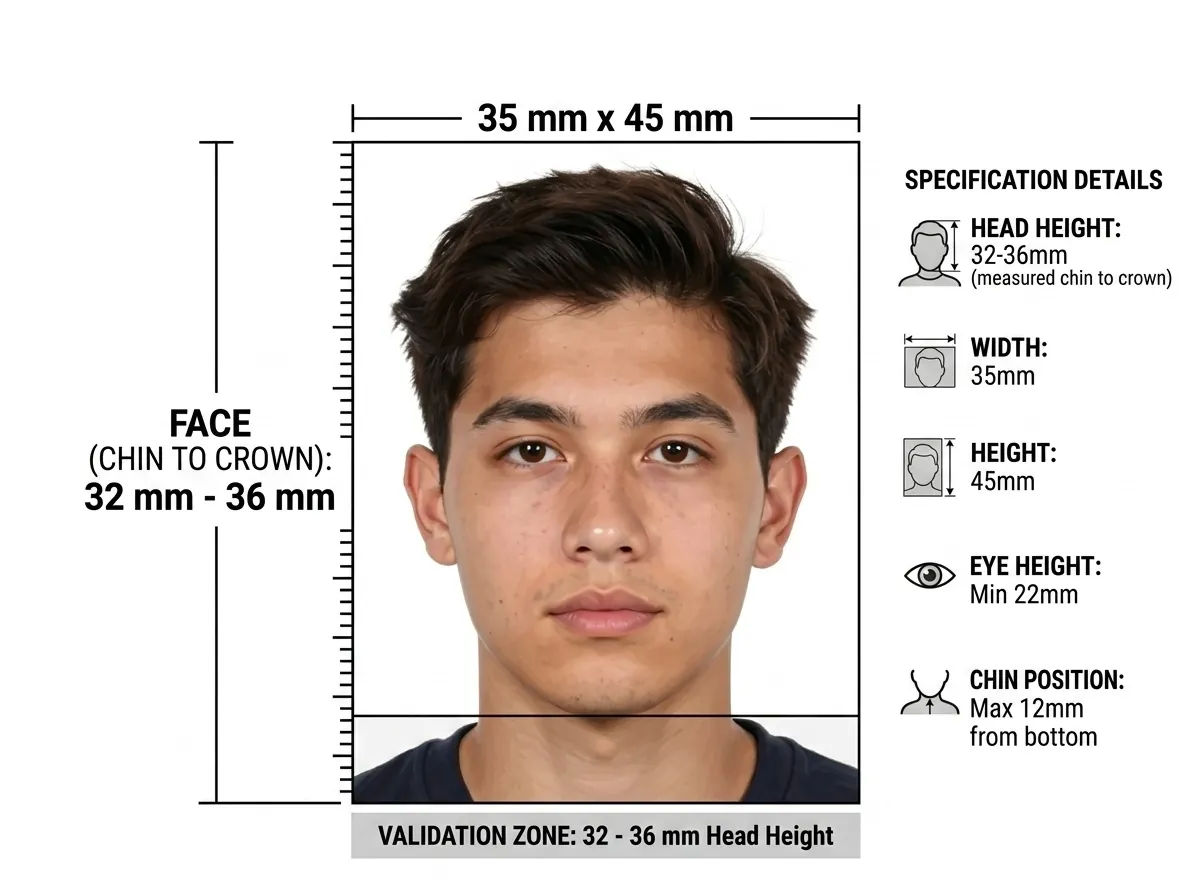
Measurement diagram of a 35 × 45 mm print with a portrait inside a ruler frame. A bracket on the left gives a face measurement of 32 to 36 mm, and a specification panel lists head height, a width of 35 mm, a height of 45 mm, a minimum eye height of 22 mm and a maximum chin position 12 mm from the bottom.

Background and Lighting

Australian passport photos sit against plain white, cream or pale blue — no pattern behind the head and no shadow on the backdrop. Light should reach your face evenly from the front, since a dark patch beside the ear reads as a shadow just as much as a cast outline does. Choose a spot away from windows that throw a strong silhouette and the background check will pass without argument.

If no wall in the room is plain enough, swap the backdrop instead: Background Eraser
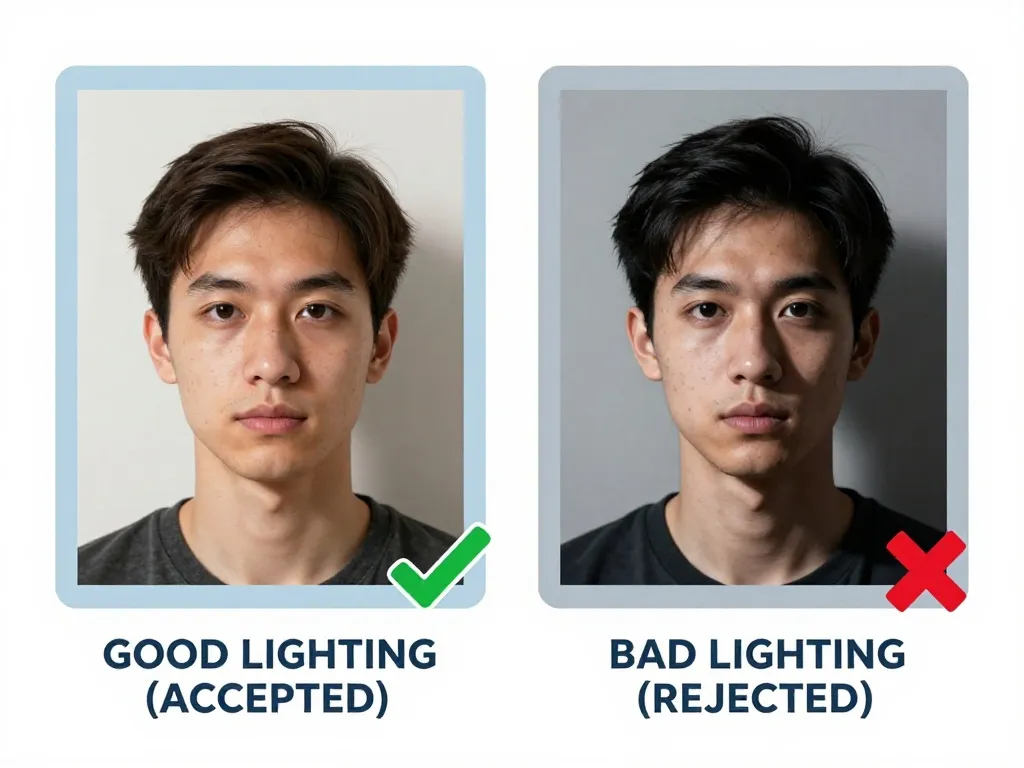
Two portraits side by side. The left, captioned Good lighting (accepted) and marked with a green tick, is evenly lit against a light background. The right, captioned Bad lighting (rejected) and marked with a red cross, is lit hard from one side, leaving a deep shadow across half the face.

Expression and Pose

An Australian photo must show a neutral face — mouth closed, eyes open, and no smile at all. Look straight into the lens with your head level and both edges of the face visible from cheek to cheek. Keep hair pushed back so nothing crosses the forehead or the cheeks, and stay still until the frame is captured. A half-smile or a chin that lifts at the last second still reads as a rejected photo, even when the dimensions are exactly right.
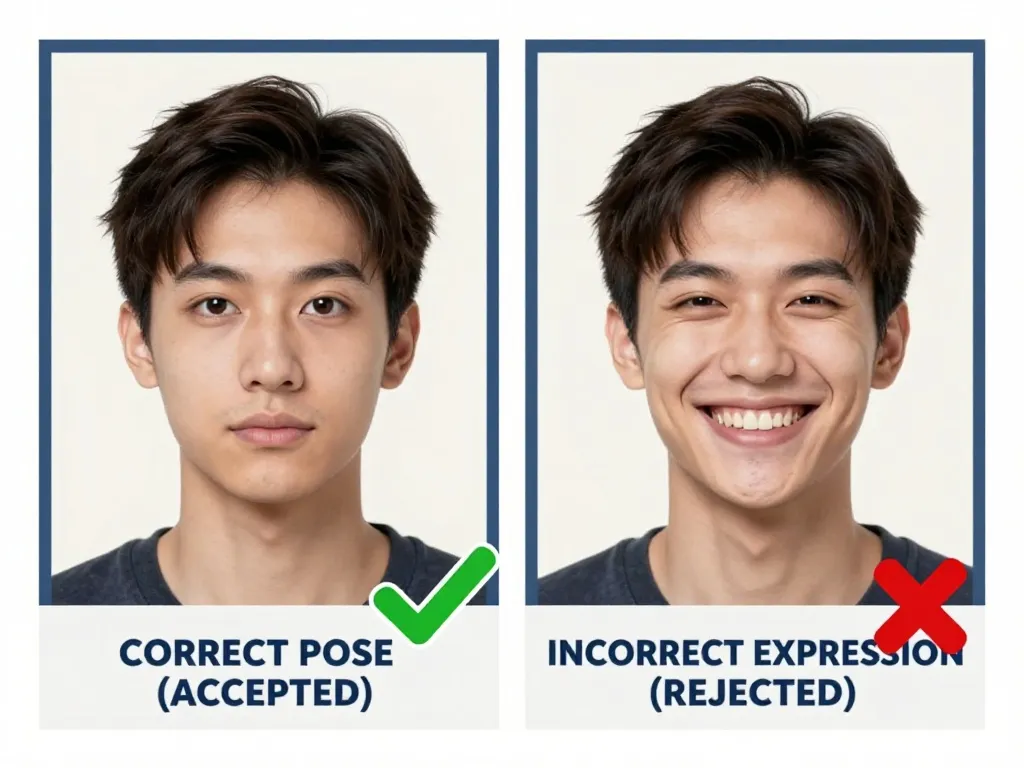
Two portraits side by side. The left, captioned Correct pose (accepted) and marked with a green tick, shows a closed mouth and a level gaze. The right, captioned Incorrect expression (rejected) and marked with a red cross, shows a wide toothy smile.

Glasses and Accessories

Australian passport photos have not permitted glasses since 1 July 2018 — the rule covers prescription lenses, sunglasses and reading glasses alike, so remove them before the shot rather than hoping a glare will go unnoticed. Hats, scarves and other head coverings are refused as well, and the specification asks for both edges of the face to stay clearly visible with your eyes open.
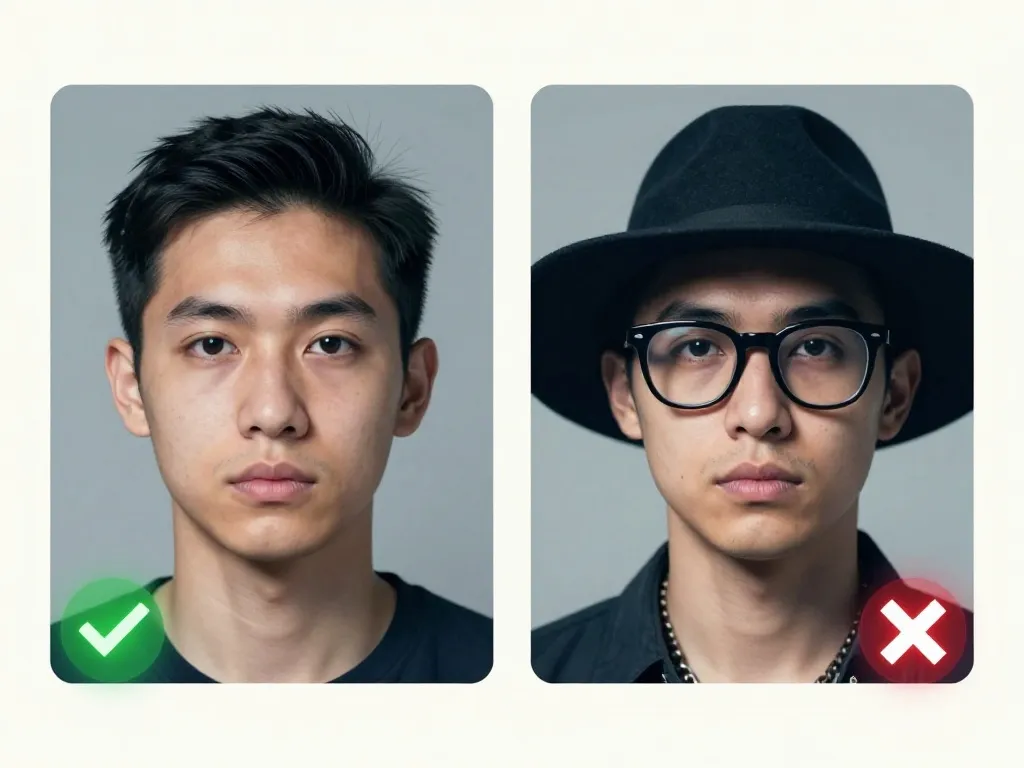
Two portraits side by side with no captions. The left, marked with a green tick, shows a man with no glasses and no hat. The right, marked with a red cross, shows the same man wearing thick black glasses and a black wide-brimmed hat.

Face Visibility

Measurement is where Australian applications fail. Chin to crown must land between 32 mm and 36 mm inside the 35 mm × 45 mm print, leaving a clear margin above the hair and below the chin. A head that fills the whole frame, or sits small with shoulders dominating, is refused. Print on 200 gsm glossy paper by dye sublimation so those millimetres survive onto the paper.
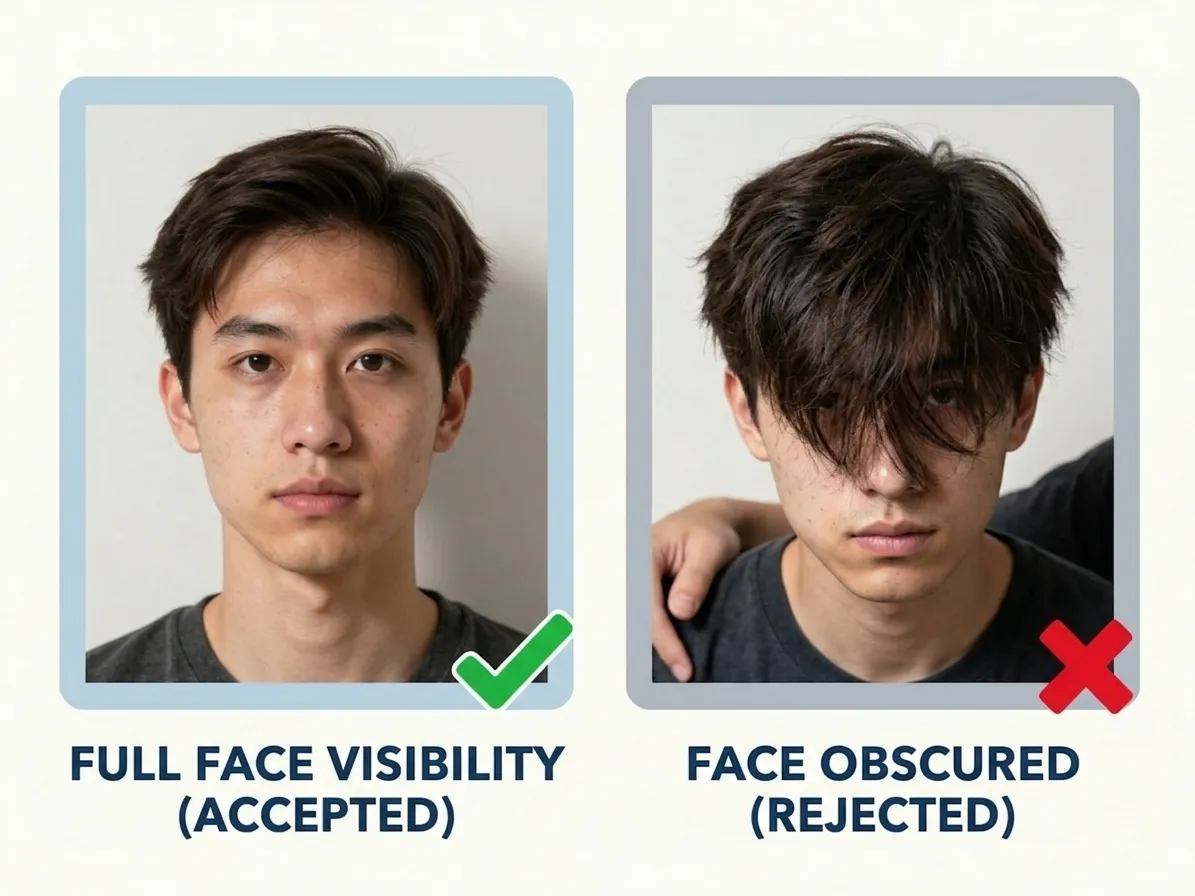
Two portraits side by side. The left, captioned Full face visibility (accepted) and marked with a green tick, shows a face with both edges clear. The right, captioned Face obscured (rejected) and marked with a red cross, shows hair falling across one eye and another person's hand on the shoulder.

Photo Recency

Australia requires a photo no older than six months. A print recycled from an earlier application is out of date on its face, even if you believe your appearance has not changed — officers compare the photo against the applicant standing in front of them. A new beard, a different haircut or recent weight change all invalidate an older shot, so take a fresh one before you book the appointment.
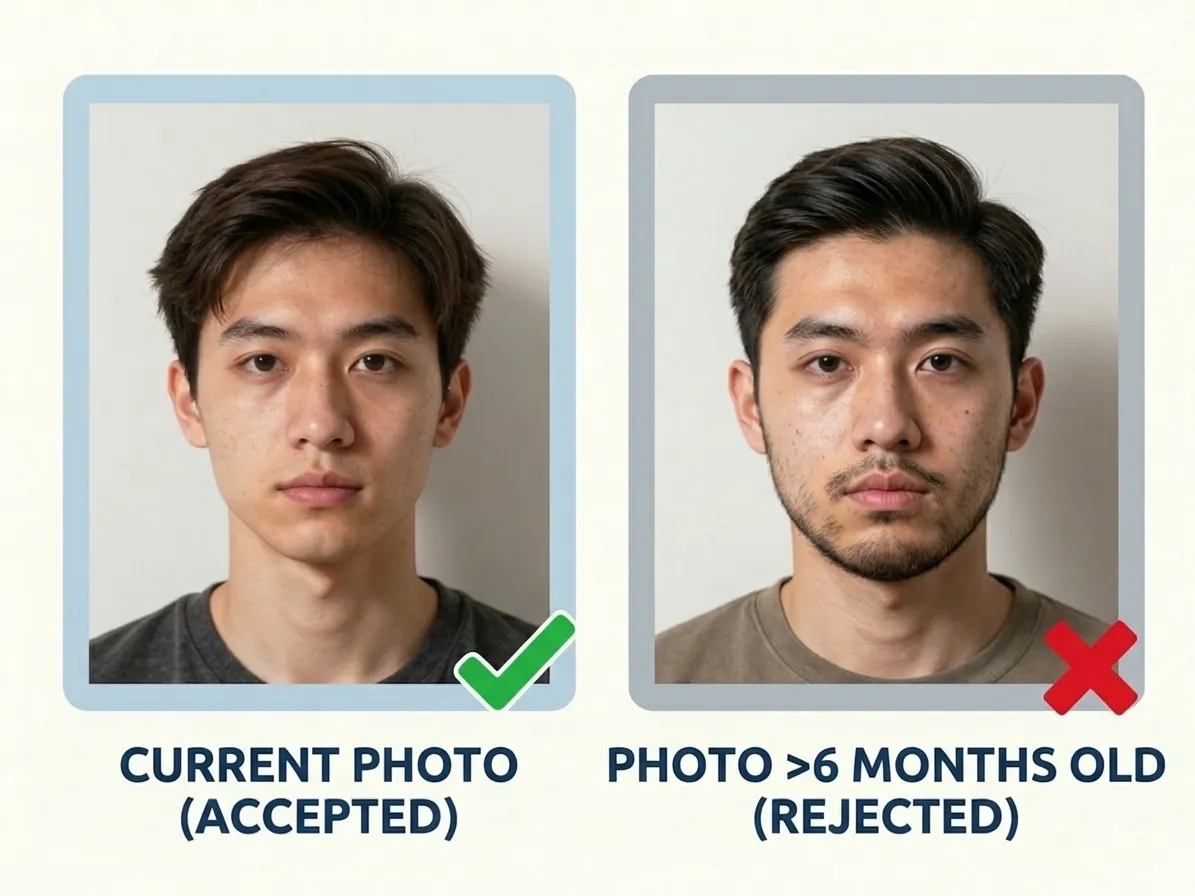
Two portraits side by side. The left, marked with a green tick and captioned as recent, shows a clean-shaven man. The right, marked with a red cross and captioned as more than 6 months old, shows the same man with a beard.

How Many Copies You Get

A paper application needs 2 identical printed photos, while an online application takes 1 digital image instead. The brief specifies 200 gsm glossy paper printed by dye sublimation, and printing at full size keeps the frame you approve on screen equal to the one the office receives. Keep a spare set in a drawer after printing: replacing one damaged sheet mid-application costs more time than cutting an extra copy now.

Printing them yourself? Lay the whole set out on one sheet: 4x6 Passport Photo Print Sheet
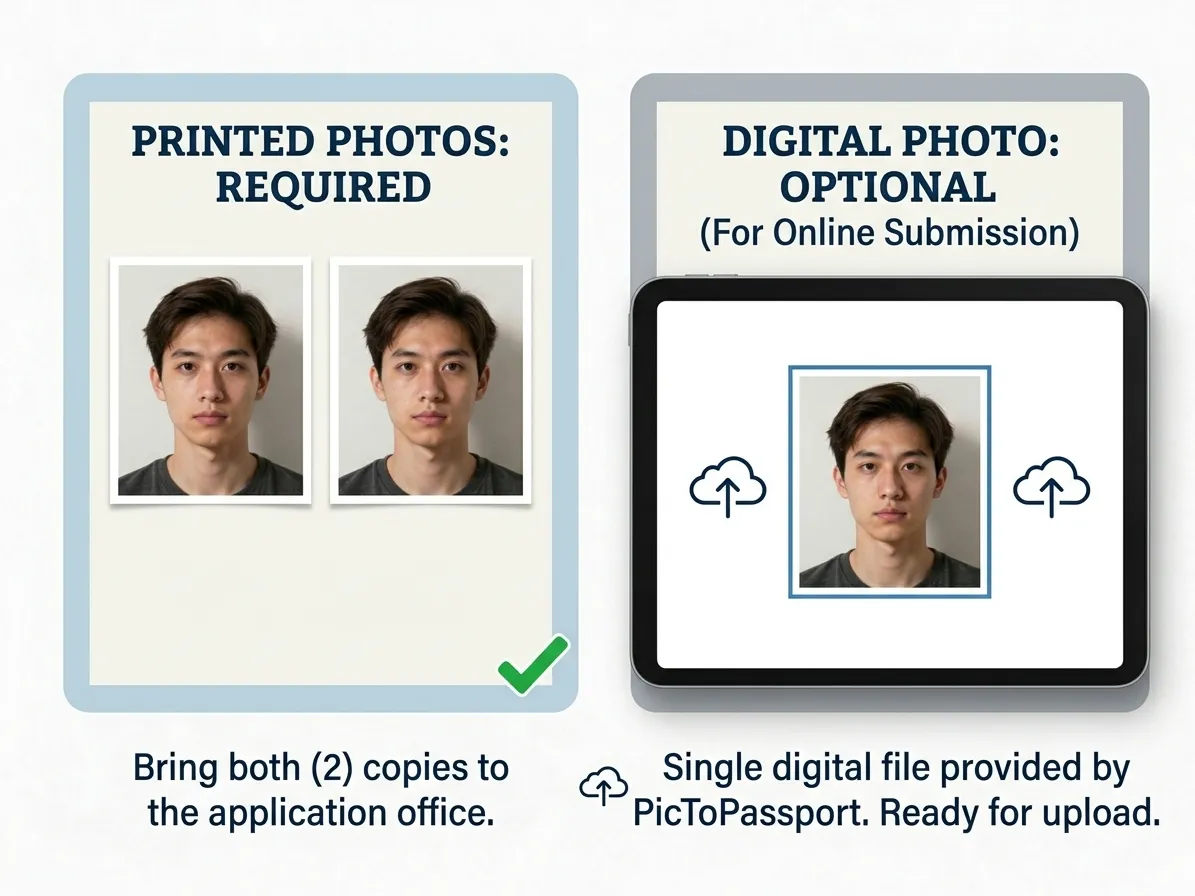
Two panels. The left, captioned Printed: required, shows two identical prints with a green tick, noted as copies to bring to the application office. The right, captioned Digital: optional, shows a tablet displaying the cropped portrait between two upload arrows, for online submission.

Common Mistakes to Avoid

Rejections are rarely caused by one big mistake; they come from the steps around the photo. Shooting a portrait off a screen, trimming a fraction of the frame during a crop, reusing an old print from a previous application, or re-saving a file through a messaging app each change what the officer receives. Check your photo against the table above before you submit, and print it at full size rather than letting the shop scale it down.
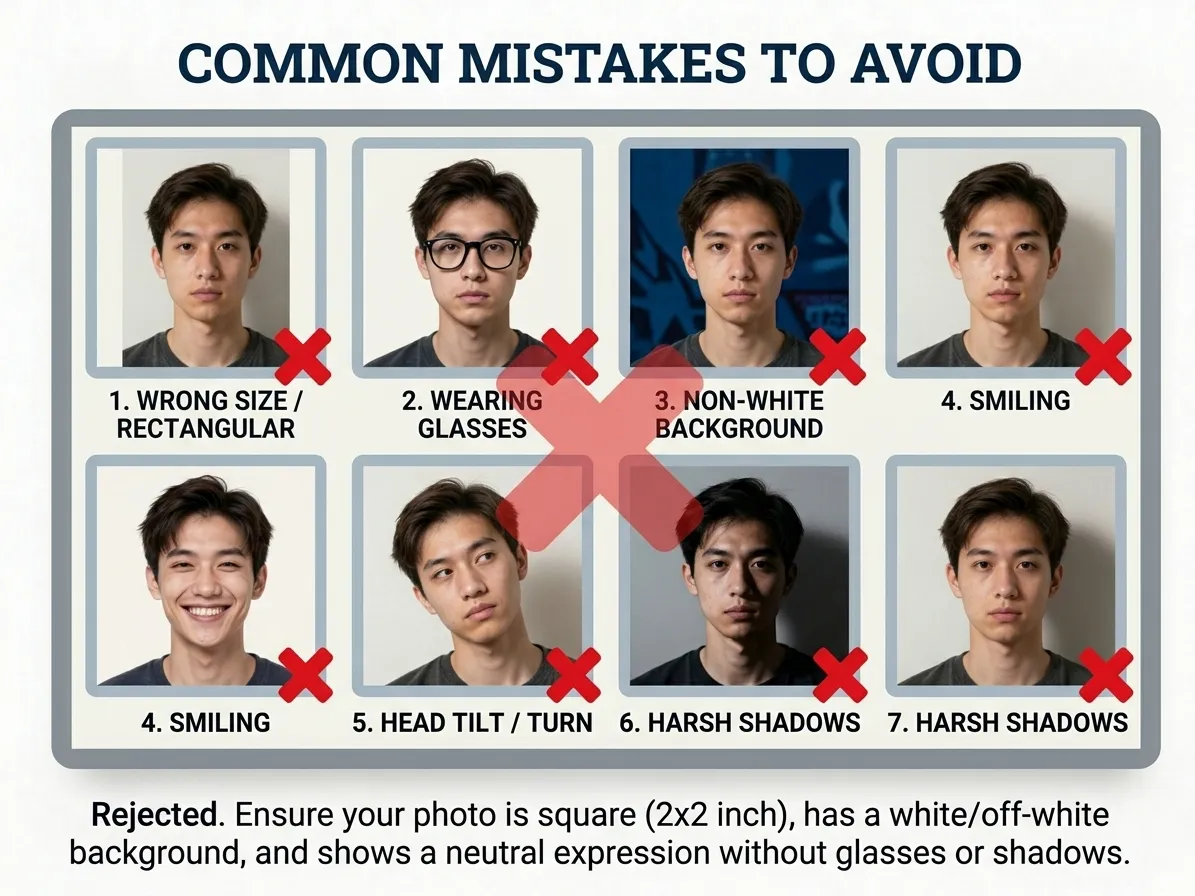
A grid headed Common mistakes to avoid showing eight portraits, each marked with a red cross and labelled wrong size or rectangular, wearing glasses, non-white background, smiling, head tilt or turn, and harsh shadows.

Baby Passport Photos

For infants the same 35 mm × 45 mm frame applies, with three conditions that are genuinely hard to meet: eyes open, mouth closed, and nothing else in the frame — no pacifier, no toys, no supporting hands. Australia allows a second person to steady the head, but their hands must not appear in the picture. Photograph a lying baby from directly above in soft daylight rather than using flash.
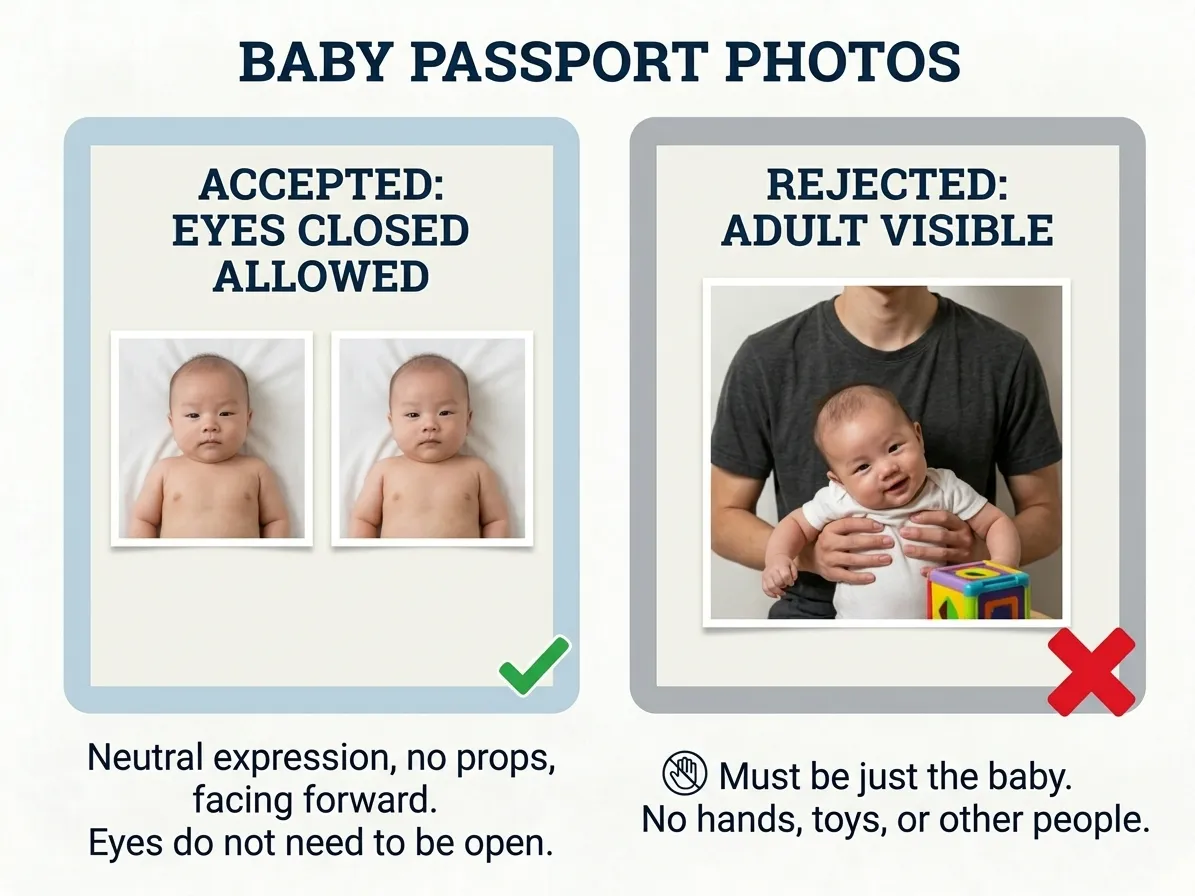
Two panels. The left, marked with a green tick, is captioned Accepted: eyes closed allowed and shows two small prints of a baby lying on a white sheet. The right, marked with a red cross, is captioned Rejected: adult visible and shows an adult holding a baby beside a toy.

Using PicToPassport

PicToPassport works in the browser and crops your snapshot to the Australian sheet of 35 mm × 45 mm, with 40 mm × 50 mm on hand for the visa classes that accept the larger size. Behind your head it places a background of plain white, cream or pale blue with no pattern and no shadow, then returns print-ready output: 2 identical photos for paper, or 1 digital file for online use. It is free, runs on your own device, and never uploads.
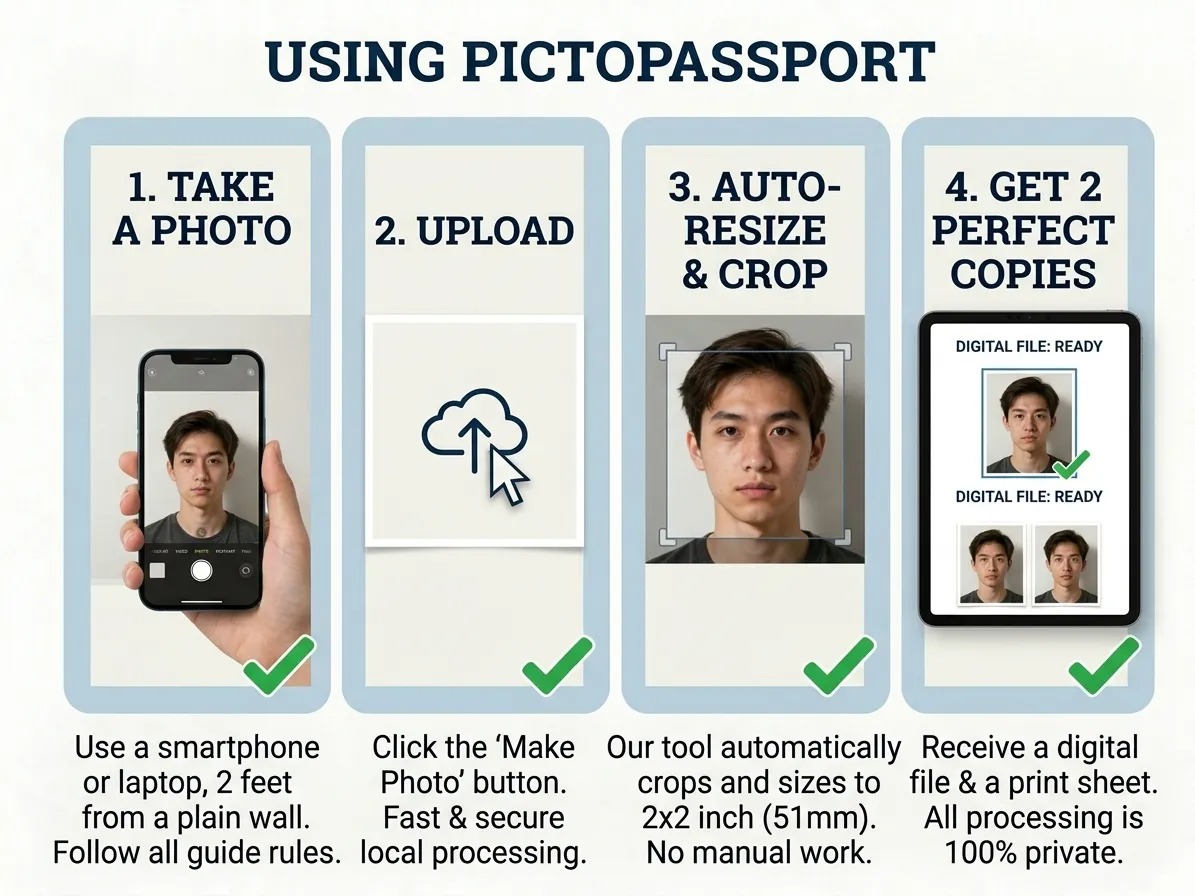
Four numbered panels, each marked with a green tick, showing the sequence: capture with a phone, upload the file, auto-resize and crop to a crop frame, and receive a digital file shown beside two prints.

Get Started in Minutes

The Australian Passport Office lists a 10-year adult passport at AUD $422 (effective 1 January 2026), and it publishes no standard processing figure — the official timeframes page carries the current answer. Settle the photo first: PicToPassport opens in your browser, frames a compliant shot for free, and keeps every image private on your device, because nothing is ever uploaded.


Frequently Asked Questions

What size should an Australian passport photo be?

Australian passport photos are 35mm wide × 45mm tall, and some visa and ID card applications also accept 40 × 50mm. Head height must be 32–36mm.

How many photos does an Australian application take?

Paper applications need 2 identical printed photos. Applying online through the Australian Passport Office? Upload just one digital image.

What background does Australia require behind the head?

A plain, light-coloured background — white, cream, or pale blue all work. Stay away from patterned walls, coloured backdrops, and shadows behind you.

Why did Australia ban glasses in passport photos?

Australia stopped accepting them on 1 July 2018 — prescription spectacles, reading glasses, and sunglasses must all come off.

What paper should I print my Australian passport photos on?

Print on high-quality, heavy-weight glossy paper — at least 200 gsm. Use dye sublimation printing for accurate skin tones and contrast. Avoid inkjet prints.

How do I photograph a baby for an Australian passport?

The baby must be awake, looking at the camera, with their mouth closed and eyes open. No pacifiers, toys, blankets, chair backs, or other people should be visible.

Are photo filters allowed on an Australian passport picture?

No retouching, filters, colour correction, or background replacement of any kind — the photo must be a true likeness.

100% Private — Your photos never leave your device
